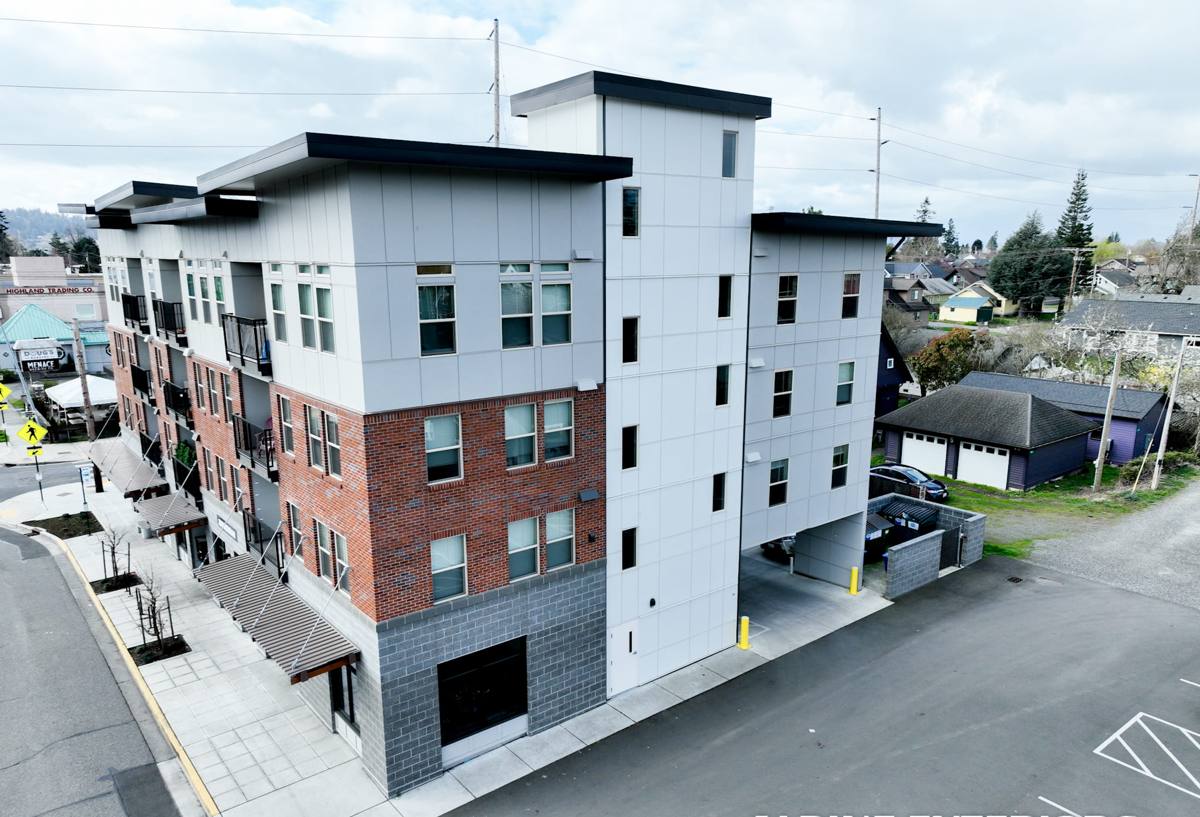
 Sudden Valley Exterior
 Windows Built for the Columbia Microclimate
Homes in the Columbia area near Sudden Valley take a beating that homeowners further inland never have to think about. Salt-tinged air off the water finds its way into every gap and seam. Driving rain comes sideways during winter storms, testing every seal a window has. And Whatcom County's long, damp moss season means anything that stays wet for weeks at a time becomes a problem, whether that's a roofline, a deck, or a window frame that's slowly trapping moisture instead of shedding it. Energy-efficient windows here have to do double duty: cut your heating bill and hold up structurally against a climate that doesn't let up for much of the year.
We've worked on enough homes in this area to know that a window that performs well in a showroom or in a drier part of the state doesn't automatically perform well here. The frame material, the glazing, the installation flashing, and the sealant all have to be chosen and installed with our specific weather in mind.
What "Energy-Efficient" Actually Means for This Climate
Energy efficiency isn't just a sticker on the glass. In the Pacific Northwest, it comes down to three things working together:
- Insulating value — how well the window resists heat transfer during our long, mild-but-persistent heating season (U-factor is the number that matters most, not R-value, which is rarely used for windows).
- Air sealing — how tightly the sash meets the frame, since a drafty window undoes the benefit of good glass no matter how expensive it was.
- Moisture management — how the window and its installation handle wind-driven rain and condensation without letting water sit against wood, trim, or sheathing.
A window can have excellent glass and still perform poorly here if the installation doesn't account for driving rain. That's why we treat the flashing and sealing details as seriously as the window unit itself.
U-Factor and Why It Matters More Than Marketing Numbers
U-factor measures how much heat a window lets escape — lower is better. For our climate zone, we generally recommend windows with a U-factor in the 0.27–0.30 range or better for most Columbia-area homes, though the right number depends on orientation, sun exposure, and how much glass a given wall has. We'll walk through the actual numbers on your specific home rather than quoting a one-size answer.
How Salt Air and Rain Wear Down Windows Over Time
Even homes a few miles from open water pick up airborne salt, especially with the wind patterns common around Whatcom County. Over years, that salt content accelerates corrosion on hardware, hinges, and any exposed metal fasteners. It also breaks down certain sealants faster than they'd wear in a drier inland climate.
Driving rain adds a second layer of stress. Wind-driven water doesn't just hit a window head-on — it gets pushed sideways and upward into gaps that a straight-down rain would never reach. Older windows, or ones installed without proper head flashing and sill pans, tend to show it first around the bottom corners: soft trim, peeling paint, or a faint musty smell in the wall cavity below the window.
Add in the region's extended moss season — months of consistently damp, low-light conditions — and any wood trim or sill that isn't detailed to shed water quickly becomes a long-term maintenance headache rather than a one-time fix.
Signs a Columbia-Area Home Needs Window Attention
- Visible condensation or fogging between the panes (a sign the seal has failed)
- Drafts you can feel near the frame on a windy day
- Wood trim that's soft, discolored, or shows paint failure at the sill
- Windows that are difficult to open, close, or lock — often a sign the frame has shifted or swollen
- A noticeable difference in room temperature near the window compared to the rest of the house
- Rising heating bills without any other explanation
Any one of these on its own isn't necessarily urgent. Several at once, especially on the same window, usually means it's time for a real evaluation rather than another round of caulk.
Frame Material: What Holds Up Here vs. What Doesn't
We install a range of frame materials, and the right choice depends on your home's exposure, budget, and the look you're going for. Here's how the common options actually perform in our climate:
| Frame Material | Performance in Salt Air / Rain | Maintenance | Typical Fit |
|---|---|---|---|
| Vinyl | Good — won't corrode or rot, handles moisture well | Low | Most homes; best value for energy performance |
| Fiberglass | Excellent — very stable, resists warping and corrosion | Low | Homes wanting higher-end durability and paintability |
| Wood-clad | Fair — cladding protects the exterior, but any breach exposes wood core to rot | Moderate to high | Homes prioritizing interior wood aesthetic, with owners willing to maintain it |
| Aluminum | Poor without thermal breaks — conducts cold and is prone to condensation | Low, but performance suffers | Rarely our first recommendation for this climate |
We're upfront that we steer most Columbia-area homeowners toward vinyl or fiberglass. It's not that wood-clad windows are bad products — it's that any nick, gap, or failed seal in the cladding here gets exposed to rain and salt air far more often than in a drier climate, and repairing a compromised wood-clad frame is a bigger job than most homeowners expect. If you want the wood look, we'll talk through what upkeep that actually requires before you commit.
Glazing and Glass Coatings
Double-pane, low-E glass is the practical standard for this area. Triple-pane can make sense on north-facing walls or homes right along more exposed shoreline where wind load and heat loss are both higher, but it adds weight and cost that isn't always worth it on a typical Columbia lot. We size the glazing package to your home's actual exposure rather than defaulting to the most expensive option.
Low-E coatings also help manage solar heat gain in summer without sacrificing the warmth you want to hold onto during our long wet winters — a real balance point in a climate with mild but persistent heating needs most of the year.
Argon and Krypton Gas Fills
Both improve insulating performance by slowing heat transfer between panes. Argon is the standard, cost-effective choice for most homes. Krypton performs slightly better in narrower gaps but costs more — we'll tell you honestly if it's worth it for your specific window sizes, and usually it isn't for standard residential openings.
Our Installation Process
The window unit is only part of the job. In this climate, the installation details determine whether that window performs well for twenty years or starts failing in five.
- On-site assessment — we look at each window's exposure, existing frame condition, and any signs of past water intrusion before recommending anything.
- Removal and inspection — once the old window is out, we check the rough opening and surrounding framing for hidden rot or moisture damage before it gets covered up again.
- Sill pan and flashing — we install a proper sloped sill pan and flashing sequence so any water that gets past the window sheds outward instead of collecting at the sill.
- Air sealing — low-expansion foam and backer rod around the frame perimeter, sized correctly so it seals without bowing the frame.
- Exterior sealant — a sealant rated for our wet, salt-exposed conditions, applied to shed wind-driven rain rather than just block a straight-down drip.
- Final check — we test operation, confirm level and square, and walk the exterior trim with you before we call it done.
Skipping or rushing any one of these steps is usually where "energy-efficient" windows stop actually being efficient a few years down the road — the glass didn't fail, the installation around it did.
Why Local Installation Experience Matters in Columbia
A crew that mostly works drier inland areas will still install a functional window — but they may not default to the flashing and sealing details that matter most here, simply because their usual jobs don't demand it. We work Whatcom County homes regularly, so accounting for wind-driven rain, salt exposure, and the long moss season isn't an upsell, it's just how we build every window installation in this area.
We also know that Columbia-area homes vary a fair amount in age and construction, from older single-pane originals to homes that already had a mid-life window upgrade decades ago. We evaluate each home on its own condition rather than assuming a single approach fits every property in the neighborhood.
What to Expect on Cost
Window replacement pricing depends on the number of openings, frame material, glazing package, and how much rework the rough openings need once we're inside the wall. Rather than quote a number that won't reflect your actual home, we'll give you a clear, itemized estimate after a walk-through — broken out by window so you can see exactly what you're paying for and where, if needed, you could phase the work.
If you're seeing drafts, condensation, or rising heating costs in your Columbia-area home, we're happy to take a look. Reach out for a free, no-pressure estimate — the form below gets you started.