 Sudden Valley Exterior
 Building Decks for Columbia Homes in Sudden Valley
The Columbia area of Sudden Valley sits close enough to Lake Whatcom and the surrounding tree cover that decks here take a different kind of beating than decks in a dry inland town. Homes get a mix of driving rain off the water, salt-tinged marine air moving in from the Puget Sound region, and long stretches of shade that never really dry out between storms. A deck built without that in mind will look fine for a season or two, then start showing soft spots, black streaks, and squeaky boards well before it should.
We build and repair decks for homeowners in and around Sudden Valley, and Columbia is one of the neighborhoods we're in regularly. That matters more than it sounds — knowing which lots sit in deep shade, which get wind-driven rain at odd angles, and which soils hold water longer changes how we frame, flash, and space a deck before the first board ever goes down.
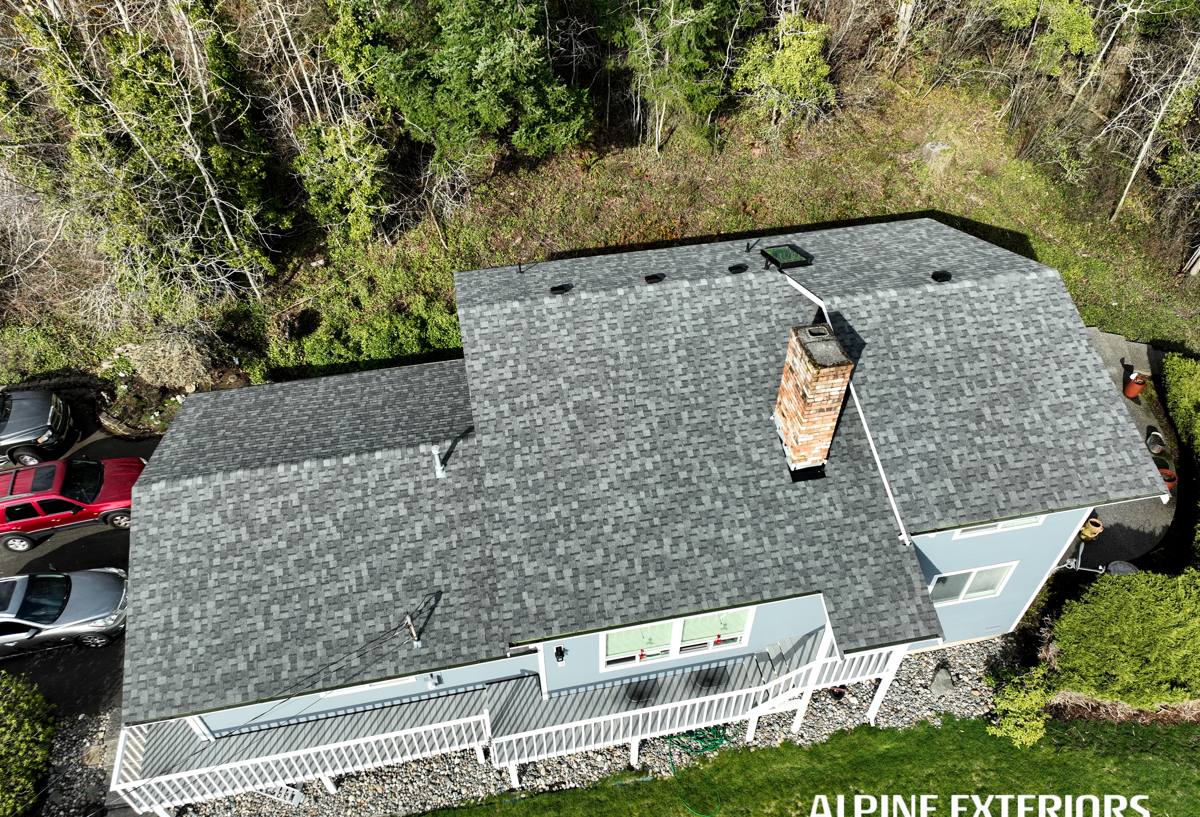
What Whatcom County's Climate Does to a Deck
Three things drive almost every deck problem we see in this part of Whatcom County:
- Driving rain — wind-blown rain gets up under railings, around post bases, and into ledger board connections that face the weather. Standard flashing details that work in calmer climates aren't enough here.
- Moss and algae season — shaded, damp decking stays wet for days at a time for much of the year. Moss holds moisture against the wood surface, which accelerates rot and makes boards slick and dangerous underfoot.
- Salt-influenced air — even away from the immediate shoreline, the region's marine air corrodes unprotected fasteners, hinges, and metal connectors faster than it would in a dry climate. Cheap or mismatched hardware is often the first thing to fail.
None of this means a deck can't last decades out here — it means the details have to account for what the site actually does to wood and metal, not what a generic build spec assumes.
Where We See Problems Start
On repair calls in Columbia and nearby parts of Sudden Valley, the failure points repeat: ledger boards attached to the house without proper flashing, joist hangers and screws that weren't rated for exterior or coastal exposure, decking laid tight with no drainage gap, and railings set in posts that were never protected from standing water at the base. Every one of these is preventable at the framing stage.
What a Correctly Built Deck Needs Here
Framing and Structure
We build to current code for structural spans and post spacing, but in this climate we don't stop at the minimum. Ledger board attachment gets proper flashing tape and a drip edge so water sheds away from the house rather than tracking behind the siding. Joist hangers, structural screws, and bolts are hot-dip galvanized or stainless rated for exterior and coastal-adjacent exposure — not the cheaper coated fasteners that start rusting within a few wet seasons.
Decking Material and Spacing
Board spacing is set to let water and debris fall through rather than pool on the surface, which matters more here than in drier climates because standing moisture is what feeds moss growth. We also grade the ledger connection and any low spots in the framing so water has somewhere to go instead of sitting against the underside of the boards.
Posts, Footings, and Hardware
Post bases are set above grade on proper post base hardware, not buried in concrete where they'll wick moisture for years. All structural connectors are matched — galvanized to galvanized, stainless to stainless — because mixing metals in a damp, salt-influenced environment sets up galvanic corrosion that eats hardware from the inside out.
Material Choices: Trade-Offs, Not Sales Pitches
Homeowners usually ask us to just pick "the best" decking material. There isn't one universal answer — there's a set of honest trade-offs depending on budget, how much upkeep you want to do, and how shaded the deck site is.
| Material | Upkeep in This Climate | Moss/Moisture Behavior | Typical Lifespan Range |
|---|---|---|---|
| Pressure-treated wood | Annual cleaning, periodic sealing | Needs consistent airflow and drainage to resist moss buildup | 15–25 years with maintenance |
| Cedar | Regular sealing/staining to hold color and resist moisture | Naturally rot-resistant but still needs care in shaded, damp spots | 15–25 years with maintenance |
| Composite decking | Low — occasional washing, no staining or sealing | Doesn't absorb water like wood; moss can still grow on the surface film if shaded and never cleaned | 25–30+ years, varies by product warranty |
We don't push one material over another as a rule — we walk the specific site with you, look at how much sun and airflow it actually gets, and talk through what upkeep you're realistically willing to do. A composite deck in full shade still needs occasional cleaning; a wood deck in full sun needs less moss management but more attention to sealing.
Our Process for a Columbia Deck Project
- Site walk and assessment — we look at drainage, sun exposure, existing structure condition if this is a rebuild, and how the deck ties into the house.
- Design and material discussion — honest conversation about material trade-offs, layout, and railing/stair requirements for your specific lot.
- Permitting — decks tied to the structure or above a certain height typically require a permit; we handle that process rather than leaving it to you.
- Framing and flashing — the structural work where climate-specific details (ledger flashing, hardware selection, drainage) actually get built in, not added later.
- Decking, railing, and finish work — final surface, railing installation, and any stairs or lighting.
- Final walkthrough — we go over the finished deck with you, including what maintenance it needs and roughly when.
Repair, Replace, or Rebuild?
Not every aging deck in Columbia needs to be torn out. We look at three things before recommending a full rebuild: whether the framing and ledger connection are structurally sound, whether the hardware is corroded to the point of being unreliable, and whether rot has reached the posts or joists versus just surface boards. Surface-level wear on decking boards is often a repair or resurface job. Rot or corrosion at the structural connections is not something to patch — that's a safety issue and usually means a rebuild of at least the affected section.
Signs You Should Get a Deck Looked At
- Boards that feel soft, spongy, or spring back slowly underfoot
- Persistent moss or dark staining that comes back within weeks of cleaning
- Visible rust streaking from screws, bolts, or joist hangers
- Railings or posts that wobble or feel loose when pushed
- Gaps opening up where the ledger board meets the house
- Standing water that doesn't drain off the surface within an hour or two after rain
Cost Factors Homeowners Should Know
Deck pricing varies enough by size, material, and site conditions that we won't put a single number here that wouldn't actually apply to your project. What does move the number, in order of impact for most Columbia jobs:
- Decking material chosen (pressure-treated is generally the lowest upfront cost, composite the highest)
- Deck size and height above grade, which affects footing and railing requirements
- Site access — some Sudden Valley lots have limited equipment access due to slope or tree cover, which affects labor time
- Whether this is new construction or a rebuild requiring demolition and disposal of an existing deck
- Railing style and any added features like built-in seating, stairs, or lighting
We give a firm, itemized estimate after the site walk, not a ballpark over the phone — too much of the real cost depends on what we find at your specific site.
Why a Crew That Already Works Columbia Matters
A deck built by someone who hasn't worked this specific microclimate before can still turn out fine — but it's more likely to miss the details that matter here: the flashing detail that handles wind-driven rain, the hardware spec that holds up against the marine air, the drainage plan that keeps moss from taking over a shaded section. Working regularly in Sudden Valley and the greater Whatcom County area means we've already seen what fails here and we build to avoid it from the start, not after a callback.
If you're planning a new deck or dealing with an aging one in Columbia, we're happy to come take a look. Fill out the form below for a free, no-pressure estimate — we'll walk the site with you and give you a straight answer on what it needs.