 Sudden Valley Exterior
 New-Construction Windows in Barkley: Getting It Right From the Rough Opening
When a home in Barkley or the surrounding Sudden Valley area is being framed, the window install is one of the few steps in the whole build that you genuinely cannot fix cheaply later. A replacement window can be pulled and reset if something goes wrong. A new-construction window is tied into the house wrap, the flashing, the sheathing, and the siding around it — so if the flashing sequence is wrong, the problem doesn't show up as a drafty window. It shows up two or three winters later as a soft spot in the wall framing, a stain on interior drywall, or a musty smell nobody can quite trace. In a region like Whatcom County, where driving rain and long stretches of damp, low-sun weather are simply part of the year, that margin for error is smaller than it is almost anywhere else in the state.
This page is about one job in one place: new-construction window installation for homes being built or fully re-sided down to the sheathing in the Barkley area near Sudden Valley. It's not a general window buying guide — it's what we've learned installing windows into new framing in this specific corner of the county, where the weather, the housing stock, and the building department all have their own quirks.
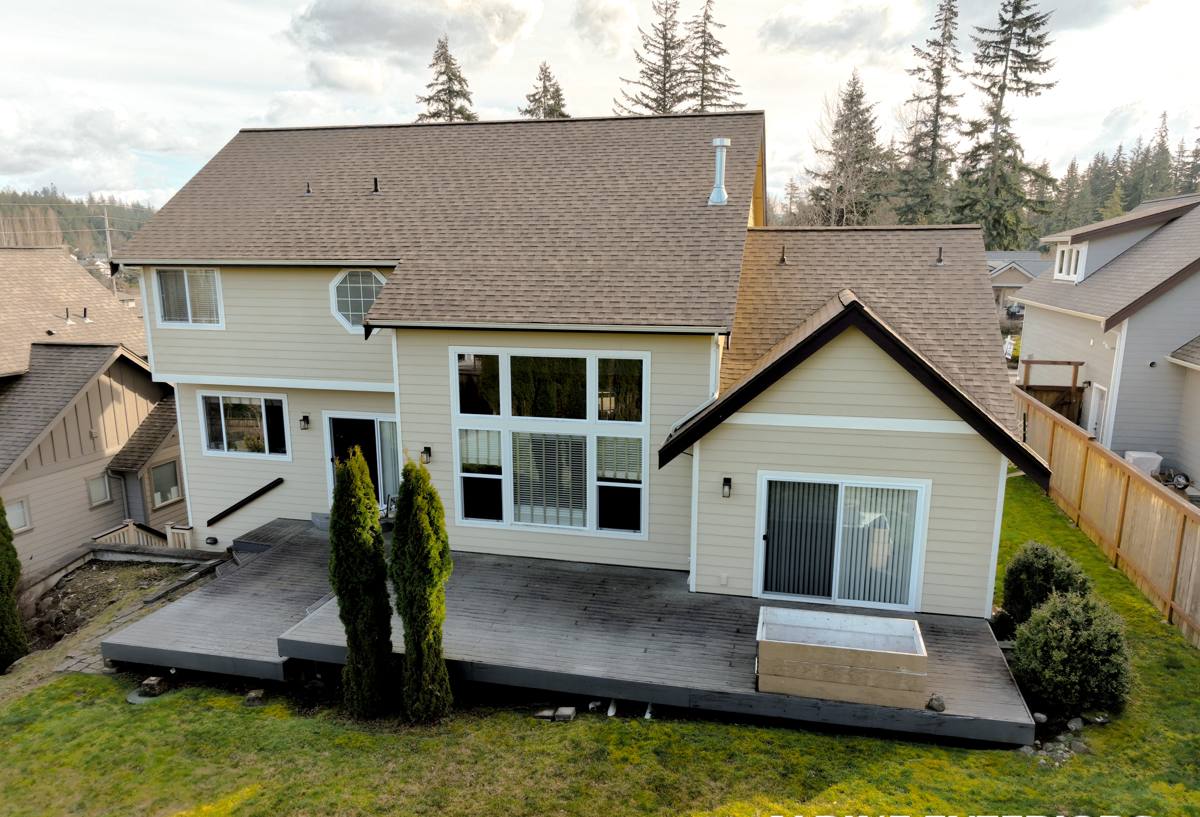
Why the Local Climate Changes How This Job Is Done
Whatcom County sits under a marine climate shaped by the Salish Sea and Bellingham Bay — cool, wet, and gray for a large part of the year, with wind-driven rain that doesn't just fall straight down, it gets pushed sideways into wall assemblies. Add a long moss season where north-facing and shaded elevations stay damp for weeks at a time, and you've got conditions that punish any window install that treats flashing and sealant as an afterthought.
Three things specifically change how we approach a new-construction window in this area:
Wind-driven, sideways rain
A window that's only sealed at the face — caulk around the trim and call it done — will hold up fine in a dry climate. Here, wind pushes water up and under trim edges and into any gap in the weather-resistive barrier. The house wrap and flashing behind the window matter more than the caulk in front of it.
Sustained moisture and moss growth
Moss and algae thrive on shaded siding and trim that stays damp. Around windows, that moisture holds against sill trim and nailing flanges longer than in a drier climate, which is exactly why sill pan flashing and proper drainage gaps behind the trim aren't optional details — they're what keeps a small amount of incidental water from turning into a rot problem.
Salt-influenced marine air
Proximity to the bay means metal components — flashing, fasteners, and window hardware — are exposed to a more corrosive environment than an inland build would see. We spec fasteners and flashing metals accordingly rather than defaulting to whatever's cheapest at the yard.
What a Correct New-Construction Install Actually Involves
"New construction" windows have a nailing fin built into the frame, which means the window gets integrated into the wall's water management system as it's installed — not bolted in after the fact like a retrofit window. Done right, the sequence looks like this:
- Rough opening is checked for square, level, and correct dimension before the window ever shows up on site.
- A sloped sill pan flashing goes in first, so any water that gets past the window has a built-in path back outside instead of sitting on bare sheathing.
- Self-adhered flashing tape is run up the jambs and across the head in a specific shingle-lap order — bottom to top — so every layer sheds water onto the layer below it, never the reverse.
- The window is set, shimmed plumb and square, and fastened through the nailing fin per the manufacturer's schedule — not just at the corners.
- Head flashing ties into the house wrap above the opening, and the wrap is lapped over the flashing, again bottom-to-top.
- Low-expansion foam or backer rod and sealant fill the gap between the frame and rough opening for insulation, without over-filling in a way that bows the frame.
- Interior and exterior trim goes on last, after the water management layer is already complete and tested visually.
Skip or shortcut any one of those steps and the window will probably look fine and test fine on a dry day. The failures we get called out to inspect almost always trace back to a flashing lap installed backwards, a missing sill pan, or fasteners that missed the framing entirely.
Choosing a Window Frame for a Barkley Build
Frame material matters more here than in a drier climate, because the frame is dealing with sustained moisture exposure, not just occasional rain. There's no single "best" material — it's a trade-off between upfront cost, maintenance, and how the frame handles this specific weather pattern.
| Frame Material | Moisture Behavior in This Climate | Maintenance | Typical Fit |
|---|---|---|---|
| Vinyl | Won't rot; handles damp exposure well | Low — occasional cleaning | Most new-construction budgets |
| Fiberglass | Very stable, minimal expansion/contraction from moisture and temperature swings | Low | Higher-end builds, larger openings |
| Wood-clad | Good if the cladding and flashing are done correctly; the wood core is at risk if water gets behind the cladding | Higher — cladding and interior wood need attention over time | Traditional aesthetic, interior wood finish |
| Aluminum | Durable but a poor thermal performer and prone to condensation in a cold, damp climate unless thermally broken | Moderate | Specific architectural or commercial applications |
Our default recommendation for most Barkley-area new construction is vinyl or fiberglass, specifically because both shrug off the sustained damp conditions here without needing the ongoing attention a wood-clad frame requires. Wood-clad windows aren't a bad product — we install them when a homeowner wants that look — but we're upfront that the installation has to be flawless and the homeowner needs to stay on top of exterior maintenance, because this climate doesn't forgive gaps in the cladding the way a drier region would.
Our Process, Start to Finish
1. Rough-in verification
Before install day, we walk the framing with the general contractor or homeowner and check every opening against the window schedule. Catching a sizing mismatch here costs nothing. Catching it after siding is on costs real money.
2. Flashing and weather barrier installation
This is where most of our time actually goes — not setting the window itself, but building the water management system around it correctly, in the sequence described above.
3. Setting and fastening
Each window is shimmed for square and plumb, checked for smooth operation before it's permanently fastened, and fastened per the manufacturer's spec — which affects both the warranty and the wind and water rating of the finished assembly.
4. Integration with siding and trim
We coordinate the window flashing with whatever siding is going on next — lap siding, fiber cement, shingle — so the drainage plane behind the finish material stays continuous. A window installed in isolation from the siding plan is one of the more common sources of leaks we're asked to diagnose.
5. Final check
Every window gets operated, checked for a tight seal, and visually inspected on the exterior before we call the job done.
Common Mistakes We See in New Construction Around Sudden Valley
- Nailing fins fastened only at the four corners instead of the full schedule, leaving the window free to bow under wind load.
- Flashing tape lapped top-over-bottom instead of bottom-over-top, which funnels water into the wall instead of away from it.
- No sill pan flashing — just caulk at the sill, which fails silently over a few wet seasons.
- House wrap cut and taped around the window before the window flashing is complete, breaking the drainage plane.
- Trim installed tight against the frame with no drainage gap, trapping moisture exactly where moss and mildew take hold first.
None of these are unique to any one framer or crew — they're just easy to miss under the pace of a normal build schedule, especially when the person setting the windows isn't the same person who'll be back in three years fixing the callback.
What Drives Cost on a New-Construction Window Job
| Factor | Why It Matters |
|---|---|
| Number and size of openings | More openings and larger units mean more material and labor hours |
| Frame material selected | Vinyl, fiberglass, and wood-clad carry different unit costs |
| Wall height and access | Second-story and vaulted openings require staging or lift access |
| Flashing detail complexity | Bay windows, corner windows, and unusual rooflines take more flashing work per opening |
| Coordination with other trades | Working around siding, roofing, or framing schedules can affect timeline and sequencing |
We won't quote a job over the phone with any real accuracy — window count, sizes, and site access change the number too much. What we can say honestly is that new-construction installation, done correctly with full flashing detail, costs more upfront than a shortcut job, and that difference is almost always smaller than the cost of repairing water damage inside a wall a few years down the road.
Why a Crew That Already Works Barkley Matters
Barkley and the Sudden Valley area have their own mix of lot conditions, tree cover, and exposure — some lots are wide open to wind and driving rain, others are shaded most of the day and hold moisture longer. A crew that's worked new construction across Whatcom County has already seen how those local conditions play out over a few wet seasons, not just on install day. That matters for things like which elevations get extra flashing attention, how much drainage gap to leave behind trim on a shaded wall, and which fasteners hold up against the marine air coming off the bay.
It also matters for the practical side of a build — knowing the local inspection process, coordinating with general contractors already working in the area, and being available to come back if a punch-list item comes up after the siding crew or trim carpenter has moved on. A window installer who's only passing through doesn't have the same stake in how that install performs once the framing is closed up and the house has been through a winter.
What to Watch After Move-In
Even a correctly installed window benefits from a quick homeowner check during the first year, especially through the first fall and winter when the assembly gets tested by real weather for the first time.
- Operate every window through a full open-and-close cycle — new construction should move smoothly with no binding.
- Look at interior sills and the wall below each window after a heavy rain for any sign of moisture.
- Check exterior caulk lines each spring — sealant is a secondary defense, but it does wear and should be maintained.
- Watch shaded and north-facing trim for early moss or algae growth, which signals a spot staying damp longer than it should.
- Note any drafts near the frame in cold, windy weather and have them checked before they become a bigger air-sealing issue.
If anything looks off, it's far easier to address in year one than after several wet seasons have had a chance to work on it.
Get a Straight Answer on Your Barkley Build
Every new-construction job is a little different once you factor in the window count, the framing schedule, and how exposed the lot is to Whatcom County's weather. If you're building or re-siding in the Barkley or Sudden Valley area, we're glad to walk the site, look at the plans, and give you a straightforward, no-pressure estimate — no hard sell, just an honest read on what the job needs. Use the form below to get started.