 Sudden Valley Exterior
 Why Barkley's Climate Is Hard on Siding
Homes in the Barkley area near Sudden Valley sit in one of the wetter, greener pockets of Whatcom County. The tree cover around Lake Whatcom keeps yards shaded for much of the year, which is great for keeping a house cool in summer but terrible for keeping siding dry. Add in the marine-influenced air that moves through this part of Washington off the Puget Sound, and you get a combination that ages the wrong siding material fast: long stretches of damp weather, driving rain that gets pushed sideways by wind off the lake, and shade that never lets a wall fully dry out between storms.
That combination is what drives moss, algae, and mildew growth on siding, trim, and fascia boards across this neighborhood. It's also what causes paint to fail early, seams to swell, and lower-grade materials to soften or delaminate over a decade or two. None of that is a defect in a house — it's just what this climate does to a wall system that isn't built for it. The fix isn't a coat of paint every few years. It's starting with a siding material and installation method that's actually engineered for this kind of weather.
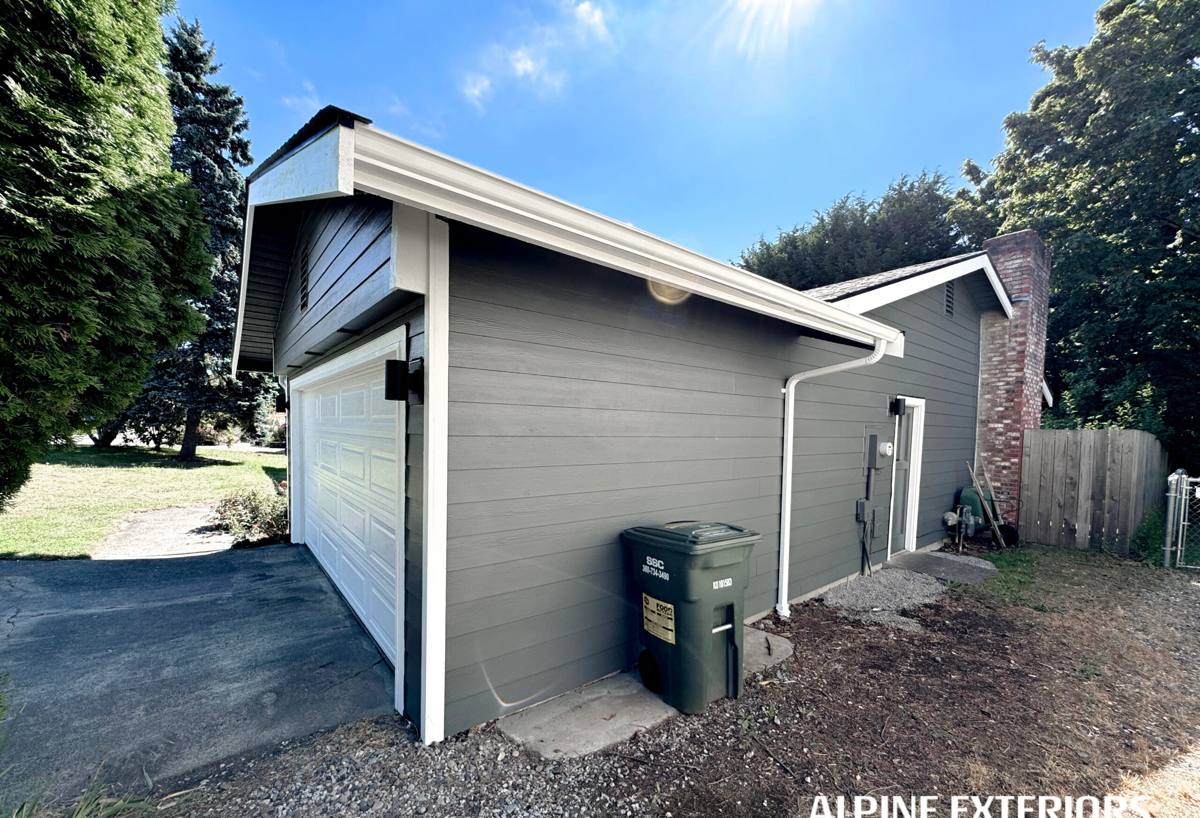
What "Correct" Fiber Cement Installation Actually Involves
Fiber cement siding is only as good as the install behind it. In a climate like this one, the details that get skipped on a rushed job are exactly the details that cause problems five or ten years down the road — usually right when a homeowner has stopped thinking about their siding at all.
Moisture Management at Grade and Roofline
Correct installation starts before a single board goes up. That means a proper weather-resistive barrier, correctly lapped and taped seams, and flashing at every window, door, deck ledger, and roof-to-wall transition. Siding needs to be held above grade, decks, and roof lines with the clearances the manufacturer specifies — not tight against them — so water has somewhere to go instead of wicking straight into the bottom edge of a board. On a shaded, damp lot like the ones common around Barkley, skipping this step is the single biggest reason siding fails early.
Fastening, Gaps, and Painted Edges
Fiber cement boards need to be fastened at the correct spacing and depth — overdriven nails crack the material, underdriven nails let boards move and eventually leak. Butt joints and cut ends need to be field-painted or caulked per the manufacturer's specification, because a raw, unsealed cut edge is the fastest way moisture gets into the board itself. Panel and trim gaps need to be sized correctly for expansion, not caulked shut everywhere out of habit. These aren't cosmetic details — they're the difference between siding that looks and performs the same in year fifteen and siding that needs early repair.
Why This Crew Installs Only James Hardie
We made a deliberate call to install James Hardie fiber cement exclusively, and it comes down to what this climate does to a wall over time. Hardie's HZ product lines are engineered with regional moisture exposure in mind, and the version specified for the Pacific Northwest is built to hold up to sustained damp conditions rather than the drier, hotter climates other regions deal with. That matters more in a shaded, tree-covered area like Barkley than it does in a lot of the country.
The other piece is the factory finish. Hardie's ColorPlus finish is baked on under controlled conditions before the boards ever reach a job site, which gives it more consistent coverage and better resistance to fading, chalking, and moss staining than a field-applied paint job on site-primed material. It's also backed by a real transferable warranty — useful if the home changes hands, which matters in a community where people tend to stay a long time but eventually do sell.
We don't install LP SmartSide, vinyl, Cemplank, Allura, or primed wood siding, and we're upfront about why: it's not that those products have no place in the market, it's that we don't think they hold up as well to this specific climate, and we'd rather turn down work than put something on a house we don't believe in for this region.
Fiber Cement vs. the Alternatives
| Material | Moisture Behavior | Fire Resistance | Maintenance | Typical Lifespan |
|---|---|---|---|---|
| James Hardie Fiber Cement | Engineered resistance to swelling and rot; factory finish sheds moisture well | Non-combustible | Occasional wash; minimal repainting with ColorPlus | 30+ years with correct install |
| Engineered Wood (LP SmartSide) | Wood-based core; performs well when detailed correctly but more sensitive to sustained moisture | Combustible | Periodic caulk and paint upkeep | Manufacturer-rated, shorter than fiber cement in wet climates |
| Vinyl | Sheds water but can trap moisture behind it; seams and panels can warp | Combustible, can deform under heat | Low, but can't be repainted to refresh color | 20–30 years, fades over time |
| Cedar / Primed Wood | Natural material; absorbs moisture, prone to rot and moss without diligent upkeep | Combustible | High — regular sealing, staining, or painting | Highly dependent on maintenance |
Every one of these products has a legitimate place somewhere. Our position is specific to this region's moisture load and the amount of shade most Barkley lots deal with — that's the environment we're building for.
Our Process for a Barkley Siding Project
- Site walk and assessment: we look at existing siding condition, moisture damage, tree cover and shade patterns, and drainage around the foundation before quoting anything.
- Scope and material selection: we walk through Hardie panel and lap options, plank exposure, trim details, and color, matched to the home's exposure and the HOA or neighborhood look where relevant.
- Prep and tear-off: old siding comes off, sheathing gets inspected for rot or water damage, and any repairs happen before new material goes up — not after.
- Weather barrier and flashing: house wrap, window and door flashing, and roof-to-wall transitions get done to spec before the first board is hung.
- Installation: proper fastening, clearances, joint treatment, and painted cut edges throughout.
- Final walkthrough: we inspect the finished job with the homeowner and cover basic care going forward.
Living With Moss and Rain: What Barkley Homeowners Can Do
Even the right siding benefits from a little seasonal attention in this climate. None of this is complicated, but it's easy to let slide when a house looks fine from the street.
- Keep gutters clear so overflow doesn't run down the face of the siding during heavy rain.
- Trim back branches and shrubs that keep siding shaded and damp longer than the rest of the house.
- Rinse siding once or twice a year with a garden hose or low-pressure wash to keep moss and algae from getting established.
- Check caulking around windows, doors, and trim annually — gaps are easier to reseal early than after water gets behind the board.
- Watch for soft spots, dark staining, or bubbling paint near the bottom courses, which usually points to a moisture or clearance issue worth having looked at.
Why a Crew That Already Works Barkley Matters
Siding work in this part of Whatcom County isn't identical to siding work in a drier climate, and it isn't identical to siding work on an open, sun-exposed lot either. A crew that regularly works in and around Sudden Valley already understands how much shade a typical Barkley lot gets, how the terrain around Lake Whatcom affects drainage and wind-driven rain, and what permitting and inspection expectations look like for Whatcom County. That familiarity shows up in fewer surprises mid-project — knowing which details need extra attention on a shaded, tree-lined lot before the first panel goes up, not after a problem shows up in year six.
It also means a shorter feedback loop if a question comes up after the job is done. A crew that's local and already has a track record in the neighborhood is easier to reach and more invested in the work holding up, because the next estimate they give is likely to be for a neighbor down the road.
What Affects the Cost of a Barkley Siding Project
Every home is different, but a few factors tend to drive the bulk of the cost on a fiber cement project in this area:
| Factor | Why It Matters |
|---|---|
| Existing siding removal and sheathing repair | Rot or water damage found during tear-off adds labor and material before new siding can go up |
| Home size and wall complexity | More corners, dormers, and trim detail mean more cutting, fitting, and finish work |
| Panel vs. lap siding, exposure width | Different Hardie profiles carry different material and labor costs |
| Access and site conditions | Slopes, tree cover, and tight lot access common around Lake Whatcom can affect staging and labor time |
| Trim and color package | Custom trim details and ColorPlus color selection affect material pricing |
We'd rather walk a home and give an honest, specific number than throw out a broad range that doesn't mean much once we're actually looking at the walls.
If you're weighing a siding project on a Barkley home, we're glad to come take a look and give you a straightforward, no-pressure estimate — just fill out the form below.