 Sudden Valley Exterior
 Deck Replacement for Barkley Homes
Barkley sits close enough to Lake Whatcom and the surrounding tree cover that decks here age differently than decks in drier parts of the state. If you've owned a home in this pocket of Sudden Valley for more than a few years, you already know the pattern: boards that looked fine in July are soft, gray, and slick by January. That's not bad luck — it's what this climate does to wood and to the fasteners, footings, and ledger connections holding it together. A deck replacement done right for a Barkley property accounts for that from the ground up, not just at the surface.
This page covers what we actually do when we replace a deck in this neighborhood — the structural work most homeowners never see, the material tradeoffs that matter here, and why a crew that already works Sudden Valley regularly catches problems that a one-time visiting contractor might miss.
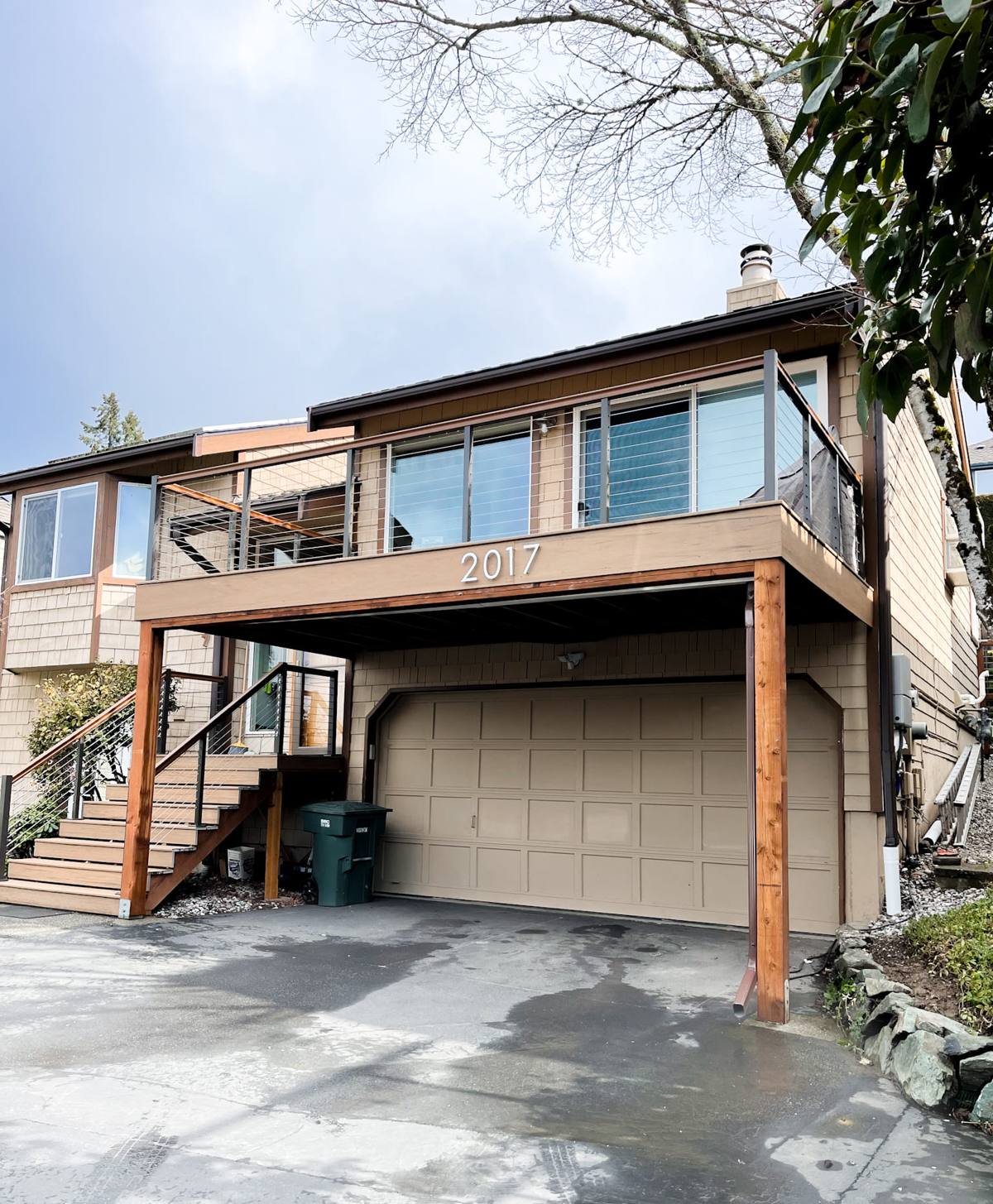
Why Whatcom County Weather Wears Decks Out Faster
Whatcom County doesn't get brutal freezes or blazing heat, but it gets something arguably harder on a deck: long stretches of damp, mild weather that never really dries things out. A few specific factors drive most of the deck failures we see around Sudden Valley:
- Driving rain and standing moisture — wind off the lake pushes rain sideways under railings and against ledger boards, and gaps between decking boards trap moisture instead of shedding it.
- Extended moss season — moss and algae hold water against wood surfaces for months at a time, well past what a dry summer week can undo. On shaded decks near trees, this can run nearly nine months of the year.
- Salt-tinged air — proximity to the water accelerates corrosion on fasteners, brackets, and any exposed metal hardware, which is often the real reason a deck starts to wobble before the boards themselves fail.
- Tree cover and debris — needles and leaf litter collect in board gaps and around posts, feeding rot in spots that are easy to overlook during a quick visual check.
None of this means a deck in Barkley can't last — it means the build has to be planned around these conditions instead of using a generic approach that works fine somewhere drier.
Signs a Deck Needs Replacing, Not Just Repair
Not every tired deck needs a full teardown. But there's a point where patching becomes false economy — you spend money keeping a structure alive that's still failing underneath. Here's how we tell the difference on a Barkley inspection:
Repair Might Be Enough If:
- Only a few boards show rot or splitting, and the frame underneath is solid
- Railings are loose but posts are still sound at the base
- Surface graying or moss staining with no soft spots when probed
Replacement Is the Honest Call If:
- A screwdriver sinks into the ledger board, joists, or posts with light pressure
- The deck flexes or bounces noticeably when walked on
- Multiple support posts show rot at or near ground contact
- Fasteners are heavily corroded or the connections have started to separate
- The structure predates current code requirements for ledger attachment and railing spacing
We'll tell you straight which category your deck falls into. There's no upside for us in replacing something that only needed a repair, and there's real risk in patching something that's structurally compromised.
What a Correct Deck Replacement Involves
A deck replacement is more than swapping old boards for new ones. Done properly, it's a structural project with a handful of steps that determine whether the new deck lasts 10 years or 25.
1. Tear-Off and Structural Assessment
We remove the old decking and inspect the framing, ledger connection, and footings underneath. This is where hidden rot around the house's ledger board or at post bases usually shows up — problems that were invisible from the surface.
2. Ledger and Flashing Correction
The ledger board — where the deck attaches to the house — is the single most common point of failure we find on older Sudden Valley decks. Older installations often lack proper flashing, which lets water track behind the siding and rot both the ledger and the wall framing behind it. We correct this with proper flashing and mechanical fastening rather than relying on the ledger board alone.
3. Footings and Framing
Posts and footings get checked against current code for size, depth, and spacing. In areas with poor drainage or heavy tree root systems, footing placement sometimes needs adjusting from the original layout.
4. Decking, Fasteners, and Hardware
This is where material choice matters most for long-term performance in this climate — covered in detail below.
5. Railings and Code Compliance
Railing height, baluster spacing, and stair guards get built to current code, which has tightened in most jurisdictions since many existing Barkley decks were originally built.
Decking Material Options for This Climate
There's no single "best" decking material — there's a best fit for your budget, maintenance appetite, and how much shade and moss exposure your specific lot gets. Here's how the common options actually compare for a moss-prone, damp property like most in Sudden Valley:
| Material | Moisture/Moss Resistance | Maintenance | Typical Lifespan |
|---|---|---|---|
| Pressure-treated wood | Good if sealed regularly; absorbs moisture if neglected | Annual cleaning and resealing recommended | 15-20 years with upkeep |
| Cedar | Naturally rot-resistant but still needs sealing in shaded, damp spots | Sealing every 1-2 years | 15-25 years with upkeep |
| Composite decking | Very good — doesn't absorb water or feed rot the way wood does | Occasional washing to clear moss/algae film | 25-30+ years |
| PVC decking | Excellent — fully synthetic, no organic material for moss to root into | Low; periodic washing | 30+ years |
Composite and PVC decking carry a higher upfront cost but generally make sense for shaded, tree-covered lots in Barkley where moss and standing moisture are a near-constant issue. For open, sunnier lots that dry out between rains, well-maintained wood remains a reasonable and less expensive choice. We'll walk your specific site with you and give an honest read on which category fits before you commit to a material.
A Note on Fasteners and Hardware
Given the salt-tinged air near the lake, we use hardware rated for coastal or high-moisture exposure rather than standard-grade fasteners. This is a small line item on a quote but it's often the difference between a deck that stays tight for two decades and one that starts showing rust streaks and loose connections within a few years.
Our Process for a Barkley Deck Replacement
- On-site assessment — we inspect the existing structure, ledger connection, footings, and note any drainage or shade issues specific to your lot
- Written estimate — clear scope, material options, and pricing with no vague allowances
- Permitting — we handle the permit and coordinate any required inspections, since deck work in this size range typically requires one
- Tear-off and disposal — old decking and framing removed and hauled off
- Structural rebuild — framing, ledger flashing, and footings corrected or replaced as needed
- Decking and railing install — installed to current code with corrosion-resistant hardware
- Final walkthrough — we go over the finished deck with you before calling the job done
Why a Crew That Already Works Sudden Valley Matters
A deck replacement isn't just carpentry — it's a judgment call at almost every step about how much this particular climate has already affected the structure. A crew that regularly works Barkley and the rest of Sudden Valley has seen the specific failure patterns this neighborhood produces: which ledger connections tend to be underbuilt, which lots hold moss longest, where drainage tends to pool around footings. That familiarity shortens the assessment, reduces surprises mid-project, and means the flashing and hardware choices are based on what actually holds up here — not on a generic spec sheet.
It also matters for permitting and code questions specific to Whatcom County, since requirements and inspection timelines are handled locally.
Maintenance Checklist to Extend Your New Deck's Life
Whatever material you choose, a little seasonal attention goes a long way in this climate:
- Sweep leaves and debris out of board gaps before fall rains set in
- Wash down moss and algae film in early spring before it gets a foothold
- Check railings and stair connections annually for looseness
- Reseal wood decking on the schedule appropriate to the product (typically every 1-2 years)
- Keep gutters and downspouts clear so runoff isn't draining directly onto or under the deck
- Trim back overhanging branches to reduce shade and debris buildup
Get a Straight Assessment
If your Barkley deck is showing soft spots, persistent moss, or loose railings, it's worth having someone look at it before another wet season goes by. We offer free, no-pressure estimates — we'll tell you honestly whether you're looking at a repair or a full replacement, and what it'll take to build something that actually holds up to this area's weather.