 Sudden Valley Exterior
 Roofing Built for Deming's Weather, Not Just Any Weather
Deming sits inland from Sudden Valley in the Nooksack River valley, tucked under heavy tree cover on the way toward Mount Baker. That setting is beautiful, and it's also hard on a roof. Homes here get less open wind than shoreline properties, but they pay for it in shade, needle and leaf litter, and slower drying times after every storm. Combine that with the driving rain that moves through this part of Whatcom County most of the year, plus a moss season that can run eight months or longer under a full tree canopy, and you have a roofing environment that punishes a poorly installed shingle roof much faster than it would in a drier, more open part of the state.
Asphalt shingle roofing is still the right call for most Deming homes — it's proven, repairable, and reasonably priced compared to metal or specialty materials. But "asphalt shingles" isn't a single product or a single installation method, and the difference between a roof that lasts its full rated life and one that fails early almost always comes down to details most homeowners never see: underlayment choice, ventilation, flashing work, and how the crew handles valleys and moss-prone shaded slopes.
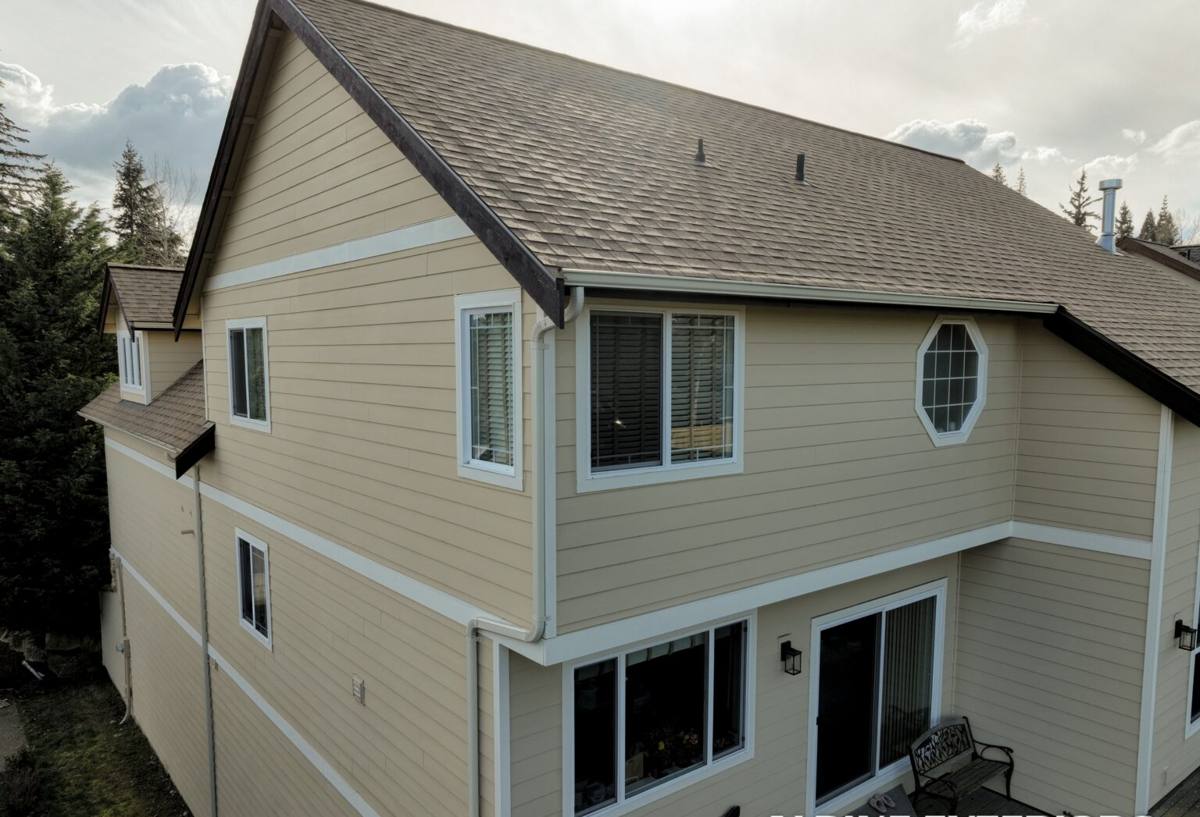
What Deming Homes Actually Need From a Shingle Roof
Moisture Management First
Between the driving rain typical of this region and the slower drying time under tree cover, moisture management matters more here than in drier climates. That means a proper underlayment system, correctly lapped and sealed, and ice-and-water shield in the valleys and around penetrations — not just at the eaves.
Ventilation That Actually Works
Shaded roofs stay damp longer, and damp roofs need airflow to dry out the decking from underneath. A shingle roof installed without balanced intake and exhaust ventilation will trap moisture against the underside of the deck, which shortens shingle life and can lead to sheathing rot long before the shingles themselves wear out.
Algae and Moss Resistance
Given how long moss season runs under Deming's tree canopy, algae-resistant (AR) shingles with copper or zinc granules are worth the modest upcharge on most jobs. They won't eliminate moss and moss and algae staining entirely, but they slow it down significantly compared to standard shingles, which buys homeowners real time between cleanings.
Signs a Deming Roof Needs Attention
- Moss growth concentrated on north-facing or heavily shaded slopes
- Granules collecting in gutters or at downspout outlets after rain
- Shingle edges curling, cupping, or lifting, especially on older roofs
- Dark streaking that doesn't wash off with light rinsing
- Soft spots or sagging felt underfoot when walking the roof (a sign of decking damage)
- Daylight visible through the roof deck from inside the attic
- Persistent moisture smell or visible water stains on interior ceilings
None of these on their own mean a full replacement is due. But they're worth a professional look, because moss and moisture problems on a heavily shaded Deming roof tend to progress faster than the same issue would on an open, sun-exposed roof elsewhere in the county.
What a Correct Installation Involves
A shingle roof is only as good as the layers underneath it. On every Deming installation, that means:
- Tear-off and deck inspection — removing old roofing down to the deck and replacing any soft, delaminated, or water-damaged sheathing before anything new goes down.
- Ice-and-water shield at eaves, valleys, and around all penetrations — the areas most exposed to standing water and driving rain.
- Synthetic underlayment across the full deck, correctly lapped to shed water downhill at every seam.
- Balanced ventilation — intake at the eaves, exhaust at the ridge, sized to the attic volume, not just whatever was there before.
- Proper flashing at chimneys, skylights, walls, and any roof-to-roof transitions, using new metal rather than reusing old flashing.
- Shingle installation with correct nailing pattern, exposure, and starter courses — the single biggest factor in whether a roof survives wind events and holds its manufacturer warranty.
Shingle Tiers Compared
| Tier | Typical Lifespan | Algae Resistance | Best For |
|---|---|---|---|
| 3-tab (economy) | 15–20 years | Limited unless AR-rated | Budget-driven projects, secondary structures |
| Architectural (standard) | 25–30 years | Good with AR granules | Most Deming homes — best balance of cost and durability |
| Premium/designer | 30–50 years | Best available | Heavily shaded, moss-prone roofs; longer-term owners |
For most Deming properties under tree cover, we steer homeowners toward architectural shingles with algae resistance as the baseline, not the upgrade — the shade and moisture load here make that resistance worth having rather than optional.
Our Process
We keep the process straightforward because roofing shouldn't be a mystery to the person paying for it:
- On-site inspection — we walk the roof (weather permitting) and check the attic, looking at deck condition, ventilation, flashing, and moss or moisture patterns specific to your property's shade and slope.
- Written estimate — a clear scope of work and price, with shingle options and any deck repair or ventilation work called out separately so you know what you're paying for and why.
- Scheduling around the weather — we work around rain windows rather than rushing a tear-off into an exposed deck overnight.
- Installation — full tear-off, deck repair as needed, underlayment, flashing, ventilation, and shingles, following manufacturer specifications to keep warranty coverage intact.
- Final walkthrough — we go over the finished roof with you, including gutter and downspout condition, before we consider the job done.
Moss, Shade, and Long-Term Maintenance
Even a correctly installed, algae-resistant shingle roof under heavy Deming tree cover will need periodic maintenance — that's the reality of a long moss season, not a sign something was done wrong. Soft washing (not pressure washing, which can strip granules and shorten shingle life) every couple of years, keeping gutters clear of needle litter, and trimming back overhanging branches where practical all extend a roof's real-world life well beyond what the shingles alone would manage. We're happy to talk through a maintenance schedule that fits your specific property and tree coverage.
What Affects the Cost
| Factor | Why It Matters |
|---|---|
| Roof size and pitch | More surface area and steeper slopes mean more material and labor time |
| Deck condition | Rotted or soft sheathing found during tear-off adds repair cost but is essential to fix before shingling |
| Number of valleys, penetrations, and flashing points | Each one takes extra time to detail correctly and is where most leaks originate |
| Shingle tier chosen | Economy, architectural, and premium products carry different material costs and lifespans |
| Ventilation upgrades | Adding proper intake/exhaust venting where none existed is a worthwhile add, not a padded line item |
| Access and site conditions | Tree cover, steep driveways, or tight lot access can affect staging and disposal logistics |
We don't quote a roof over the phone based on square footage alone — an accurate number requires seeing the actual deck condition, pitch, and detailing involved.
Why a Crew That Already Works Deming Matters
A roofer who mostly works open, sun-exposed roofs elsewhere in Whatcom County can still do competent general roofing work, but they may underestimate how aggressively moss and moisture behave under sustained tree shade, or under-spec ventilation for a deck that rarely gets a full day of sun. A crew that regularly works Deming and the surrounding wooded communities around Sudden Valley knows to plan tear-offs around rain windows common to this part of the county, to prioritize algae-resistant shingles as the default rather than the upsell, and to size ventilation for a roof that dries slower than one in an open field. That familiarity shows up less in the sales pitch and more in how the roof performs three, five, and ten years in.
Roofing Checklist for Deming Homeowners
- Confirm the estimate includes deck inspection and repair pricing, not just shingle installation
- Ask whether algae-resistant shingles are the default or an upcharge
- Verify ventilation will be assessed and corrected if undersized, not just replaced as-is
- Get flashing details in writing — chimneys, skylights, and valleys are the most common leak points
- Ask how tear-off timing will be handled if rain moves in mid-project
- Confirm what warranty coverage (manufacturer and workmanship) applies and what could void it
- Ask about a realistic moss and gutter maintenance schedule for your specific tree coverage
If your Deming roof is showing moss, granule loss, or you're just not sure how much life it has left, we're glad to take a look and give you a straight answer. Reach out below for a free, no-pressure estimate — there's no obligation, and you'll get a clear written scope before any work begins.