 Sudden Valley Exterior
 Deck Replacement Built for the Alger Climate
A deck around Alger doesn't fail the way a deck fails in a dry climate. Out here, the enemy isn't sun bleaching — it's water that never really stops, moss that never really goes dormant, and air that carries enough salt off the Sound to work on metal fasteners year-round. A deck that was built to a minimum-code standard fifteen or twenty years ago is often past due for full replacement, not another round of patching, and homeowners in the Alger area are usually surprised at how much of the failure is hidden underneath the boards rather than on the surface.
This page is specifically about full deck replacement for homes in and around Alger — not a general "decks" page. The framing, fastener choices, drainage details, and material picks that make sense here are shaped directly by this region's long wet season, and getting those details right the first time is the difference between a deck that lasts and one you're dealing with again in five years.
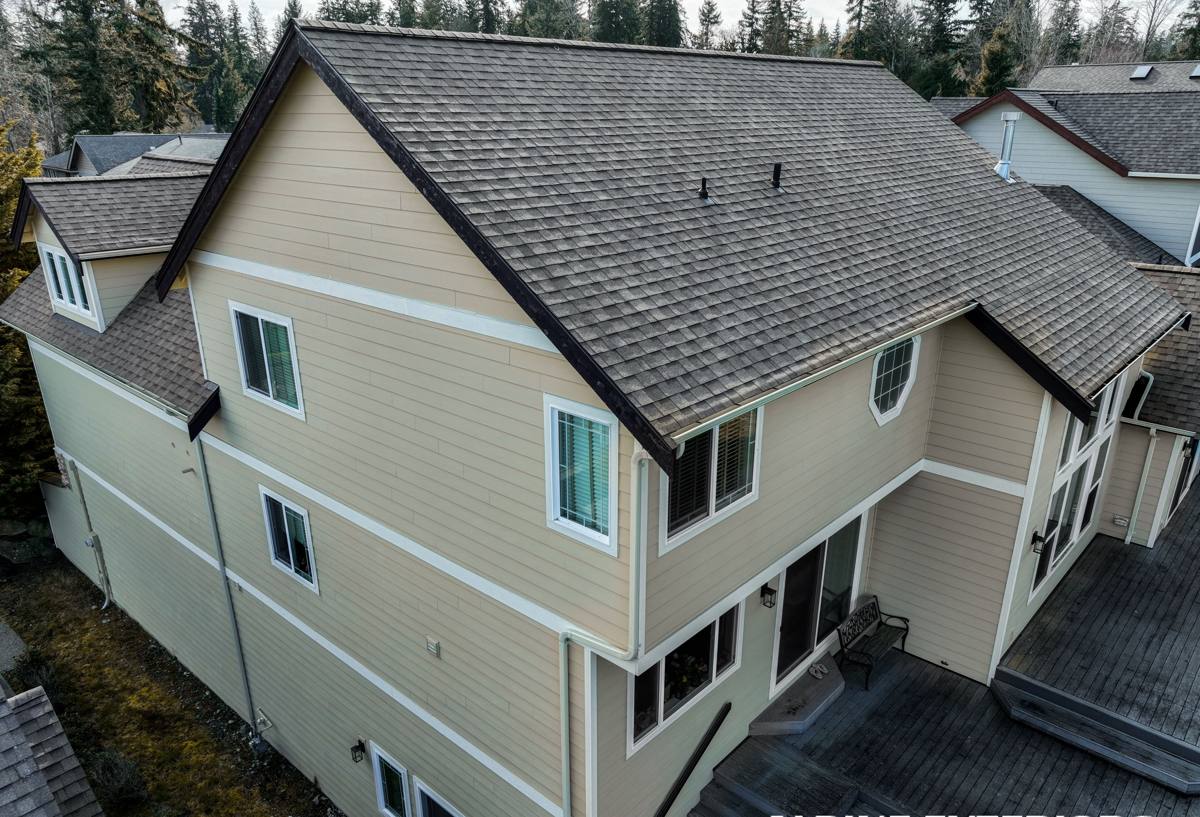
Why Local Decks Wear Out Faster Than Homeowners Expect
Three things drive deck failure in this part of Washington, and they compound each other:
- Driving rain — wind-driven rain gets pushed sideways into ledger connections, stair stringers, and end grain, not just straight down onto the top of the boards.
- Salt-influenced air — even at a distance from open water, airborne salt accelerates corrosion on lower-grade fasteners, joist hangers, and hidden hardware.
- A long moss season — shaded and north-facing decks stay damp for months at a stretch, which feeds moss and algae growth and keeps wood at a higher moisture content than it was ever designed to tolerate.
None of that means decks can't last here — plenty do, for decades. It means the build details that get skipped or corner-cut in a drier climate can't be skipped here, and a replacement done without accounting for those details will underperform no matter how good the decking material looks on day one.
Signs a Deck Needs Replacement, Not Repair
Repair makes sense when the problem is isolated — a cracked board, a loose railing baluster, a stair tread that's seen too much traffic. Replacement becomes the honest recommendation when the problems are structural or systemic. Common signs we look for:
- Soft, spongy, or spring-back decking, especially near the house or in shaded corners
- Rot or dark staining at the ledger board where the deck meets the house
- Rusted, streaking, or failing joist hangers and fasteners
- Persistent moss or slime on the walking surface even after cleaning
- Railings or posts that flex or feel loose under normal weight
- Gaps that have widened significantly between boards, or boards cupping
The ledger board connection deserves special mention. It's the single most common point of hidden failure on a deck, because it sits right against the house where water collects if flashing wasn't installed correctly — and it's the connection that keeps the whole deck attached to the structure. If we find rot there, that alone is usually enough to recommend replacement over repair.
Why Painting or Staining Over Problems Doesn't Fix Them
A fresh coat of stain can make a tired deck look presentable for a season, but it doesn't do anything for a soft joist, a rusted hanger, or a ledger board that's been absorbing water for years. If a deck is showing structural symptoms, cosmetic work just delays an honest conversation about replacement — and in the meantime the framing keeps deteriorating underneath.
What a Correct Deck Replacement Involves
A deck replacement done right in this climate goes well beyond swapping old boards for new ones. The parts that matter most are the parts you won't see once the project is finished:
Framing and Structure
Joists, beams, and posts are sized and spaced to current code for the actual span and load, not just matched to what was there before. Footings are set to the required depth for frost and load-bearing, and post bases are set up off grade contact so they aren't sitting in standing water.
Ledger Flashing
Where the deck attaches to the house, proper flashing — installed in the correct layered sequence with the house's water-resistive barrier — keeps water from tracking behind the siding and into the rim joist. This is the detail most responsible for long-term deck failure when it's missed, and it's non-negotiable on a correct rebuild.
Fasteners and Hardware
Given the salt-air exposure common to this area, we use fasteners and structural hardware rated for the environment — hot-dip galvanized or stainless steel connectors, and fasteners compatible with the treated lumber being used, so galvanic corrosion isn't accelerating failure from the inside.
Drainage and Airflow
Boards are spaced and the substructure is arranged so water sheds off the deck surface and doesn't pool underneath. Where a deck sits low to the ground or over a living space below, we talk through drainage options so moisture isn't trapped against the framing.
Choosing a Decking Material for This Climate
There's no single "best" decking material — there's a best material for a given budget, maintenance appetite, and how much shade and moisture that specific deck deals with. Here's how the common options actually compare for homes in a wet, moss-prone climate:
| Material | Upfront Cost | Maintenance | Moisture / Moss Behavior |
|---|---|---|---|
| Pressure-treated wood | $ | Needs regular cleaning and re-sealing | Absorbs moisture; prone to moss in shade without upkeep |
| Cedar | $$ | Regular sealing to hold color and resist checking | Naturally rot-resistant but still needs drainage and airflow |
| Capped composite / PVC | $$$ | Low — occasional washing | Doesn't absorb water into the board; still needs to be kept clear of standing debris |
Composite and PVC boards hold up well against moss staining because they don't take on moisture the way wood does, which is a real advantage in a shaded, wet yard. That said, we don't treat composite as an automatic upgrade for every project — it costs more up front, some products can still get slick with algae film if a deck never sees direct sun, and hidden-fastener systems have to be installed correctly or boards can loosen over time. We'll walk through the honest trade-offs for your specific site — sun exposure, budget, how long you plan to stay in the home — rather than push one product across the board.
Our Deck Replacement Process
- On-site assessment — we inspect the existing deck, ledger connection, footings, and framing to confirm replacement is the right call and identify any structural surprises early.
- Plan and material selection — we go over decking material, railing style, and any layout changes, and give you a clear, itemized estimate.
- Permitting — we handle the permit application where one is required based on the deck's size, height, and location.
- Demo and disposal — the old deck is removed and hauled off, including checking what's under it for hidden rot or damage to the house.
- Framing and flashing — new footings, framing, and ledger flashing are installed to code before any decking goes down.
- Decking and railings — boards and railing systems are installed per manufacturer spec, particularly for hidden-fastener composite systems.
- Final walkthrough — we go over the finished deck with you, including maintenance guidance specific to the material you chose.
Permits and Local Building Requirements
Most full deck replacements in this region require a building permit, particularly when the deck is attached to the house, elevated, or being rebuilt with a different footprint or footing layout. Requirements cover things like guardrail height, baluster spacing, stair geometry, and footing depth — all of which matter more in a wet climate because a code-compliant footing is also a footing less likely to shift as the ground saturates and freezes through the winter. We manage the permit process as part of the job so you're not chasing it down separately.
Living With a New Deck Through a Long Moss Season
Even a well-built deck in this climate benefits from a little seasonal attention, especially through the wetter months. A short, honest maintenance routine goes a long way:
- Sweep leaves and debris off the deck regularly, especially in fall — trapped organic matter is what feeds moss
- Rinse off algae or moss film before it gets a chance to stain the surface
- Keep gutters and downspouts clear so runoff isn't being dumped onto or near the deck
- Check railings and stair connections once a year for any looseness
- For wood decking, plan on re-sealing on the schedule the product actually calls for, not just when it looks dry
- Trim back vegetation that's keeping any part of the deck in permanent shade and damp
Why It Matters to Hire a Crew That Already Works This Area
Deck-building fundamentals are the same everywhere, but the details that keep a deck alive for decades are regional. A crew that already works in and around Alger and Sudden Valley knows which fastener grades hold up against the salt air, how footing depth needs to account for this area's saturated ground through the wet months, and where moss tends to take hold on a typical local lot layout. That's not something you get from a crew that mostly builds decks somewhere drier and treats this as a one-off job — it shows up in the flashing details, the hardware choices, and the material recommendations from day one.
If your deck is showing its age — soft spots, a stained ledger board, hardware that's rusting, or moss that never fully goes away — we're happy to take a look and give you a straight answer about whether repair still makes sense or it's time for a full replacement. Reach out for a free, no-pressure estimate using the form below.