 Sudden Valley Exterior
 Why a Deck in Acme Gets Built Differently
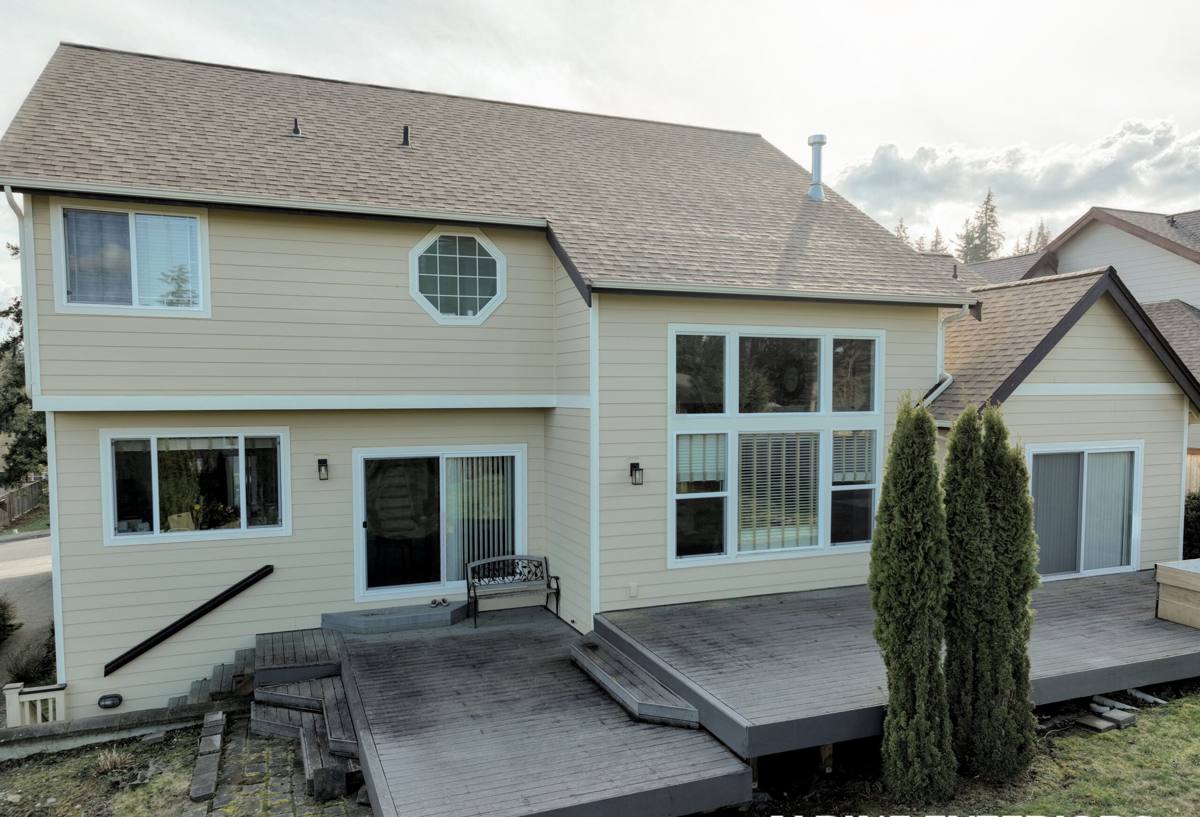
Acme sits back in the trees and hills of Whatcom County, away from open, sun-exposed lots and closer to the kind of forested, low-lying ground that holds moisture longer than you'd expect. A deck built here has to deal with shade cover, slower drying times after rain, and a moss season that can stretch across most of the fall and winter. None of that means a deck can't be built to last in Acme — it means the details that get skipped on an easy job matter a lot more on this one.
We're not describing a different product than what you'd get anywhere else. It's the same lumber, the same fasteners, the same basic structure every deck needs. What changes is how much attention goes into the parts that keep water moving instead of sitting: flashing, gaps, slope, and airflow underneath. Skip those and a deck in a place like Acme will show problems — soft spots, black streaking, spongy boards — years before one built the same way in a drier, more open spot.
What Acme's Setting Actually Demands From a Deck
Shade and Moss
Tree cover keeps a lot of Acme properties shaded for a large part of the day, especially in the low-sun months. Shade is pleasant to sit under and hard on a deck surface — it slows drying after every rain and gives moss, algae, and mildew a head start. Decking that's flat, tightly spaced, or has a rough grain pattern holds onto that moisture instead of shedding it, and that's where moss gets its foothold first.
Ground-Level Moisture
A lot of decks in this area sit low to the ground or step down off a walkout basement. Low decks trap humid air underneath them because there's not enough clearance for it to move. That trapped moisture is exactly what accelerates rot in joists and rim boards, even when the decking on top still looks fine.
Driving Rain
Whatcom County gets its share of wind-driven rain, and a deck attached to the house takes the brunt of it at the ledger board — the single most common point of water intrusion on any deck. Wherever a deck meets siding, water wants to find a way behind the cladding if the flashing isn't done correctly. This is a detail nobody sees once the project is finished, and it's also the one that causes the most expensive repairs when it's done wrong.
Choosing the Right Decking Material for This Climate
There's no single "correct" decking material — there's a correct material for your budget, your maintenance appetite, and how much shade and moisture your specific lot deals with. Here's how the common options actually perform in conditions like Acme's, honestly:
| Material | Upfront Cost | How It Handles This Climate | Maintenance | Typical Lifespan |
|---|---|---|---|---|
| Pressure-treated lumber | Lowest | Holds up structurally but needs sealing to resist moss and graying | Annual cleaning, periodic sealing | 15-20 years with upkeep |
| Cedar | Mid-range | Naturally moisture- and insect-resistant, but greys and can stain if neglected in shade | Regular cleaning, occasional staining | 15-25 years with upkeep |
| Composite decking | Higher | Doesn't rot, but can grow surface mildew in constant shade if not cleaned | Periodic washing, no sealing/staining | 25-30+ years |
| PVC/capped composite | Highest | Best moisture resistance of the group; sheds surface moss the easiest | Lowest — occasional washing | 30+ years |
We don't push one product on every job. A sun-exposed deck out in the open can do fine in cedar for decades with basic care. A shaded, low-clearance deck tucked under trees is where composite or capped PVC earns its higher price tag — less because the wood is bad, and more because the site conditions punish anything that holds moisture against its surface.
What's Underneath the Boards Matters More Than the Boards
Ledger Flashing
The ledger board — where the deck attaches to the house — needs proper metal flashing integrated with the house's weather-resistant barrier, not just caulked and bolted on. This is the single detail most likely to cause hidden rot behind siding if it's rushed.
Joist Protection
Every cut end and top edge of a joist should get a protective tape or coating before decking goes down. Framing lumber is treated on the outside, but any field cut exposes untreated wood right where water pools.
Footings and Frost Depth
Post footings need to go below the local frost line and bear on solid, undisturbed soil. On sloped or uneven Acme lots, that sometimes means deeper or stepped footings rather than a uniform grid, which is a site-specific call, not a one-size-answer.
Airflow and Drainage Underneath
Wherever height allows, we build in clearance and skirting that still lets air move. A sealed-in, low-clearance deck with no airflow is one of the more common reasons we see joist rot on inspection callbacks in this region.
Our Deck Building Process
- Site visit and design. We walk the property, look at slope, shade, drainage, and how the deck will tie into the house, then design to fit the lot rather than a standard template.
- Permitting. We handle the permit application and inspections required for the project so you're not chasing paperwork.
- Demo and site prep. Removal of any existing structure, grading as needed, and protecting the surrounding landscaping.
- Footings and framing. Footings poured to proper depth, framing built with protected joists and correctly flashed ledger attachment.
- Decking and railing installation. Boards and rail systems installed to manufacturer spec, with attention to gapping for drainage and expansion.
- Final walkthrough. We go over the finished deck with you, including how to care for the specific material you chose.
Permits and Whatcom County Requirements
Most new decks and any deck attached to a house or built above a certain height require a permit in Whatcom County, along with inspections at the framing stage. Setback requirements from property lines can also come into play depending on the parcel. We pull the permits and coordinate inspections as part of the job — it's not an upsell, it's part of building it correctly and keeping the structure covered under your homeowner's insurance and any future home sale disclosures.
What a New Deck Typically Costs in Acme
Deck pricing is driven by a handful of factors more than by size alone. Here's what actually moves the number:
| Cost Factor | Why It Matters |
|---|---|
| Size and shape | More square footage and more corners/angles both add labor and material |
| Height off the ground | Taller decks need more substantial framing, footings, and often stairs |
| Decking material | Pressure-treated to PVC composite can roughly double the material cost per square foot |
| Site access and terrain | Sloped or hard-to-access Acme lots can add equipment and labor time |
| Railing style | Cable, glass, and composite rail systems cost more than basic wood rail |
| Extras | Built-in seating, lighting, or a roof/cover add to both cost and timeline |
Because of that spread, a small, low, pressure-treated deck and a large, elevated composite deck with custom rail can differ by tens of thousands of dollars for what looks like "a deck" on paper. We'll walk through where your priorities are — budget, low maintenance, or long-term durability — and build a quote around that instead of a generic package.
Before You Call a Contractor
- Know roughly how you'll use the space (dining, lounging, hot tub, grilling) — it affects size and layout
- Note how much sun vs. shade the area gets through the day
- Think about how much maintenance you actually want to do each year
- Check whether there's a slope, drop-off, or drainage issue near the planned footprint
- Have a rough budget range in mind so material options can be filtered to fit it
Keeping a Deck Ahead of Moss Season
Even a well-built deck needs some seasonal attention in a climate like this one. A little maintenance goes a long way toward avoiding the slick, stained, or soft-spot problems that show up when moss and moisture are left alone all winter.
- Sweep leaves and debris off the deck regularly through fall — trapped organic matter is what moss and algae feed on
- Rinse or wash the surface before moss gets a chance to establish, especially in shaded corners
- Check that gaps between boards are clear so water can actually drain through, not pool on top
- Keep any skirting or under-deck areas ventilated rather than sealed tight
- Re-seal or re-stain wood decking on the schedule appropriate to that product — don't wait until it's visibly grey and dry
- Have fasteners, connectors, and railing hardware checked periodically for corrosion, especially anything not rated for wet exposure
Why Hiring a Crew That Already Works in Acme Matters
A deck built the same way everywhere doesn't perform the same way everywhere. A framing detail that's fine on an open, sunny lot in a drier part of the state can be the reason a deck in a shaded, low Acme yard needs joist repairs in half the time. Sudden Valley Exterior Co works this part of Whatcom County regularly, so the flashing details, footing depths, and material choices we make are based on what we've actually seen hold up — and what hasn't — on decks like the ones already sitting on this ground.
If you're planning a new deck or replacing one that's showing its age, we're happy to come take a look and talk through honest options for your specific lot. There's no pressure and no cost to get a straight answer — just fill out the form below and we'll set up a time to walk the site with you.