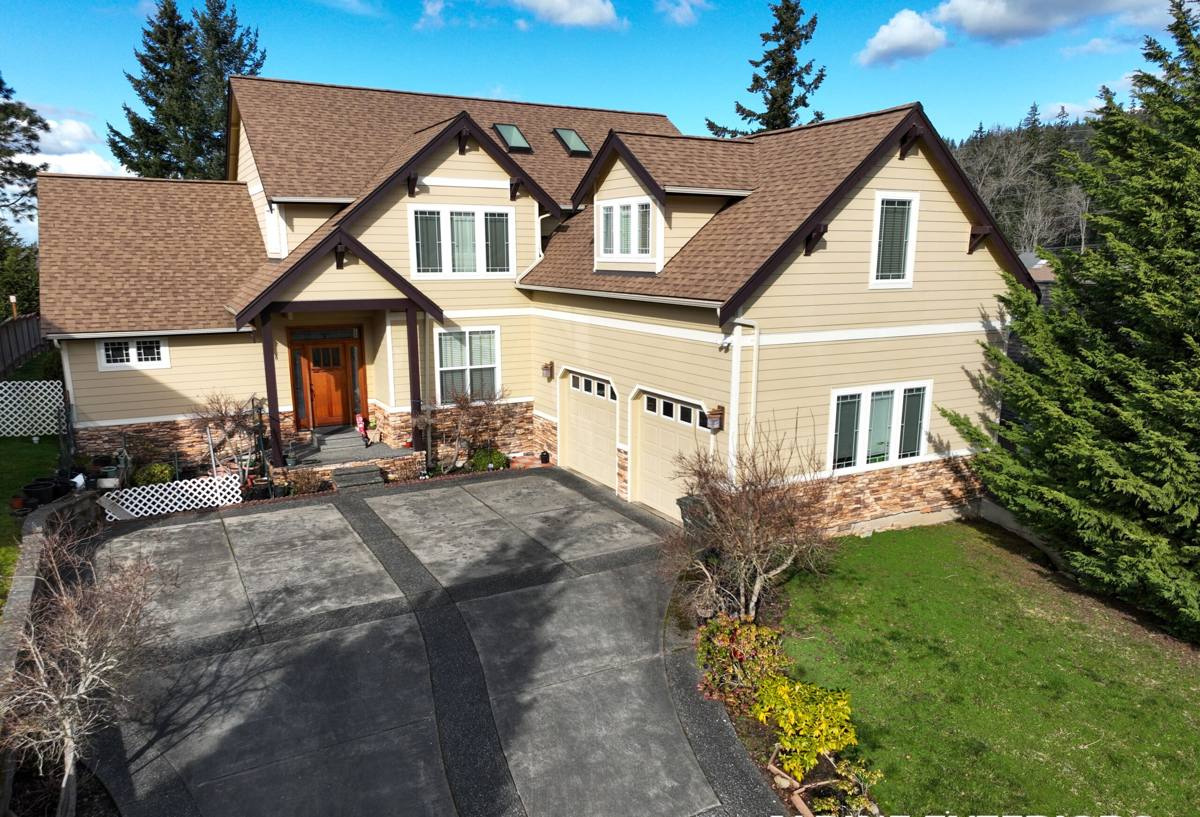
 Sudden Valley Exterior
 Why Decks Fail Faster in Sunnyland
Homes in and around Sunnyland deal with a specific combination of weather that most deck-building guides never mention: damp marine air moving off the water, long stretches of driving rain in fall and winter, and a moss season that can run from October through May. None of that is exotic for Whatcom County, but it is hard on wood, hard on fasteners, and hard on anything installed without proper drainage. A deck built for a drier inland climate will often show real trouble here in half the time.
The most common failure points we see aren't dramatic. They're slow: ledger boards that trap moisture against the house, joists that never fully dry between rain events, and surface boards that hold moss long enough for it to start breaking down the wood fiber underneath. By the time a deck looks obviously bad, the structure underneath has usually been compromised for a while.
Signs a Sunnyland Deck Needs Replacement, Not Repair
Not every tired-looking deck needs a full tear-out. But there's a point where patching boards is just delaying a bigger job — and spending money on repairs that won't outlast the underlying problem. Here's what tells us a deck has crossed that line:
- Soft or spongy spots in the decking surface, especially near the house or in shaded corners that stay damp longest
- Visible rot, dark staining, or fungal growth at the ledger board where the deck attaches to the house
- Posts or footings that have shifted, or a deck that feels less rigid than it used to underfoot
- Rusted, popped, or corroded fasteners — a common issue on older decks built before coated exterior screws were standard
- Moss or algae that returns within weeks of cleaning, which usually signals the wood underneath is staying wet longer than it should
- Railings that flex or feel loose, which is a safety issue as much as a cosmetic one
If a deck is showing two or more of these, especially structural ones like ledger rot or footing movement, replacement is almost always the more honest recommendation than a patch job that buys another season or two.
What a Correct Deck Replacement Actually Involves
It Starts Below the Surface
A deck replacement that's done right isn't just swapping old boards for new ones. The parts nobody sees — flashing, ledger attachment, joist spacing, and drainage — are what determine whether the new deck lasts 10 years or 25 in a climate like this one. We treat those as the actual job, not a formality on the way to the visible finish.
Key structural elements we address on every replacement:
- Ledger flashing: proper metal flashing and a drainage gap between the ledger and the house siding, so water sheds away instead of pooling against the wall
- Joist protection: joist tape or a comparable moisture barrier on top of framing lumber, which matters more here than in drier regions because framing rarely gets a long chance to fully dry out
- Footings and posts: checked or replaced to current frost and load requirements, not just reused because they look fine above ground
- Fastener selection: coated or stainless hardware rated for treated lumber contact, since standard fasteners corrode faster in persistent damp conditions
- Spacing and drainage: board gaps set to let water and debris pass through rather than collect, which also cuts down on the moss and algae buildup that's common under Whatcom County's tree cover
Whatcom County Permitting
Most deck replacements that involve structural changes — new footings, a larger footprint, or work near setback lines — require a permit through the applicable jurisdiction. Even straightforward like-for-like replacements sometimes need one depending on deck height and attachment to the home. We handle this as part of the job rather than leaving homeowners to sort it out, because skipping a required permit can create real problems at resale.
Choosing Materials for a Marine, Moss-Prone Climate
There's no single "best" decking material — there's a best fit for how a homeowner uses the deck, their maintenance appetite, and their budget. In Sunnyland's climate, moisture resistance and mold/moss resistance matter more than they would somewhere drier, so we weigh that heavily in the conversation.
| Material | Upfront Cost | Maintenance | Moisture/Moss Resistance | Typical Lifespan |
|---|---|---|---|---|
| Pressure-treated wood | Lowest | Annual cleaning + periodic sealing | Fair — needs upkeep to stay ahead of moss and rot | 10–15 years |
| Cedar | Moderate | Regular sealing/staining | Good natural resistance, but surface still needs care | 15–20 years |
| Capped composite | Higher | Occasional washing, no sealing | Very good — capped surface resists moisture and staining | 25–30 years |
| PVC decking | Highest | Minimal — occasional washing | Excellent — fully synthetic, doesn't absorb moisture | 30+ years |
We're upfront about the trade-offs. Wood is the lower up-front cost, but in a climate with this much sustained dampness, it asks for more consistent maintenance to avoid the rot and moss problems that shorten its life. Composite and PVC cost more initially but shift the long-term burden away from maintenance — that's often the right call for homeowners who want to enjoy the deck rather than manage it. Cedar sits in between: a good-looking, naturally rot-resistant option for people willing to stay on top of sealing.
Our Deck Replacement Process
1. On-Site Assessment
We inspect the existing deck's framing, footings, and ledger connection, not just the visible surface. This tells us what's actually driving the deterioration and whether it's isolated or structural.
2. Straightforward Scope and Pricing
We walk through material options, what's required by code for the specific property, and what it will cost — in plain terms, before any demolition starts.
3. Permitting and Scheduling
Where a permit is required, we handle the submission and inspection scheduling so the homeowner isn't managing that process on their own.
4. Tear-Out and Structural Rebuild
Old decking, framing, and any compromised footings come out. We rebuild the structure to current standards, including proper flashing and drainage details, before a single new board goes down.
5. Decking, Railing, and Finish Work
Surface materials and railings go in per the agreed spec, with attention to fastener placement and board spacing for long-term drainage.
6. Final Walkthrough
We go over the finished deck together, including any maintenance the chosen material will need going forward.
Why a Crew That Already Works Sunnyland Matters
Deck problems here don't look identical to deck problems in a dry inland climate, and a crew that mostly works elsewhere can miss the details that matter locally — like how aggressive the flashing and drainage detailing needs to be, or how much moss resistance actually matters for board selection under Whatcom County's tree cover and rainfall pattern. A crew that regularly works in and around Sudden Valley and Sunnyland has already seen how local decks age, which framing details hold up and which don't, and which materials are worth the added cost here versus areas with a drier, milder climate.
There's also a practical side: local crews know the permitting process for the jurisdictions covering this area, aren't guessing at typical footing depths for local soil and drainage conditions, and can respond quickly if something needs a follow-up visit after the job is done.
Maintaining a New Deck in This Climate
Even the best-built deck benefits from some basic seasonal attention, especially given how long moss season runs here. A little consistency goes a long way toward protecting the investment:
- Sweep off leaves and debris regularly in fall — trapped organic material is what feeds moss and algae growth
- Rinse or gently wash the surface a couple of times a year, more often in shaded or low-airflow areas
- Check railings and stair connections annually for looseness
- For wood or cedar decks, reseal on the schedule recommended for the specific product — don't wait until it visibly needs it
- Keep gutters and downspouts clear near the deck area so runoff isn't draining directly onto or under it
- Trim back overhanging branches where practical to cut down on shade and debris that keep the surface damp longer
What Replacement Typically Costs
Every deck is different, and final pricing depends on size, material choice, framing condition, and site access — but homeowners generally see costs scale with material tier and structural scope rather than square footage alone. A smaller deck rebuilt in pressure-treated wood will run well below a similarly sized deck rebuilt in PVC decking with upgraded railings. The honest starting point is always an on-site look, because two decks that look similar from the street can have very different framing conditions underneath.
If your deck in Sunnyland is showing wear, feels less solid than it used to, or you're just planning ahead before it becomes an issue, we're happy to take a look and talk through honest options. Reach out for a free, no-pressure estimate using the form below.