 Sudden Valley Exterior
 Storm Damage Roof Repair Built for Yew Street's Conditions
Yew Street sits inside Sudden Valley, and like the rest of this Whatcom County community, its roofs take a beating that flatter, drier regions never see. A single fall or winter storm system can bring driving rain sideways off Lake Whatcom, gusts strong enough to lift shingle tabs, and enough standing moisture to start moss growth within weeks. When a roof gets hit, the repair has to account for all of that at once — not just patch the visible damage and hope the rest of the roof holds.
This page covers what storm damage roof repair actually means for homes in this part of Sudden Valley: what the climate does to a roof over time, what a correct repair looks like, how our process works from first call to final inspection, and why it matters to hire a crew that already knows this neighborhood's roofs rather than one working from a general checklist.
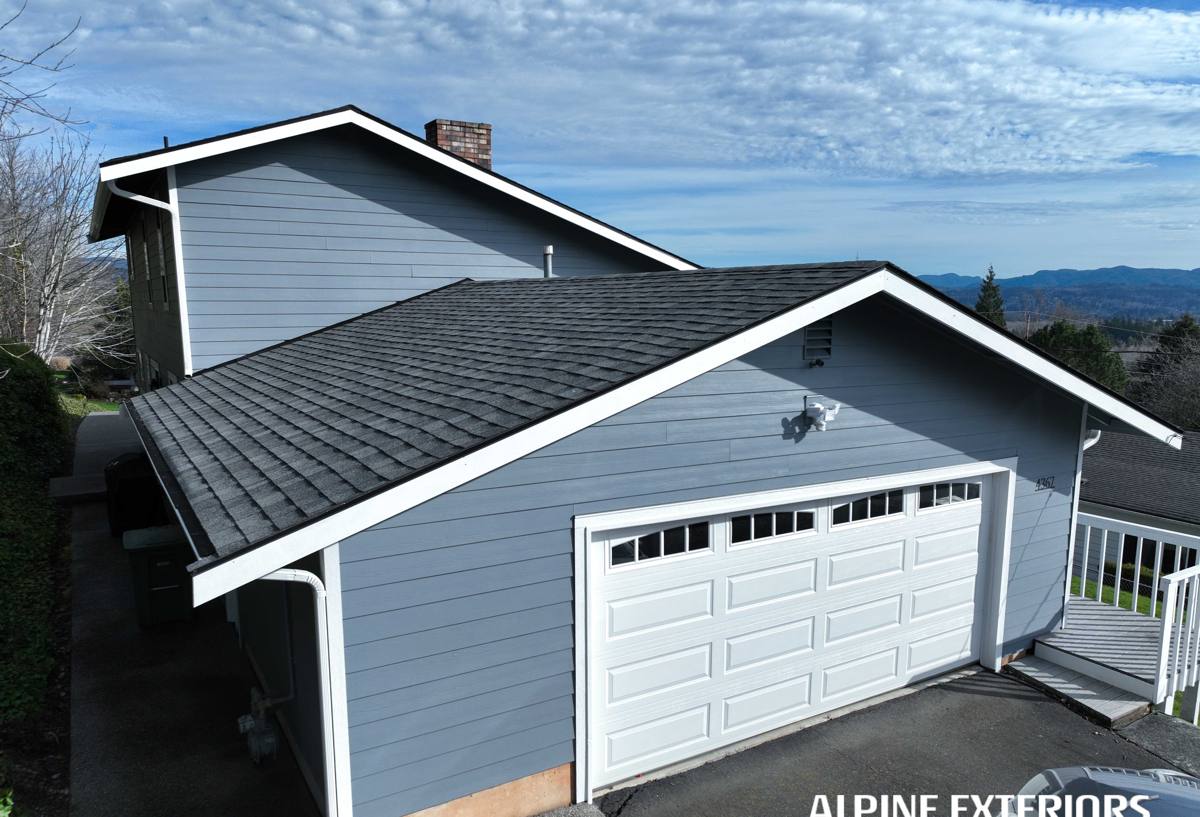
What Whatcom County Storms Actually Do to a Roof
Storm damage isn't always a dramatic hole in the roof deck. More often it's a combination of smaller failures that add up — and if only the obvious one gets fixed, the roof keeps leaking.
Wind and Driving Rain
Sustained wind lifts shingle edges and works them loose at the nail line, even when the shingle itself doesn't tear off. Once a tab is lifted even slightly, driving rain gets pushed underneath it instead of running off the surface. That's how a wind event from weeks ago shows up as a ceiling stain today — the water has been finding its way in through a lifted edge the whole time.
Moss and Prolonged Dampness
Sudden Valley's tree cover and long wet season mean roofs here rarely get a full day of direct sun in the winter months. Moss and algae take hold on north-facing slopes and anywhere debris collects, and once established, moss holds moisture against the shingle surface around the clock. That constant dampness accelerates granule loss and rot at the deck level — a slow form of damage that storm events tend to expose all at once when a already-weakened section finally fails.
Salt-Tinged Marine Air
The marine-influenced air common across Whatcom County carries enough salt content to accelerate corrosion on exposed metal — flashing, fasteners, gutter hardware, and vent caps. A storm repair that reuses corroded flashing or under-spec fasteners is a repair that fails again within a season or two, especially on a roof already softened by moss and moisture.
Signs Your Yew Street Roof May Have Storm Damage
Some damage is obvious from the ground. Most of it isn't. After any significant wind or rain event, it's worth checking for the following before assuming everything is fine:
- Shingle granules collecting in gutters or at the base of downspouts
- Lifted, curled, or missing shingle tabs, especially on the side facing prevailing wind
- Dented or dislodged flashing around chimneys, skylights, and roof-to-wall transitions
- New or spreading ceiling stains, especially near exterior walls or chimneys
- Moss buildup that has thickened noticeably since the last dry season
- Sagging or soft spots felt when walking the attic near the roof edge
- Debris — branches, needles, cones — packed into valleys where water is supposed to run freely
- Gutters pulling away from the fascia or overflowing during moderate rain
Any one of these on its own might be minor. Two or three together after a storm usually means water has already found a way past the roof surface, even if there's no visible leak yet.
What a Correct Storm Damage Repair Involves
A storm repair that's done right addresses the cause of the failure, not just the symptom. That means a few things have to happen in sequence, every time.
A Full Inspection First, Not Just a Patch
Before any material goes back on the roof, the whole slope gets checked — not just the spot where the leak showed up inside the house. Water travels along the deck and underlayment before it drips through the ceiling, so the entry point is often several feet from where the stain appears. Skipping this step is the most common reason a "repaired" roof leaks again in the next storm.
Matching Materials, Not Just Available Materials
Shingle color, profile, and granule blend change between manufacturing runs, so an older roof section won't perfectly match new material bought off the shelf. A correct repair blends the new shingles into the existing field as closely as possible and, where a full match isn't realistic, uses a transition point that won't stand out or create a water-shedding problem at the seam.
Flashing and Underlayment Get Replaced, Not Reused
Given how quickly local air corrodes exposed metal, any flashing that was disturbed by the storm gets replaced rather than bent back into place. Underlayment beneath the damaged section is replaced as well — reused underlayment that's already absorbed moisture won't reliably shed water again.
Ventilation and Moss Conditions Get Addressed
If moss or poor attic ventilation contributed to the failure, that gets flagged and discussed as part of the repair — not left for the homeowner to discover the same problem again next winter.
Repair vs. Replace: What Actually Drives the Decision
Not every storm-damaged roof needs full replacement, and not every roof can be safely patched. The honest answer depends on a handful of factors, laid out here so you know what we're actually evaluating on-site.
| Factor | Favors Repair | Favors Replacement |
|---|---|---|
| Roof age | Under 10–12 years, otherwise sound | Nearing or past expected shingle lifespan |
| Extent of damage | Isolated to one slope or section | Spread across multiple slopes |
| Deck condition | Solid, no soft spots found | Rot or soft decking discovered underneath |
| Moss/algae history | Light, manageable buildup | Heavy, long-term moss with granule loss |
| Material availability | Close match available | Discontinued or heavily weathered shingle |
| Insurance scope | Claim limited to storm-specific damage | Adjuster approves full slope or full roof |
In practice, most storm calls we see on established Sudden Valley homes are legitimate repairs — the roof structure is sound, and the damage is confined to what the storm actually touched. Replacement gets recommended when the inspection turns up pre-existing wear that the storm simply exposed rather than caused.
How the Repair Process Works
- Initial contact and scheduling — describe what happened and what you're seeing; we prioritize active leaks and exposed decking ahead of cosmetic damage.
- On-site inspection — a full walk of the roof, attic check where accessible, and photo documentation of every affected area, not just the obvious one.
- Written scope and estimate — what needs repair, what materials will be used, and a clear price range before any work starts.
- Temporary protection if needed — tarping or emergency sealing for active leaks while materials are sourced or weather clears enough to work safely.
- Repair work — damaged shingles, flashing, and underlayment removed and replaced correctly; surrounding areas checked for related wear.
- Final walk-through — we show you what was done and what to watch for, especially if moss or ventilation issues were noted but fall outside the storm repair scope.
Insurance Claims and Documentation
Most storm damage claims live or die on documentation. We photograph damage before and after repair, note the likely cause (wind, impact, prolonged moisture), and provide a written scope that adjusters can work from. We don't inflate a scope to chase a bigger payout, and we don't shrink one to make a job look cheaper than it is — the goal is an accurate record that holds up if the claim gets questioned. If you're not sure whether damage is claim-worthy, that's a reasonable first question to ask us during the inspection rather than guessing on your own.
Why a Crew That Already Works Yew Street Matters
Roofing crews that work the same neighborhoods repeatedly build a working sense of which roof ages, slopes, and tree coverage patterns tend to fail first in this specific stretch of Sudden Valley. That's not a substitute for a thorough on-site inspection, but it does mean fewer surprises — we already know, roughly, what a storm does to homes with this much tree canopy and this much lake-driven wind exposure, and we check for it as a matter of course rather than an afterthought. It also means a shorter response time after a storm, since we're not driving in cold from outside the area during the exact week every roofer in the county is booked solid.
Maintenance That Reduces Storm Damage Between Now and the Next One
Storm damage repair fixes what already happened. A few maintenance habits reduce how much damage the next storm causes:
- Clear gutters and valleys before the fall wet season starts, not after the first storm
- Trim back branches that overhang the roofline to reduce debris buildup and moss spread
- Have moss physically removed rather than just chemically treated on heavily shaded slopes
- Check attic ventilation periodically — poor airflow speeds up moisture damage from the inside
- Address small flashing or shingle issues as soon as they're noticed, before the next storm finds them
None of this eliminates storm risk in a climate like this one, but it narrows the gap between "storm caused minor wear" and "storm caused a leak."
Get an Honest Look Before Winter Weather Sets In
If a recent storm has you wondering about your roof, or you just want a second opinion before committing to a repair someone else quoted, we're happy to take a look. The estimate is free, there's no pressure to book anything on the spot, and you'll get a straight answer about whether you're looking at a repair, a partial replacement, or nothing urgent at all. Use the form below to get started.