 Sudden Valley Exterior
 Sehome's Climate Is Harder on Siding Than It Looks
Homes in and around Sehome and Sudden Valley sit in one of the wetter, mossier corners of Whatcom County. The combination of marine-influenced salt air, long stretches of driving rain, and a moss season that can run from fall through spring puts real, ongoing stress on exterior siding. It's not one dramatic storm that causes the damage — it's the cumulative effect of hundreds of wet-dry cycles a year, shaded lots that never fully dry out, and wind-driven rain that finds its way into every gap and seam a builder left loose.
Siding here isn't just a cosmetic layer. It's the primary barrier standing between your framing and a climate that stays damp for months at a time. When that barrier is the wrong material, poorly installed, or both, the consequences show up as rot, mold, and expensive repairs — usually a few years after the original installer is long gone.
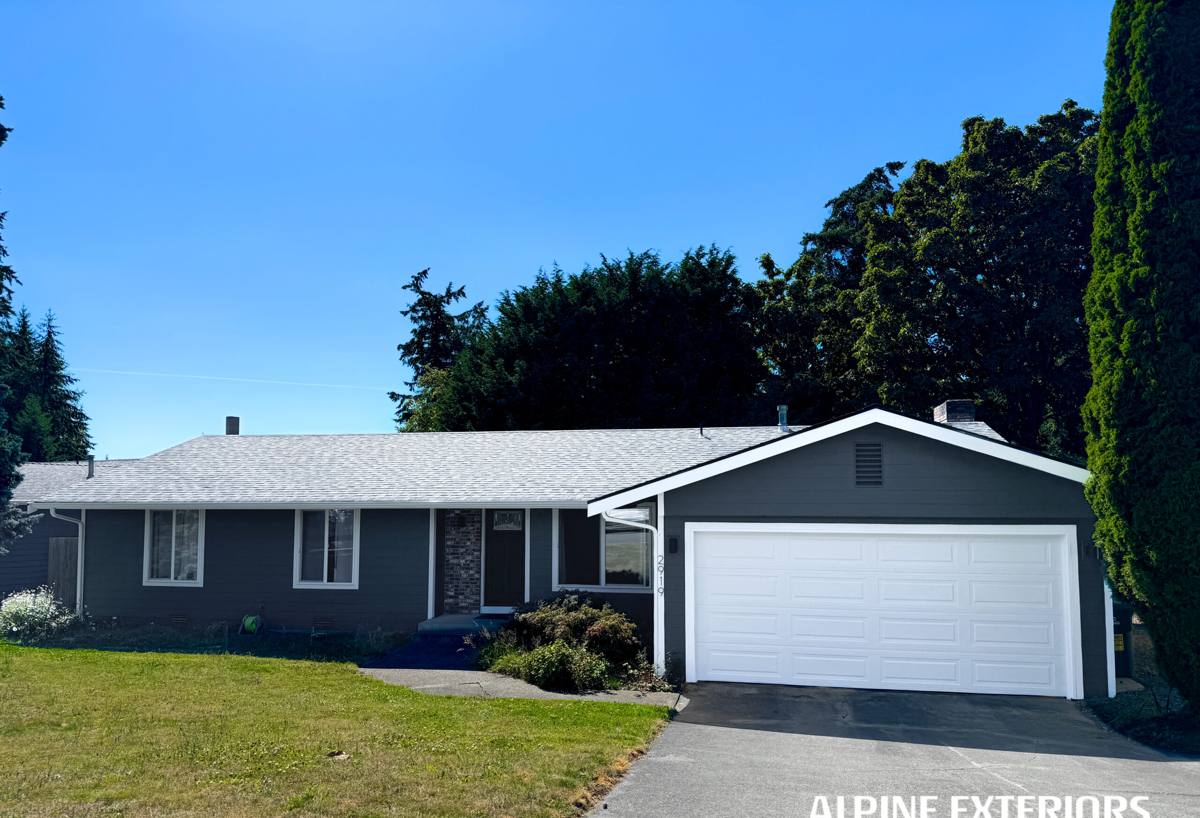
What Happens When the Wrong Siding Meets This Environment
We see the same failure patterns repeat across Whatcom County homes, and they're almost always tied to material choice or installation shortcuts rather than bad luck.
- Vinyl siding handles rain fine on its own, but it moves with temperature swings, and its seams and J-channels are exactly where wind-driven rain likes to work its way behind the panel. Once moisture gets behind vinyl, there's often no drainage path built into the original install.
- Wood-based composite products like LP SmartSide are engineered wood — meaning they can swell, delaminate, or wick moisture at cut edges and panel seams if caulking and paint maintenance ever fall behind. In a climate with this many wet months, that maintenance window is smaller than most homeowners expect.
- Cedar and other raw wood siding looks great new, but it needs refinishing on a real schedule to keep water out, and its grain texture is an easy surface for moss and algae to colonize in shaded, damp locations.
None of these are "bad" products in every climate. They're products whose weak points line up directly with the conditions Sehome and Sudden Valley homes deal with every year — which is a big part of why we standardized on one material instead of offering all of them.
What a Correct Siding Installation Actually Involves
Siding failures are rarely about the panel itself — they're about what's underneath it and how it was fastened. A correct installation includes several layers most homeowners never see once the job is done:
The water management system
A weather-resistant barrier goes on the sheathing first, with every seam properly lapped and taped so water sheds downward and outward instead of tracking behind the wall assembly. Flashing goes over every window, door, and horizontal trim transition — and critically, kickout flashing gets installed anywhere a roofline meets a wall, which is one of the most common places we find hidden rot on older homes in this area.
Fastening and clearance
Fiber cement siding has a manufacturer-specified fastener pattern, nailing zone, and minimum gap requirements at the bottom edge, around penetrations, and where siding meets a deck, patio, or grade. Skipping these clearances is one of the most common corner-cutting we see on siding installs — it looks fine on day one and causes moisture intrusion two or three winters later.
Joint and caulk treatment
Every butt joint, corner, and trim intersection needs the correct sealant, applied to the manufacturer's spec — not just enough caulk to make it look finished. This is a small detail that determines whether your siding is actually watertight or just looks watertight.
Why We Install Only James Hardie Fiber Cement
We made a deliberate decision to install one siding system rather than offer a menu of options: James Hardie fiber cement. It's non-combustible, which matters for both safety and insurance considerations, and it's manufactured in HardieZone formulations engineered for specific climate demands rather than a one-size-fits-all product. For the Pacific Northwest's wet, moss-heavy conditions, that engineering matters more than it does in a dry climate.
The factory-applied ColorPlus finish is also a real advantage here, not a marketing point. Because the color and protective coating are baked on at the factory rather than field-painted, the finish holds up more consistently against the repeated wet-dry cycling and moss growth this area produces, and it comes with a longer, transferable warranty on both the substrate and the finish. That warranty only holds up, though, when the installation itself is done correctly — which is why we treat installation standards as seriously as material selection.
Our Installation Process
The process is the same whether we're working on a house that's due for a full replacement or new construction:
- Walk-around assessment. We look at existing siding condition, trim, flashing, roofline intersections, and anywhere moisture has clearly been a problem historically.
- Tear-off and sheathing inspection. Old siding comes off and we check the sheathing underneath for soft spots or rot before anything new goes on — this step catches problems a surface inspection can't.
- Weather barrier and flashing. A new weather-resistant barrier and complete flashing package go in around every window, door, and roof-to-wall transition.
- Hardie installation to spec. Panels or lap siding go up following James Hardie's fastening, clearance, and joint-treatment requirements for this climate zone.
- Trim, caulk, and finish detail. Corners, trim boards, and joints get sealed correctly, and factory finish touch-up is handled per manufacturer guidance rather than generic field paint.
- Final walk-through and cleanup. We review the completed work with the homeowner and clear the site.
Signs Your Sehome Home May Need New Siding
Because moisture damage in this climate develops slowly and often behind the siding itself, it's worth knowing the early warning signs before they become structural problems:
- Paint that's bubbling, peeling, or won't hold a fresh coat
- Soft or spongy spots when you press on the siding
- Persistent moss, algae, or dark staining that returns shortly after cleaning
- Visible warping, cupping, or cracking in individual boards or panels
- Gaps opening up at trim, corners, or where siding meets windows and doors
- A noticeable jump in heating costs with no other explanation
- Musty smells near exterior walls, especially in rooms on the shaded side of the house
Any one of these on its own isn't necessarily an emergency, but two or more together usually means water has already found a way behind the siding.
What Siding Installation Costs and What Drives the Price
Every home is different, but the same factors move the price up or down on almost every siding project we quote:
| Cost Factor | Why It Matters |
|---|---|
| Home size and wall complexity | More square footage and more corners, gables, and trim details mean more labor and material |
| Tear-off vs. new construction | Removing and disposing of old siding, and repairing any sheathing rot found underneath, adds time before new siding can go on |
| Siding profile chosen | HardiePlank lap siding, HardiePanel, and HardieShingle carry different material and labor costs |
| Trim and accessory scope | Full trim replacement, soffit and fascia work, and custom detailing add to the project beyond the field siding itself |
| Site access and roof lines | Steep sites, multiple stories, or complex roof-to-wall intersections increase labor and staging time |
Anyone quoting a full siding replacement without walking your property first is guessing. A firm number should come after an on-site look at your home's actual condition and trim scope.
Why It Matters to Hire a Crew That Already Works in This Area
Siding installed correctly in a dry climate can still fail here if the crew doesn't account for what Whatcom County actually throws at a house — sustained wind-driven rain, extended damp shoulder seasons, and shaded, tree-covered lots that hold moisture longer than open sites. A crew that regularly works Sehome and Sudden Valley homes has already seen where local houses tend to leak, which roof-to-wall details need extra attention, and how much clearance and ventilation actually holds up here versus what a spec sheet says in theory.
That local track record also matters after the job is done. Fiber cement siding installed to spec should need very little attention for years, but if a question ever comes up about a warranty item or a detail near a trim line, it helps to be working with a crew that's still local and still doing this work in your neighborhood — not a company that moved on to the next region.
Caring for Your New Siding
James Hardie siding installed correctly is low-maintenance, not no-maintenance. A yearly rinse-down removes the pollen, dust, and early moss spores before they take hold, especially on shaded or north-facing walls. It's worth doing a visual check of caulking at trim joints and penetrations every year or two, since caulk is the one component that wears out well before the siding itself does. Keeping shrubs and tree branches trimmed back from exterior walls also helps — in this climate, anything blocking airflow and sunlight along a wall extends how long that surface stays damp after a storm, which is exactly the condition moss needs to establish itself.
If you're weighing a siding replacement or just want a straight answer on what your home actually needs, we're happy to take a look and put together a free, no-pressure estimate — no obligation either way.