 Sudden Valley Exterior
 Siding Installation in Columbia, Sudden Valley
The Columbia area of Sudden Valley sits in one of the wetter, greener corners of Whatcom County, and that setting is hard on exterior siding. Homes here live under heavy tree canopy for much of the year, sit close to Lake Whatcom, and take on the marine-influenced air that moves inland off the Salish Sea. That combination means moisture doesn't just fall on a house here — it lingers on it. Siding installed without that reality in mind tends to show problems years before it should: soft spots at the bottom courses, streaking and moss growth on north-facing walls, and paint or coating failure long before the manufacturer's warranty period is up.
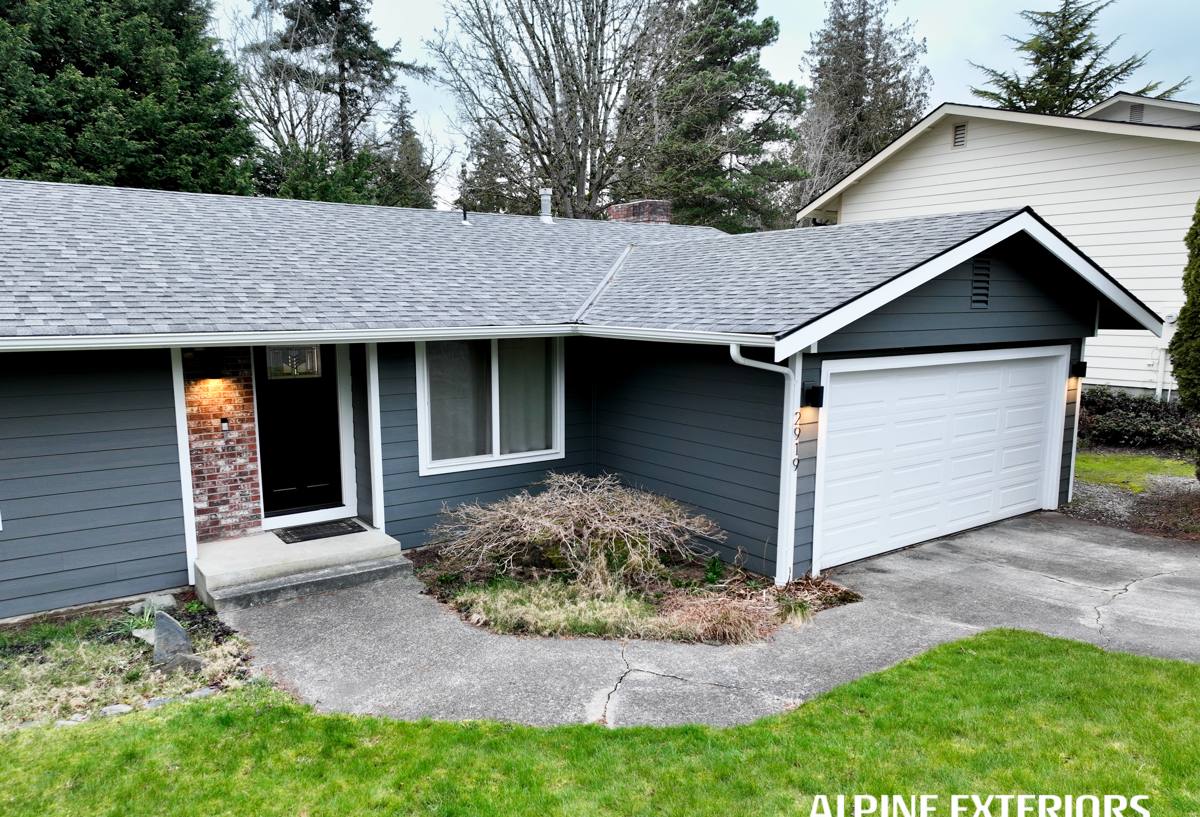
This page is about one job, done right, in one place: installing siding on a Columbia home built to hold up against local conditions, not a generic install pulled from a warmer, drier climate zone.
What Columbia's Climate Actually Does to Siding
Moisture that doesn't dry out fast
Between tree cover, lake proximity, and the marine air common to Whatcom County, siding in Columbia spends more of the year damp than siding in most inland climates. Products that rely on a factory paint film or a field-applied coating to keep water out are more exposed here, because that film is under near-constant stress from standing moisture rather than the occasional rain event.
Moss and organic growth
A long moss season is one of the defining features of siding maintenance in this part of the state. Moss holds moisture against the wall assembly, and on siding that isn't dimensionally stable or properly sealed at the edges, that trapped moisture is what eventually causes swelling, delamination, or rot at the substrate behind the siding — not the moss itself, but what the moss lets sit against the wall.
Driving rain and wind-driven wetting
Storms moving through Whatcom County frequently drive rain sideways into exposed walls rather than letting it run straight down. That means laps, seams, and penetrations (hose bibs, vents, light fixtures) take on water pressure that a purely vertical-rain assumption doesn't account for. Flashing details and lap coverage matter more here than in calmer climates.
Salt-influenced air
While Columbia isn't oceanfront, the marine air that reaches inland from the Salish Sea carries enough salt content to accelerate corrosion on fasteners, trim flashing, and any metal components in the wall assembly. Over a couple of decades, that adds up on a house that wasn't detailed with corrosion-resistant hardware from the start.
What a Correct Siding Installation Involves
A siding job is only as good as what's underneath it and how the details are executed. For a Columbia home, that means:
- A continuous, correctly lapped weather-resistive barrier behind the siding — not just wrapped, but shingled properly so water sheds outward at every seam
- Proper flashing at every window, door, deck ledger, and penetration, integrated with the weather barrier rather than caulked over the top of it
- Correct fastener type, spacing, and depth for the specific siding product — under- or over-driven fasteners are one of the most common causes of early siding failure
- Manufacturer-specified clearances at the bottom of the wall, at grade, at roof lines, and at decks — tight clearances trap moisture exactly where Columbia's climate already keeps things damp longest
- Back-priming and factory-finished edges wherever field cuts occur, so cut ends aren't left absorbing water
- Corrosion-resistant fasteners and flashing metals appropriate for the area's marine-influenced air
Skipping any one of these doesn't usually show up in year one. It shows up in year five or eight, as a callback that costs far more to fix than it would have to do correctly the first time.
Why We Install Only James Hardie Fiber Cement
We made a deliberate decision to install James Hardie fiber cement siding exclusively, and not vinyl, not LP SmartSide, not Cemplank or Allura, not primed spruce or cedar. That's not a marketing position — it's a practical one, shaped directly by climates like Columbia's.
Fiber cement doesn't rely on an organic wood fiber core that can swell, soften, or feed rot when moisture gets past the surface, the way engineered wood products can. It doesn't soften or deform under sustained heat and moisture cycling the way vinyl can. And unlike bare or site-primed wood products, Hardie's ColorPlus factory finish is baked on under controlled conditions and backed by a real finish warranty, so homeowners aren't relying on a field-applied coat of paint to be the only thing standing between the siding and Whatcom County's wet season.
Hardie also engineers specific product lines (its HZ5 line, for example) for harsher moisture climates, which is a meaningfully different approach than a one-size-fits-all siding product. For a house in Columbia dealing with moss, standing moisture, and driving rain, that climate-specific engineering is the difference between siding that ages gracefully and siding that needs attention every few years.
Our Process for a Columbia Siding Installation
1. On-site assessment
We walk the exterior, check the existing wall assembly where accessible, and identify moisture-prone areas specific to the lot — tree shading, north-facing walls, low clearance points, and existing moss or staining patterns.
2. Tear-off and substrate check
Old siding comes off cleanly, and we inspect the sheathing underneath for any soft spots or existing moisture damage before anything new goes up. This step is where problems that have been hiding for years actually get found and fixed.
3. Weather barrier and flashing
A new, continuously lapped weather-resistive barrier goes on, with flashing integrated at every window, door, and penetration before the siding starts.
4. Hardie installation to spec
Panels or planks go up with manufacturer-specified fastener patterns, clearances, and joint treatment, factory edges oriented correctly, and any field cuts back-primed.
5. Trim, caulking, and final detailing
Corners, trim boards, and penetrations get sealed with products appropriate for the assembly, not just caulked over gaps as a shortcut.
6. Final walkthrough
We review the finished work with the homeowner, point out any maintenance basics specific to a shaded, moss-prone lot, and make sure everything's documented for warranty purposes.
What Drives Cost on a Columbia Siding Job
| Factor | Why It Matters Locally |
|---|---|
| Extent of substrate repair needed | Homes with long-deferred maintenance in a wet, shaded lot often have hidden sheathing damage once old siding comes off |
| Wall height and access | Multi-story walls and steep lots (common around the lake) affect scaffolding and labor time |
| Trim and detail complexity | Homes with more windows, dormers, and roof intersections require more flashing and cutting labor |
| Siding profile and finish selected | Lap width, texture, and ColorPlus finish choice affect material cost per square foot |
| Tear-off scope | Full removal of old siding versus partial re-side affects both labor and disposal cost |
| Site access for trees and slope | Tree-heavy, sloped lots common in Sudden Valley can add setup and cleanup time |
We give homeowners a real, itemized estimate after seeing the specific house — broad ranges without an on-site look aren't useful, and we don't quote that way.
Signs a Columbia Home May Need New Siding
- Visible moss or persistent green staining on north- or shade-facing walls
- Soft or spongy areas when you press on siding near the bottom of the wall or below windows
- Paint that's peeling, bubbling, or chalking heavily rather than fading evenly
- Gaps opening up at seams, corners, or trim joints
- Visible warping, cupping, or separation of boards from the wall
- Rising utility bills that may point to a failing weather barrier behind the siding
- Siding that's original to a home built more than 20-25 years ago and has never been replaced
Why Hiring a Crew That Already Works Columbia and Sudden Valley Matters
Siding installation isn't a one-size-fits-all trade. A crew that mostly works dry, open lots in a different climate zone doesn't have the same instinct for where water actually collects on a shaded, lake-adjacent lot in Whatcom County. Knowing which walls in this area take the worst of the driving rain, which lots hold moisture longest under tree cover, and which flashing details matter most for a long moss season isn't something you learn from a manual — it's something you learn from doing the work here, repeatedly, and seeing what holds up and what doesn't over years.
We're a local crew, working in Sudden Valley and the surrounding Whatcom County area, installing one product system we stand behind because we've seen how it performs against exactly this kind of climate.
Get a Free Estimate for Your Columbia Home
If your siding is showing moss, staining, soft spots, or is simply due for replacement, we're glad to take a look and give you a straightforward, no-pressure estimate for a James Hardie installation built for Columbia's climate. Use the form below to get started.