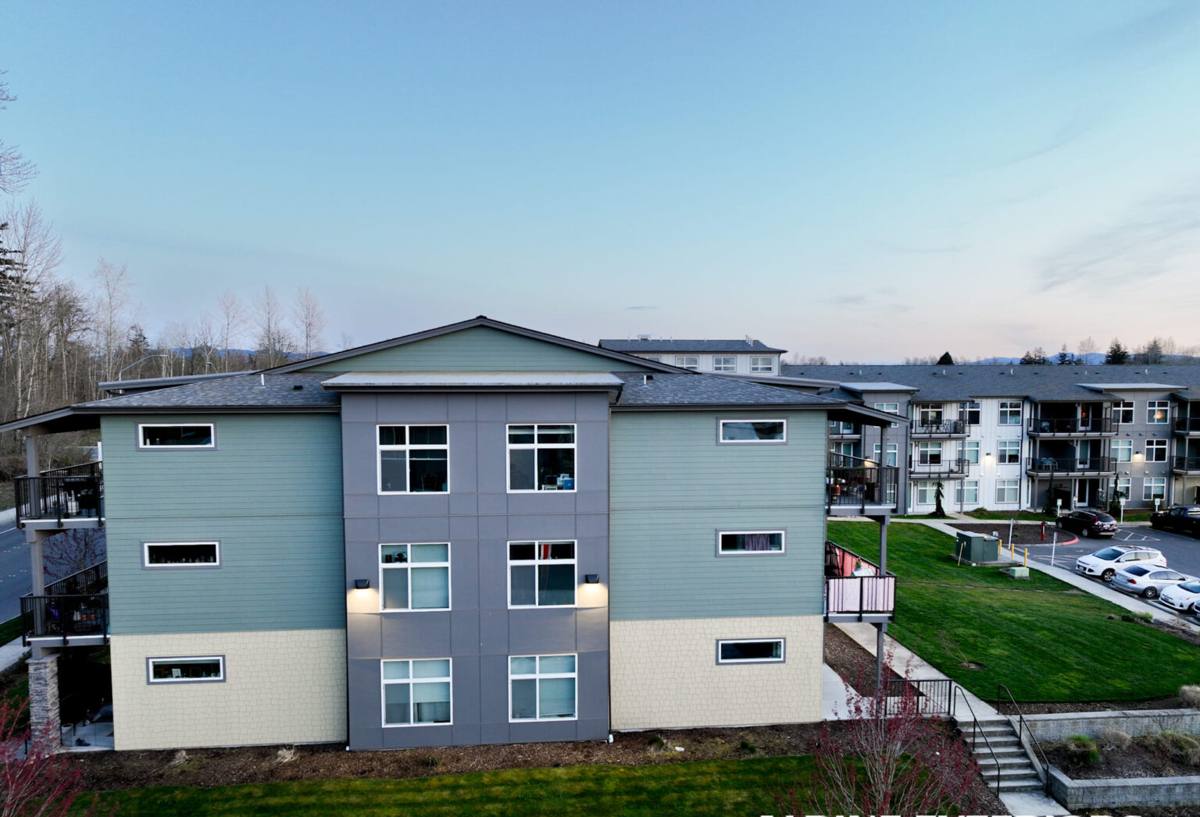
 Sudden Valley Exterior
 Siding That Actually Holds Up in Sehome
Sehome sits close enough to the water and tree cover that its homes take on a specific kind of weather stress: salt-laden air moving in off the water, long stretches of driving rain through fall and winter, and a moss season that can run half the year on shaded north- and west-facing walls. None of that is exotic or rare for Whatcom County, but it adds up differently on siding than a dry-climate install ever accounts for. We install James Hardie fiber cement exclusively, and on a job in Sehome that decision is less about brand preference and more about which product actually survives the conditions without babysitting.
This page is about one service in one place: James Hardie siding installation and replacement for homes in and around Sehome. We're not going to give you a generic rundown of fiber cement siding in general — you can find that on our main James Hardie page. Here we're talking about what this specific neighborhood's climate does to a wall assembly, what a correct installation looks like in response, and why the crew doing the work matters as much as the material itself.
What Salt Air, Rain, and Moss Actually Do to a Wall
Salt Air
Proximity to open water means airborne salt settles on exterior surfaces even miles inland, carried by wind. On untreated wood siding and many engineered wood products, that salt accelerates surface breakdown and pulls moisture into the material through hygroscopic action — salt attracts water. On cheap or poorly sealed vinyl, it accelerates fading and can work into seams and fasteners over years. Fiber cement doesn't have organic wood fiber for salt to degrade, and James Hardie's factory-applied ColorPlus finish is engineered to resist the fading and chalking that salt-exposed coatings are prone to.
Driving Rain
Whatcom County doesn't just get rain — it gets wind-driven rain that hits siding at an angle, which means water finds its way behind laps, around trim, and into any gap a careless install leaves open. This is where installation quality outweighs the product spec sheet. A wall system with the right lap exposure, flashing, and water-resistive barrier detailing sheds wind-driven rain. A wall system missing any one of those elements will eventually take on moisture no matter what siding is nailed to it.
Moss and Sustained Moisture
Shaded walls in Sehome — under mature trees, on north faces, in the lee of neighboring structures — stay damp for extended stretches, and moss takes hold on any surface that holds a film of moisture and doesn't dry between rain events. Moss itself isn't usually destructive to fiber cement, but it's a visible sign that a wall section isn't drying properly, and sustained dampness behind or around siding is what causes rot in trim, sheathing, and framing over time. Product choice and airflow/drainage detailing both matter here.
Why We Don't Install Everything on the Market
We get asked why we don't offer vinyl, LP SmartSide, cedar, or primed spruce alongside Hardie. The honest answer: those products can perform fine in the right conditions, but Sehome's combination of salt exposure, wind-driven rain, and prolonged damp shade is exactly the environment where their weak points show up first — wood-based products absorbing moisture at cut edges and fastener penetrations, vinyl's seams and thermal movement working against tight, rain-driven coastal exposure. James Hardie's HZ5 product line is specifically engineered for climates like this — moisture, freeze-thaw cycling, and coastal exposure — and it's the only material we're willing to put our name behind here.
What a Correct Installation Involves
Flashing and Water Management First
Before a single course of siding goes up, the wall needs a correctly lapped weather-resistive barrier, properly integrated window and door flashing, and kick-out flashing at roof-to-wall intersections. This is the part of the job that's invisible once finished and the part most likely to get shortcut. It's also the single biggest factor in whether a wall stays dry through a Whatcom County winter.
Fastening, Clearances, and Lap Exposure
James Hardie publishes specific fastener spacing, embedment, and clearance requirements — ground clearance, roof-line clearance, and gaps at trim and penetrations — that are engineered around drainage and drying. Skipping these to save time is the most common cause of premature caulk failure and moisture intrusion on fiber cement jobs we've been called in to fix after another crew's work.
Caulking and Joint Treatment
Butt joints and trim transitions need the right sealant, applied correctly, and finished per Hardie's specification — not just caulked and painted over. In a driving-rain climate, joint failure is where water gets in first.
Ventilation Behind the Cladding
A drainage plane that lets incidental moisture escape rather than trapping it against the sheathing is what keeps a shaded, damp wall from developing rot behind siding that looks fine from the street.
| Installation Element | Why It Matters in Sehome |
|---|---|
| Weather-resistive barrier lapping | Sheds wind-driven rain before it reaches sheathing |
| Kick-out flashing at roof lines | Prevents concentrated water intrusion at wall/roof junctions common in wet winters |
| Correct fastener spacing/embedment | Prevents siding movement and premature joint failure |
| Ground and roof clearances | Reduces splash-back moisture and trapped dampness that feeds moss |
| Drainage plane/rainscreen detailing | Lets shaded, damp walls dry out between rain events |
James Hardie Product Lines That Fit This Climate
James Hardie engineers its HZ5 formulation for regions with significant moisture exposure and freeze-thaw cycling — which describes Whatcom County's coastal edge well. Within that, homeowners typically choose between a few plank profiles and finishes:
| Product Line | Best Fit For | Note |
|---|---|---|
| HardiePlank HZ5 lap siding | Most Sehome homes, standard exposure | Available in multiple textures, factory-finished |
| HardiePanel vertical siding | Accent walls, modern facades, gable ends | Often paired with lap siding for visual contrast |
| HardieTrim | Window/door surrounds, corners, fascia | Matches the moisture resistance of the field siding |
| ColorPlus factory finish | Any of the above | Baked-on finish resists fading and chalking better than field-applied paint |
Our Process for a Sehome Job
Every job follows the same sequence, whether it's a full re-side or a repair-and-replace section:
- Walk-through and assessment — we look at existing siding, trim, moisture staining, and moss patterns to understand what the current assembly is and isn't handling.
- Written estimate — scope, product line, and a clear cost breakdown, no vague allowances.
- Tear-off and substrate check — old siding comes off and we inspect sheathing for hidden rot before anything new goes up. This step catches problems a re-side over old siding would hide.
- Barrier and flashing installation — the invisible work that determines long-term performance.
- Hardie installation to manufacturer spec — fastening, clearances, joint treatment, all per James Hardie's published installation guidelines, not shortcuts.
- Final walk-through — we go over the finished work with the homeowner before calling it done.
Signs a Sehome Home May Need Siding Attention
- Persistent moss or algae growth on north- or west-facing walls that doesn't clear even after cleaning
- Soft spots, bubbling, or visible warping around window and door trim
- Paint that's peeling or bubbling rather than just fading
- Visible gaps at butt joints or corner trim where caulking has failed
- Musty smell or visible staining on interior walls that share an exterior wall with a shaded exposure
- Siding that flexes or feels soft when pressed near the base of the wall
Cost Factors on a Sehome Project
| Factor | Why It Affects Cost |
|---|---|
| Extent of tear-off vs. overlay | Full removal reveals and fixes hidden substrate damage but adds labor |
| Wall complexity (gables, dormers, trim detail) | More cuts, more flashing, more labor hours |
| Product line and finish selection | Panel vs. lap, standard vs. premium ColorPlus colors |
| Extent of moisture damage found underneath | Rotted sheathing or framing must be repaired before new siding goes on |
| Access and site conditions | Mature trees, slopes, and tight lot lines around Sehome can affect staging and labor time |
We don't quote a number until we've actually looked at the walls — anyone quoting a firm price over the phone for a job like this is guessing.
Why Hiring a Crew Already Working in Sehome Matters
A crew that regularly works this neighborhood already knows the exposure patterns — which elevations take the worst of the driving rain, where moss tends to build first, and how the local drainage and shade patterns behave through a wet Whatcom County winter. That's not something you get from a general contractor working from a spec sheet alone. It shows up in small decisions: where to add extra flashing attention, which walls need a closer look at ventilation, and how to sequence a job around the area's weather windows so the substrate isn't left exposed longer than it has to be.
Maintenance After Installation
Correctly installed James Hardie siding is low-maintenance, not no-maintenance. In Sehome's climate, that means an annual rinse to keep moss and organic buildup from establishing on shaded walls, a periodic look at caulked joints and trim for any separation, and keeping gutters and downspouts clear so water is directed away from the wall assembly rather than sheeting down it. None of this is heavy lifting, but skipping it is how small issues become expensive ones.
If you're seeing moss buildup, failing trim, or you're just planning ahead for a home in Sehome, we're happy to walk the property, look at what's actually happening on your walls, and give you a straight answer on what it would take to fix it right. The estimate is free, there's no pressure, and you can use the form below to get started.