 Sudden Valley Exterior
 Geneva's Climate Is Hard on Roofs — Here's Why
Geneva sits in the same weather pattern as the rest of the Sudden Valley area: long wet winters, salt-laden air moving in off the water, and tree cover dense enough that roofs rarely get a full day of direct sun even when the rain stops. That combination is tough on a roof in ways that don't always show up until the damage is already done. Moss doesn't just look bad — it holds moisture against the shingle surface for weeks at a time, working its way under tabs and granules. Driving rain finds every weak seam around flashing, vents, and valleys. And salt air accelerates corrosion on exposed fasteners, drip edge, and metal flashing faster than most manufacturer literature accounts for.
None of that means a roof in Geneva has to fail early. It means the replacement has to be built for these conditions specifically, not installed to a generic spec and hoped along. That's the difference between a roof that needs attention again in eight years and one that goes the distance.
Moisture and Moss Pressure on Lake-and-Tree Lots
Homes tucked against tree lines or set close to the water lose afternoon sun exposure that would otherwise dry a roof surface out between storms. That shade, combined with organic debris from overhanging branches, is exactly what moss and algae need to take hold. Once established, moss lifts shingle edges and channels water sideways instead of down, which is how leaks start in places that look fine from the ground.
Salt Air's Slow Damage to Metal Fasteners and Flashing
Fasteners, flashing, and any exposed metal components corrode faster in a marine-influenced climate. A roofing system installed without corrosion-resistant fasteners and properly lapped, sealed flashing will show rust streaks and early leaks around penetrations well before the shingles themselves are due for replacement. This is one of the most common shortcuts we see on jobs that come in too cheap.
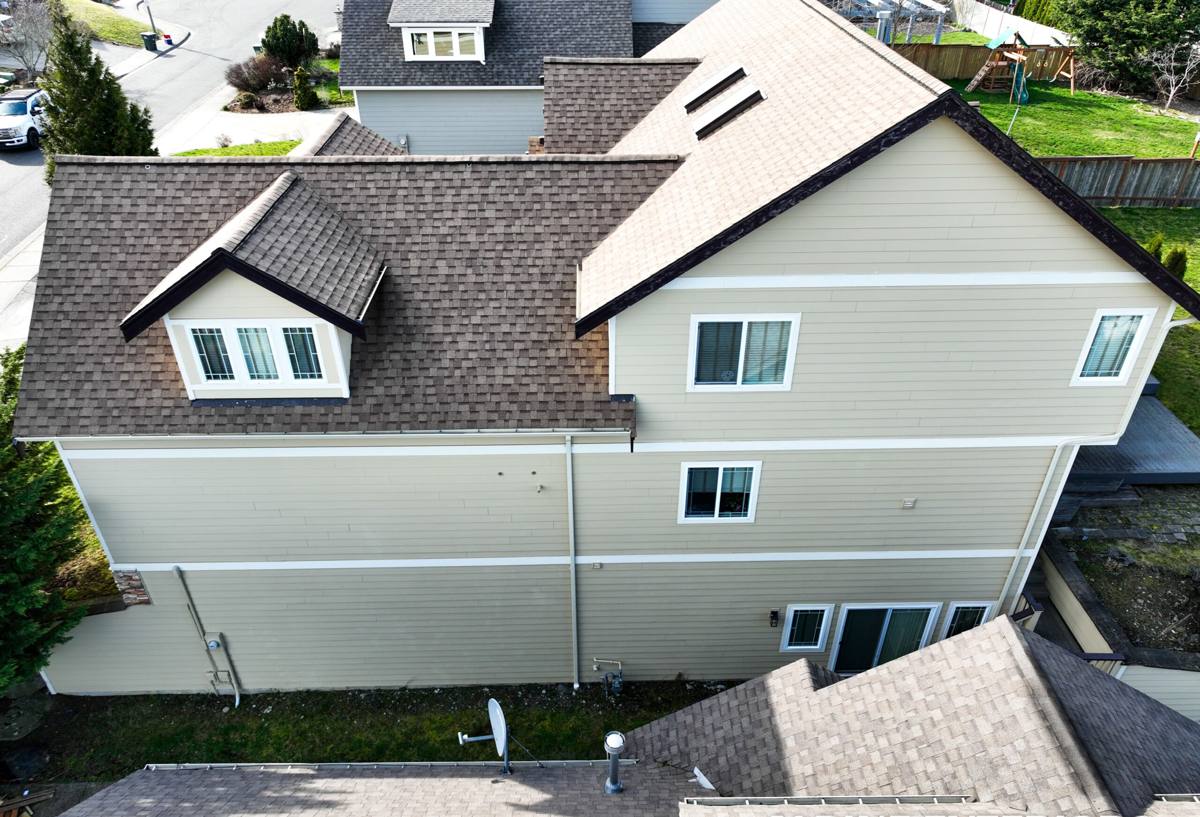
Signs Your Geneva Roof Needs Replacing, Not Patching
Not every roof problem calls for full replacement. But in this climate, certain signs mean patching is just delaying a bigger repair bill — and risking damage to the decking and interior underneath.
- Granules collecting in gutters or at the base of downspouts in noticeable amounts
- Shingles that are cupping, curling at the edges, or visibly brittle
- Moss growth that returns within a season of being cleaned off
- Soft or spongy spots when walking the roof, or sagging visible from the ground
- Daylight visible through the roof deck from inside the attic
- Rusted or lifted flashing around chimneys, vents, and skylights
- Interior water stains on ceilings, especially after wind-driven rain
- A roof that's 20+ years old, regardless of how it looks from the street
If you're seeing two or more of these, it's worth having someone walk the roof in person rather than guessing from photos or a drive-by look.
What a Correct Roof Replacement Actually Involves
A roof replacement is more than swapping old shingles for new ones. Everything under the surface layer matters more in a wet, moss-prone climate than it does in a dry one, because that's what determines whether water actually stays out.
Tear-Off and Deck Inspection
We remove the existing roofing down to the deck rather than layering over it. That's the only way to actually see the condition of the plywood or plank decking underneath — soft spots, rot, or delamination from years of trapped moisture don't show up until the old layer is gone. Any damaged decking gets replaced before anything new goes down; skipping this step is the single most common reason a "new" roof leaks within a few years.
Underlayment, Ice & Water Shield, and Flashing
Synthetic underlayment goes down as the primary water barrier, with self-adhering ice-and-water membrane at the eaves, valleys, and any low-slope transitions where wind-driven rain is most likely to work its way backward under shingles. All flashing — step flashing along walls, counter-flashing at chimneys, and pipe boots — gets replaced as part of the job, not reused. Reusing old flashing to save time is a shortcut that shows up as a leak later, usually in a spot that's expensive to access.
Ventilation That Matches the Attic, Not a Generic Spec
Balanced intake and exhaust ventilation keeps the attic dry and the roof deck at a stable temperature, which matters for both moisture control and shingle lifespan. A roof that traps humid air underneath it will grow moss and mildew from the inside just as easily as from weather hitting the outside. We size ventilation to the actual attic, not a one-size-fits-all vent count.
Choosing a Roofing Material for a Geneva Home
Material choice affects how well a roof handles moss, moisture, and salt air over its lifetime — and how much upkeep it asks of you in between. Here's how the common options compare for this specific climate:
| Material | Typical Lifespan | Moss/Moisture Resistance | Relative Cost | Notes for This Climate |
|---|---|---|---|---|
| Architectural asphalt shingle | 25–30 years | Good with proper ventilation; algae-resistant granule options recommended | $ | Most common choice; performs well when installed with full moisture barrier detailing |
| Standing-seam metal | 40–50+ years | Excellent — sheds moss and debris, minimal surface for growth to grip | $$$ | Higher upfront cost but very low maintenance in wet, shaded lots |
| Synthetic/composite shingle | 30–50 years | Very good; engineered to resist moisture absorption | $$ | Good middle ground where budget and longevity both matter |
| Cedar shake | 20–30 years with upkeep | Requires regular treatment and cleaning to resist moss and rot | $$–$$$ | Attractive look, but the maintenance schedule in this climate is demanding — we're upfront about that tradeoff before anyone commits |
There's no single "right" answer here — it depends on how much upfront cost versus long-term maintenance a homeowner wants to take on. We'll walk through the honest tradeoffs for your specific roof rather than pushing whatever's easiest for us to install.
Our Roof Replacement Process, Start to Finish
- On-site inspection and estimate — we walk the roof, check the attic, and note deck condition, flashing points, and ventilation before quoting anything
- Written scope and material selection — you know exactly what's being installed, including underlayment and flashing details, not just a shingle color
- Permitting — handled on our end where required so you're not the one navigating it
- Tear-off and deck repair — old roofing removed, decking inspected and repaired as needed
- Installation — ice-and-water shield, underlayment, flashing, roofing material, and ventilation installed to spec
- Cleanup and walkthrough — site cleared of debris and nails, with a final walkthrough before we consider the job done
Timing the Job Around Whatcom County Weather
Roof replacements can be done for much of the year, but dry-window scheduling matters more here than in drier parts of the state. We work around weather forecasts to keep the deck exposed for the shortest time possible, and we tarp and secure the roof at the end of every work day if a section is left open. Late summer and early fall tend to offer the most predictable dry stretches, but a well-managed crew can work safely through most of the year with the right precautions.
Why It Matters to Hire a Crew That Already Works in Geneva
A crew that regularly works Geneva and the broader Sudden Valley area already knows how this climate behaves on a roof — which valleys collect debris fastest, which orientations hold moss longest, and how driving rain typically finds its way in on homes with this kind of tree cover and lake exposure. That's knowledge that doesn't come from a spec sheet; it comes from having replaced and repaired roofs on similar lots nearby. It also means warranty service isn't a long drive away if something needs a look after the job is done.
Caring for Your New Roof Through the Moss Season
A correctly installed roof still benefits from basic upkeep, especially given how long moss season runs here. Keeping gutters clear so water doesn't back up under the eaves, trimming back overhanging branches to let more light and air reach the surface, and having the roof looked at every couple of years all extend the life of the investment. We're happy to flag anything we notice on future visits, even outside of a formal inspection.
If your roof in Geneva is showing its age or you just want an honest read on where it stands, we're glad to come take a look. The estimate is free, there's no pressure attached to it, and you'll get a straight answer about what your roof actually needs — use the form below to get started.