 Sudden Valley Exterior
 Roof Repair in Fairhaven: What This Neighborhood's Homes Are Up Against
Fairhaven sits close to the water where Bellingham Bay meets the city, and that position puts real, steady stress on a roof that homes further inland simply don't deal with in the same way. Salt-tinged air drifts through the neighborhood most of the year, rain comes in sideways as often as it falls straight down, and the mature tree cover on many of Fairhaven's older lots keeps roof surfaces shaded and damp long after a storm has passed. None of that means a roof here needs replacing every few years. It does mean that roof repair in Fairhaven has to account for a specific combination of conditions, and a patch that would hold up fine in a drier, calmer part of Whatcom County can fail here within a season or two.
Because Fairhaven's housing stock spans everything from early-century homes to newer construction built into the same hillside terrain, the roofs we're asked to repair vary a lot in age, pitch, and prior workmanship. What stays consistent is the climate they're all fighting. This page focuses specifically on roof repair for Fairhaven properties: what tends to go wrong here, what a repair actually needs to include to hold up, and how we approach the work.
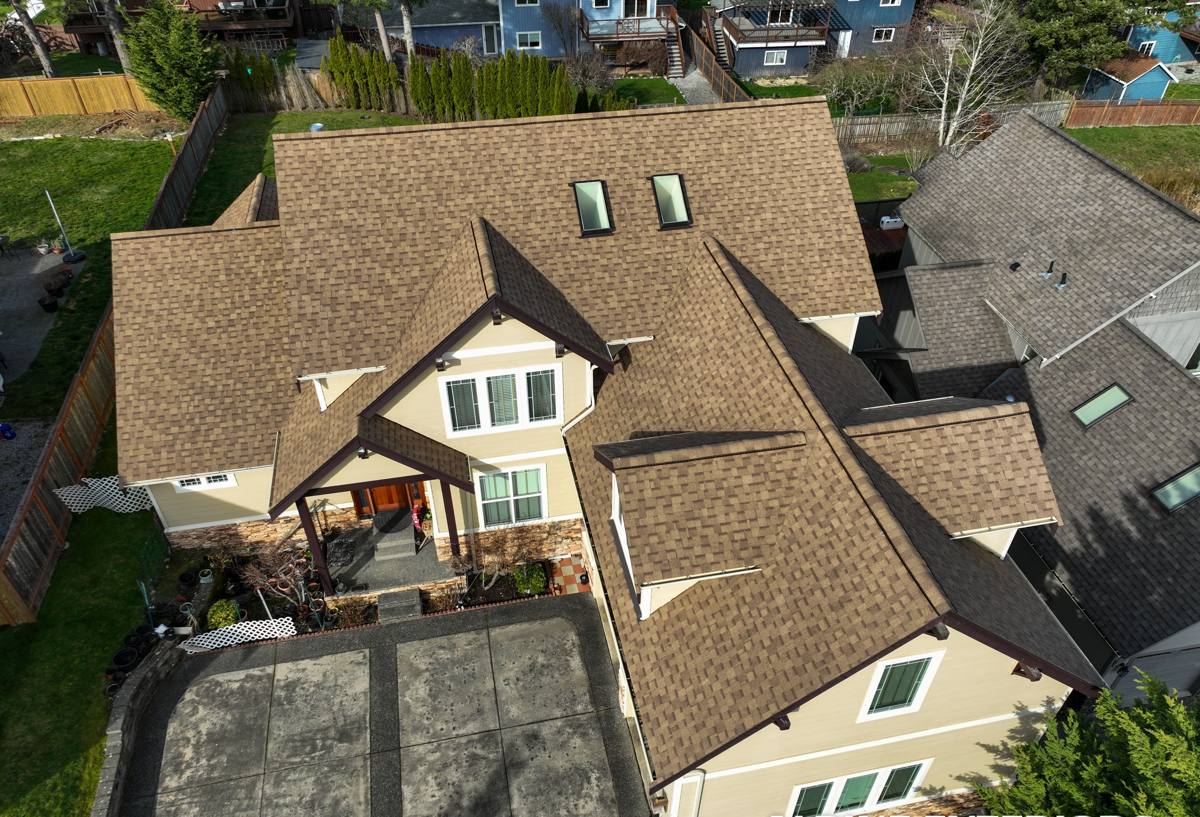
How Bellingham Bay's Climate Wears Down a Roof
Salt Air and Metal Fatigue
Roofing metal, whether it's flashing, valley material, or fasteners, sits in a steady drift of mildly corrosive marine air near the bay. That exposure works slowly. Fasteners back out or rust at the head, flashing seams lose their seal, and metal edges corrode from the inside of a lap joint before it's visible from the ground. By the time you can see rust streaks on a roof, the corrosion underneath usually has a head start.
Wind-Driven Rain and Flashing Failure
Fairhaven's open exposure toward the water means rain rarely just falls straight down. Wind pushes it sideways and up under shingle edges, into valleys, and behind flashing that was cut correctly for a calmer climate but never accounted for wind-driven moisture. Most of the active leaks we're called out for in this neighborhood trace back to a flashing detail, not a shingle field failure.
A Long Moss Season
Mild temperatures, consistent dampness, and shade from mature trees add up to a moss season that can run most of the year on north-facing or heavily shaded slopes. Moss doesn't just sit on top of shingles. It lifts tabs as it grows, holds water against the roofing surface long after everything else has dried, and works its way into granule loss and cracking over time.
The Repair Issues We See Most Often in Fairhaven
Valley and Flashing Leaks
Valleys, chimney flashing, and wall-to-roof intersections are where wind-driven rain finds its way in, and they're the most common repair call in this neighborhood by a wide margin. A proper repair means re-flashing the detail correctly, not just sealing the surface with roofing cement, which is a temporary fix at best.
Moss-Lifted and Cracked Shingles
Shingles that have been under moss for an extended period often show cracking, curling, or granule loss once the moss is removed. Some sections can be repaired in place; others need the affected shingles replaced individually, which requires matching material closely enough that the repair doesn't stand out.
Soft Decking and Hidden Rot
Sustained moisture intrusion, especially around a slow flashing leak that's gone unnoticed, can soften the roof deck underneath. This isn't something you can diagnose from the ground or even from inside the attic in every case. It usually shows up once we're on the roof and can test the deck directly at the repair area.
Ventilation Problems That Masquerade as Roof Leaks
Condensation from poor attic ventilation can look and feel exactly like a roof leak from inside the house, especially in cooler months. Chasing the wrong problem wastes money and delays the actual fix, so part of an honest repair diagnosis is ruling ventilation in or out before assuming the roofing material itself has failed.
What a Correct Roof Repair Actually Involves
Not every repair is created equal, and the difference between a surface patch and a proper repair usually isn't visible until the next heavy rain or the next moss season.
| Surface Patch | Proper Diagnostic Repair |
|---|---|
| Roofing cement applied over the visible leak point | Source of the leak traced and confirmed before any material is touched |
| Flashing left in place even if the seal has failed | Flashing removed, inspected, and re-installed or replaced as needed |
| Moss scraped off the surface only | Moss removed and the underlying shingle condition assessed |
| Deck condition assumed to be fine | Deck checked for softness or rot at the repair area |
| No attention to attic ventilation | Ventilation ruled in or out as a contributing factor |
A surface patch can look identical to a proper repair for a while, which is exactly why it's worth asking a contractor to explain what they actually did, not just that the leak stopped for now.
Our Roof Repair Process in Fairhaven
- On-roof inspection: We get up on the roof and into the attic ourselves rather than estimating from the ground or a photo, since most of what matters in this climate isn't visible from below.
- Honest diagnosis: We trace the actual source of the leak or damage, including checking flashing, valleys, ventilation, and deck condition at the repair area.
- Written scope: You get a clear explanation of what's wrong, what we recommend fixing, and why, before any work starts.
- The repair itself: We address the actual cause, not just the visible symptom, matching materials as closely as possible so the repair blends with the surrounding roof.
- Cleanup and follow-up: We clear debris and old material from the site and let you know what to keep an eye on going forward, particularly around moss regrowth in shaded areas.
Repair or Replace? The Factors We Walk You Through
Most roofs don't need full replacement just because one area is leaking, but there are situations where repair is a short-term answer to a longer-term problem. We'll always give you a straight answer on which category your roof falls into.
| Factor | Why It Matters |
|---|---|
| Age and remaining shingle life | A 5-year-old roof and a 22-year-old roof with the same leak call for different recommendations |
| How many separate problem areas exist | One isolated flashing leak is a repair; damage spread across multiple slopes points toward replacement |
| Deck condition | Widespread soft decking usually means the repair cost approaches replacement cost anyway |
| Moss and algae extent | Heavy, long-term moss growth can shorten remaining shingle life even where there's no active leak yet |
| Prior repair history | A roof with several past patches in different spots is often signaling it's near the end of its service life |
We'll walk the roof, explain what we find in plain terms, and let you make the call with real information rather than a push toward the more expensive option.
What We Use and Why We Repair Instead of Oversell
Our standard on repair work is simple: fix what's actually failing, match materials as closely as the market allows, and never recommend a full tear-off when a targeted repair will genuinely hold up. That means being honest about trade-offs. Patching a small, isolated flashing leak is usually the right call. Repeatedly patching a roof that's failing broadly, on the other hand, ends up costing more over a few years than addressing the real problem once. Where moss is a factor, we'll talk through removal and prevention options rather than just scraping the surface and calling it done, since regrowth in a shaded, damp climate like this one is close to guaranteed without some ongoing attention.
We're also careful with pressure washing on and around roofing. Aggressive pressure washing can drive water up under shingles and strip protective granules, which creates the exact moisture problem we're trying to fix. Moss and debris removal on a roof calls for a gentler approach than most people expect.
What to Check Before Hiring Anyone for Roof Repair in Fairhaven
- Confirm an active Washington state contractor license and current liability insurance
- Ask them to explain the actual cause of the leak, not just where it's showing up inside
- Ask whether they're proposing a patch or a full detail repair, and what the difference means for how long it lasts
- Get a written scope that names the specific area and materials involved, not just "repair roof leak"
- Ask how they handle moss removal and whether prevention is part of the plan
- Ask what happens if they find deck damage once they're on the roof
Why a Crew That Already Works Fairhaven Matters
A crew that regularly works this stretch of Whatcom County has already seen how salt air, wind-driven rain, and a long moss season behave on real roofs over time, not just in theory. That experience shapes practical decisions on repair day: which flashing details tend to fail first in this exposure, which slopes hold moisture longest, and where it's worth spending a little extra time so the fix holds through the next few wet seasons instead of coming back as a callback. Fairhaven's mix of older housing stock, hillside lots, and closeness to the bay isn't identical to conditions elsewhere in Bellingham, and repair work here benefits from a crew that treats that as a real factor rather than an afterthought.
If you've got an active leak, a soft spot on the roof, moss that's gotten out of hand, or you just want an honest opinion on what's going on up there, we're glad to take a look. Reach out using the form below to schedule a free, no-pressure estimate.