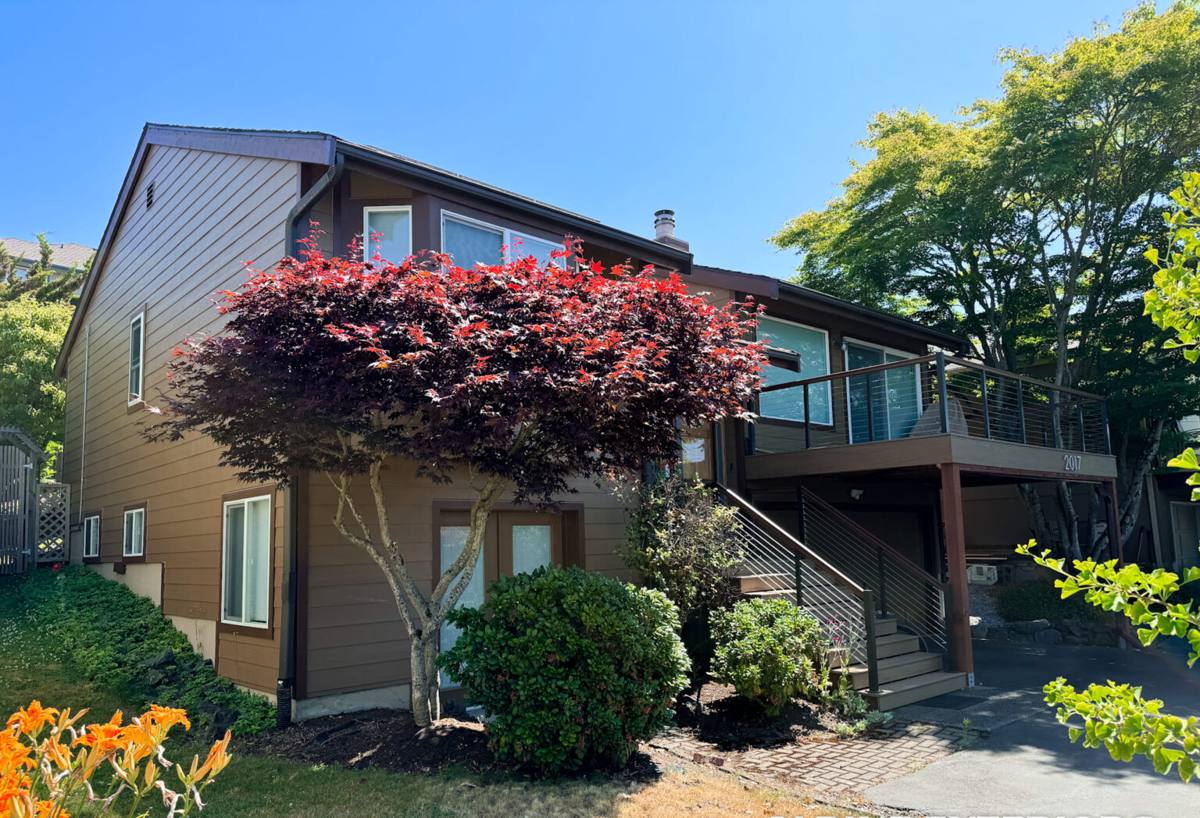
 Sudden Valley Exterior
 Roofing in a Lake Whatcom Microclimate
Homes around Lake Whatcom deal with a roofing environment that's a little different from the rest of Whatcom County. The tree cover holding shade over so many rooflines keeps moisture sitting on shingles longer than it does on an open lot. Weather moving in off the water brings driving rain that finds its way sideways under loose flashing. And even though the lake itself is fresh water, air moving through the valley from the Sound carries enough salt content to accelerate corrosion on fasteners, flashing, and gutter hardware over the years. None of this means a Lake Whatcom roof is doomed to fail early — it means repairs here have to account for conditions a roof in a drier, more open part of Washington simply doesn't face.
We work on homes in Sudden Valley and around the lake regularly enough to know which failure patterns show up first, and which quick fixes tend to come back as callbacks within a year or two. This page is about roof repair specifically — not full replacement, not general exterior work — because that's usually the smarter, more affordable move when the underlying roof structure is still sound.
What Actually Causes Roof Repair Calls Around Lake Whatcom
Moss and a Long Growing Season
Whatcom County's moss season runs long, and shaded lake-adjacent lots make it worse. Moss doesn't just look bad — it lifts shingle edges as it grows, holds water against the roof deck, and works its way into nail lines. By the time moss is visibly thick on a roof, there's a good chance it's already caused granule loss or minor lifting underneath that isn't obvious from the ground.
Driving Rain and Wind-Driven Water
Steady, driving rain off the water doesn't just fall straight down — it gets pushed sideways under ridge caps, around chimney flashing, and into valleys where two roof planes meet. Most of the leaks we trace back to a specific point of entry are at these transition areas, not in the middle of an open shingle field.
Salt-Laden Air and Metal Fatigue
Metal flashing, drip edge, gutter fasteners, and roof vents take a slow beating from airborne salt content moving through the valley. It shows up as premature rust streaking, pitted metal, and fasteners that back out or corrode faster than the shingles around them age. It's one of the reasons we pay close attention to metal components during any repair, even when the shingles themselves are the reason for the service call.
What a Correct Roof Repair Actually Involves
Diagnosis Before Patching
A repair that just covers a stain on the ceiling without finding where water is actually entering the roof assembly usually fails again within a season or two. Correct repair work starts by tracing the leak to its real source — which is frequently several feet away from where the damage shows up inside, since water travels along the underlayment and decking before it drips through.
Matching Materials and Technique
A patch that doesn't match the surrounding shingle profile, weight, or fastening pattern creates a new weak point even if it stops the immediate leak. Flashing gets replaced, not just caulked over — caulk is a short-term seal, not a repair. And any decking found soft or delaminated from prolonged moisture exposure gets replaced before new shingles or flashing go back down, not shingled over.
Addressing the Cause, Not Just the Symptom
If moss growth or debris buildup contributed to the failure, a proper repair includes clearing that area and, where it makes sense, adjusting things like gutter flow or ventilation that let the problem develop in the first place. Otherwise the same repair is needed again in a couple of years.
Our Repair Process, Start to Finish
- Inspection. We look at the roof itself, not just the spot you're worried about — attic access, flashing points, valleys, and penetrations all get checked so nothing gets missed.
- Honest diagnosis. We tell you what's actually wrong, what caused it, and whether it's a repair or something bigger. If a small repair is genuinely the right call, that's what we recommend.
- Written estimate. Scope of work, materials, and cost, before anything happens on the roof — no verbal-only agreements.
- The repair itself. Proper tear-out of the damaged area, matching materials, correct flashing and fastening technique, and attention to the surrounding roof so the repair blends in and performs like the rest of the roof.
- Cleanup. Old materials, nails, and debris hauled off — we don't leave a work site looking worse than when we started.
- Follow-up. We'll tell you honestly if the repair should hold for years or if it's a stopgap on a roof that's getting close to needing full replacement.
Repair or Replace? Cost Factors to Weigh
Not every roof problem is a repair-sized problem, and not every roof problem needs a full replacement either. These are the factors that actually drive that decision:
| Factor | Favors Repair | Favors Replacement |
|---|---|---|
| Roof age | Under roughly 15 years, or well-maintained | At or beyond the material's expected service life |
| Extent of damage | Isolated to one flashing point, valley, or section | Multiple areas failing independently |
| Decking condition | Solid, dry decking under the damaged area | Widespread soft spots or rot found during inspection |
| Moss/algae staining | Surface growth, shingles still intact underneath | Granule loss and shingle brittleness across large areas |
| Number of past repairs | First or second repair on that roof | Recurring repairs in the same or nearby areas |
If your roof lands mostly in the middle column, repair is usually the financially sound choice. If it's trending toward the right column, we'll tell you that plainly rather than patch something that needs a bigger conversation.
Materials and Flashing Choices We Use
Repair work is only as good as the materials and technique behind it. Here's how we think about the choices that matter most on Lake Whatcom homes:
| Component | Our Standard Approach | Why |
|---|---|---|
| Flashing metal | Corrosion-resistant metal, properly lapped and sealed | Salt-influenced air accelerates rust on lower-grade or poorly installed metal |
| Underlayment | Synthetic underlayment on repaired sections where feasible | Better moisture resistance and durability than older felt products during our long wet season |
| Sealants | Used to supplement correct flashing, never as the primary waterproofing method | Sealant alone degrades with UV and temperature swings and isn't a substitute for proper flashing overlap |
| Fasteners | Corrosion-resistant fasteners matched to the material being installed | Reduces the premature loosening we see from standard fasteners in this climate |
Signs You Need a Roof Repair Now
Some roof problems can wait for a scheduled inspection. Others shouldn't. If you're seeing any of the following, it's worth a call sooner rather than later:
- A ceiling stain that's new, growing, or appears after a heavy rain
- Visible moss buildup along ridges, valleys, or the north-facing slope
- Shingles that look lifted, curled, or are missing granules in patches
- Rust streaking or visibly corroded flashing around chimneys, vents, or skylights
- Gutters overflowing during normal rain, which points water back toward the roof edge and fascia
- Daylight visible through the roof deck from inside the attic
- A musty smell in the attic, which often shows up before visible staining does
Why Local Experience on Lake Whatcom Matters
A repair crew that only sees a lake-adjacent, moss-prone, salt-influenced roof once or twice a year is working from general knowledge. A crew that works Sudden Valley and the surrounding Lake Whatcom area regularly has already seen which flashing details hold up here and which ones don't, which slopes collect moss fastest given the tree cover, and where wind-driven rain tends to find its way in on this style of roof. That's the difference between a repair that's technically correct on paper and one that's actually built for the conditions your roof faces every winter.
If your property is part of a homeowners' association or has shared community guidelines, we're used to working within those requirements as well, and can coordinate any needed approvals as part of the job rather than leaving that step to you.
Whatcom County weather isn't going to change, and neither is the long moss season or the salt-influenced air moving through the valley. What can change is whether your roof repair is built to hold up against all of it, or just built to look fixed until the next heavy rain finds the same weak spot.
If you're dealing with a leak, visible moss, damaged flashing, or just want an honest opinion on the condition of your roof, we're glad to take a look. Fill out the form below for a free, no-pressure estimate — we'll tell you plainly what we find and what it would take to fix it right.