 Sudden Valley Exterior
 Why Barkley Homes Need Siding Built for This Climate
Homes in the Barkley area near Sudden Valley sit in one of the wettest, dampest corners of Whatcom County. Between the long stretch of driving rain that runs roughly October through April, the salt-tinged air that drifts inland off the Sound, and shaded lots that never fully dry out, exterior siding here works harder than it does almost anywhere else in the state. Add in a moss season that can stretch across most of the year on north-facing walls and tree-covered lots, and it's easy to see why so many homes in this area show premature paint failure, soft trim, and staining well before the siding is anywhere near the end of its expected life.
None of that is a defect in the house. It's what happens when ordinary siding meets a marine climate year after year without the right product, the right details, or the right crew behind it. The goal of this page is to walk through what actually holds up in Barkley conditions, what a correct James Hardie installation looks like here, and why the install itself matters as much as the product.
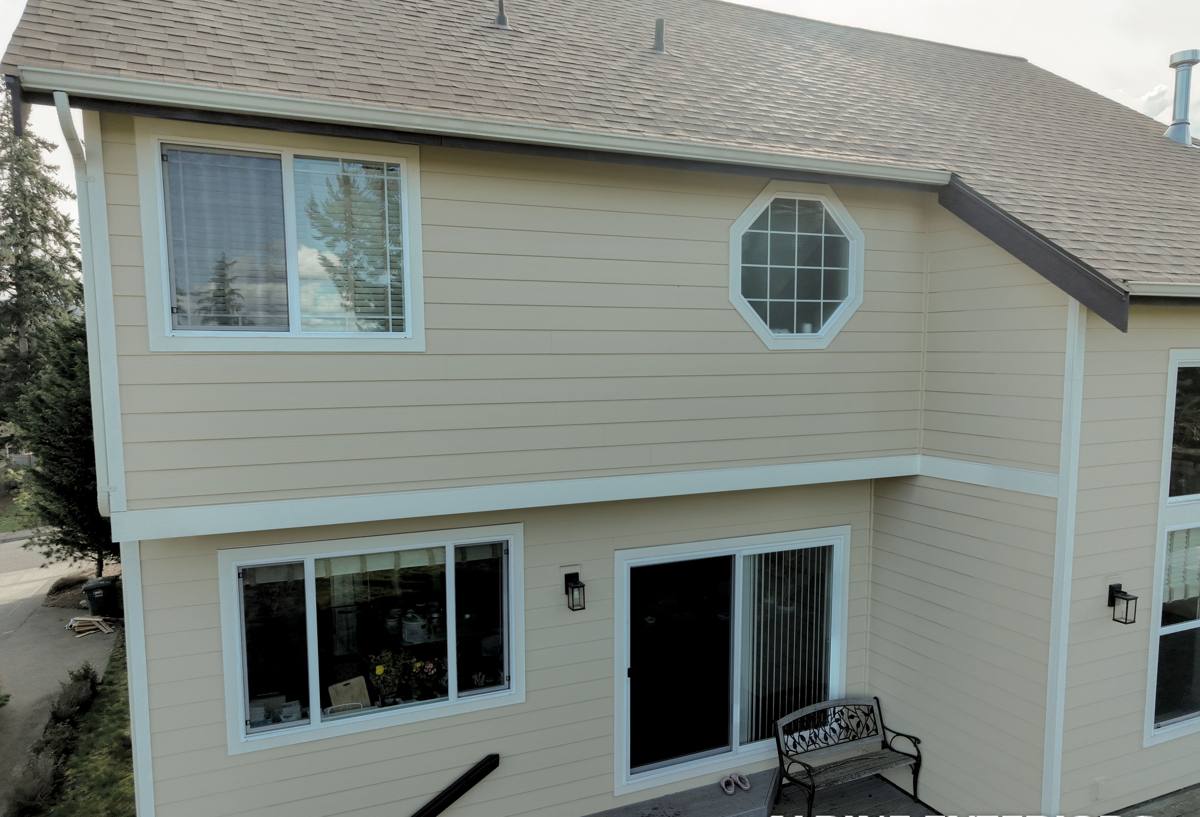
What Correct James Hardie Installation Actually Requires
James Hardie fiber cement is engineered specifically for climates like this one, but the product only performs as well as the installation behind it. In a region with sustained rain and humidity, a few details separate a siding job that lasts decades from one that fails at the seams within a few years.
Flashing and a real drainage plane
Fiber cement is not waterproof — it's water-resistant, and it's designed to sit over a drainage plane that lets any moisture that gets behind the cladding find its way back out. That means correctly lapped weather-resistant barrier, properly integrated window and door flashing, and a rainscreen gap where the wall assembly calls for one. Skip this step and you can install the best siding on the market and still end up with rot in the sheathing behind it.
Fastening pattern and clearances
James Hardie publishes exact fastener spacing, nail penetration depth, and minimum clearances from grade, roof lines, and decks. In a climate where standing water and splash-back are a near-constant reality for months at a time, those clearances aren't a formality — they're what keeps the bottom courses of siding from wicking moisture for half the year.
The right engineered product line
James Hardie makes climate-specific formulations, and the HZ5 line is built for regions that see the kind of sustained damp, temperature swings, and moisture exposure common around Whatcom County. Using the correct HZ designation for this region isn't optional if you want the manufacturer's warranty to mean anything.
ColorPlus factory finish over field paint
A factory-applied ColorPlus finish is baked on under controlled conditions and backed by its own finish warranty. Field-painted siding depends on weather windows, surface prep, and paint quality at the time of install — a much harder thing to get right in a region where dry, moderate-temperature painting days are limited for large stretches of the year.
The Moss and Mildew Reality on Whatcom County Exteriors
Moss and mildew don't rot fiber cement the way they can degrade wood-based siding, but they still cause real problems if a wall assembly isn't detailed correctly. Moss holds moisture against a surface, mildew feeds on trapped organic buildup, and both show up fastest on shaded, north-facing walls and anywhere gutters or downspouts aren't doing their job. On a lot with mature tree cover — common throughout this part of the county — those conditions can persist almost year-round.
The fix isn't a different siding material; it's proper drainage detailing, correctly pitched flashing above windows and trim, and gutter systems that actually move water away from the wall instead of letting it sheet down the face of the house. We look at all of this during a project, not just the siding itself, because siding that's installed correctly but sits behind a gutter that overflows every storm will still stain and stay damp.
Our Process for a Barkley Siding Project
1. On-site assessment
We walk the exterior, check the condition of the existing siding and trim, look at sheathing where it's exposed or accessible, and note drainage issues — clogged gutters, grading that pitches toward the foundation, vegetation crowding the walls — before we ever talk product.
2. Tear-off and sheathing check
Once the old siding comes off, we inspect the sheathing and framing underneath. Any soft or water-damaged sections get flagged and repaired before a single course of new siding goes up. This is the point where hidden moisture damage from years of undetected leaks gets caught — and it's also the point where a rushed crew is tempted to skip ahead.
3. Weather barrier, flashing, and rainscreen
We install the drainage plane and flashing to manufacturer spec, with particular attention to window and door openings, roof-to-wall transitions, and any decks or lower rooflines that create splash-back zones — all common trouble spots in this climate.
4. Installation to spec
Siding, trim, and fasteners go in following James Hardie's published installation guidelines for clearances, fastening, and joint treatment, using the HZ5 product line appropriate for this region.
5. Final walk-through and warranty registration
We walk the finished job with the homeowner, confirm caulking and touch-up points, and register the installation so the manufacturer's warranty is properly on file.
Cost Factors for James Hardie Siding in Barkley
Every home is different, but the same handful of factors drive most of the variation in a quote for this area:
| Cost Factor | Why It Matters Here |
|---|---|
| Existing siding removal & sheathing repair | Homes with hidden moisture damage from years of driving rain often need sheathing repair before new siding can go on |
| Home size and wall complexity | Dormers, gables, and multiple roof lines add cutting, flashing, and labor time |
| Siding profile | Lap, shingle, and panel profiles carry different material and labor costs |
| Finish choice | Factory ColorPlus finish costs more upfront than unfinished board but avoids repainting cycles |
| Site access | Sloped lots, mature landscaping, and limited driveway access — common around the lake — can add setup and staging time |
Why We Install Only James Hardie
Vinyl, LP SmartSide, and cedar all have a place in the market, and each has genuine strengths — vinyl is inexpensive, engineered wood products are lighter to work with, and cedar has a look some homeowners specifically want. We don't install any of them. Our standard is James Hardie fiber cement, and in a climate defined by sustained rain, salt air, and long damp stretches, the reasons come down to a few practical points: it's non-combustible, it holds paint and color far longer than wood-based alternatives without the same swelling and delamination risk in constant moisture, and the ColorPlus finish and product warranty are built around real-world climate performance rather than best-case conditions. For homes taking this much weather exposure every year, that trade-off is the whole point of standardizing on one product and installing it correctly every time.
Why a Crew That Already Works This Area Matters
Installing siding correctly in Barkley isn't just about knowing the manufacturer's spec sheet — it's about knowing how this specific stretch of Whatcom County behaves. A crew that already works around Sudden Valley and Lake Whatcom knows which wall orientations collect the most moss, how far wind-driven rain travels up a wall face during a fall storm system, and which drainage details actually hold up through a full wet season rather than just looking right on installation day. That familiarity shows up in the small decisions — flashing laps, gutter tie-ins, clearance heights — that don't show up on an invoice but determine whether the siding is still performing in fifteen years.
Maintenance Checklist for Hardie Siding in a Marine Climate
- Rinse siding annually to clear salt residue, pollen, and organic buildup before it becomes moss
- Clean gutters at least twice a year and confirm downspouts discharge well away from the foundation
- Inspect and re-caulk joints around windows, doors, and trim every few years
- Trim back vegetation and tree limbs to keep airflow moving across shaded wall sections
- Check flashing above windows, doors, and any roof-to-wall transitions for gaps or deterioration
- Watch north-facing and heavily shaded walls for early moss growth and address it before it spreads
If your Barkley home is due for new siding, or you're not sure whether what's on the walls now is holding up the way it should, we're happy to take a look and walk you through what we find. There's no pressure and no cost to get an honest estimate — the form below gets you started.