 Sudden Valley Exterior
 Decks in Happy Valley Face a Different Set of Problems
A deck in Happy Valley isn't fighting the same battle as one on the dry side of the state. Between the marine air coming off the water, the near-constant rain from fall through spring, and the moss that seems to colonize anything that sits still for more than a season, the climate here is actively working against wood, fasteners, and finishes almost every day of the year. A deck that would hold up fine in a drier climate can start showing soft spots, corroded hardware, and slick green growth within a few years if it wasn't built with this environment in mind.
That's the difference between a deck that looks good on install day and one that's still solid, safe, and dry-footed a decade later. Building for Whatcom County means building for water — where it lands, where it drains, and where it gets trapped if you're not careful.
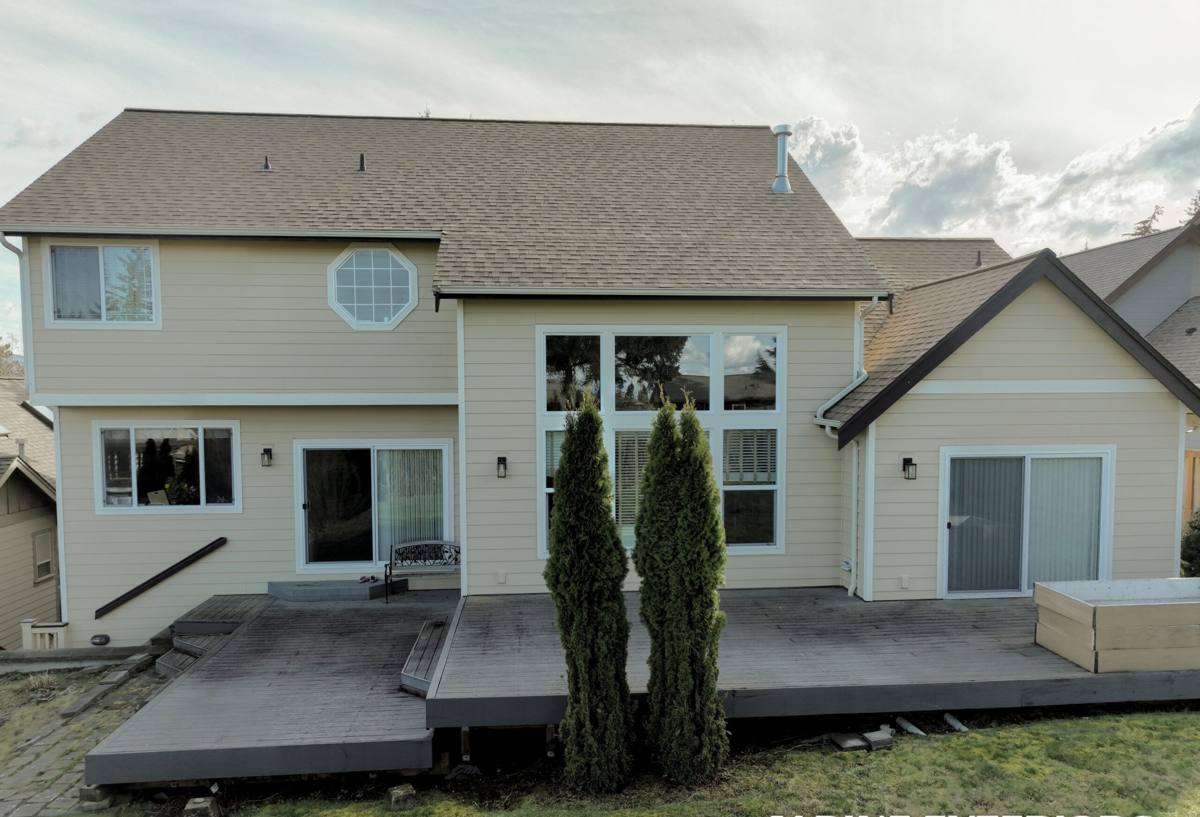
What the Local Climate Actually Does to a Deck
Driving Rain and Standing Moisture
Rain here doesn't just fall straight down — wind-driven rain gets pushed sideways into ledger connections, under railings, and into any gap where two materials meet. Decks that aren't detailed with proper flashing and drainage paths end up holding water against the house band board or pooling on the deck surface itself, which is exactly the condition that leads to rot, mold, and eventually structural problems in framing that's supposed to last decades.
Salt Air and Corrosion
Being close enough to the water to catch salt-laden air means bare or poorly coated metal doesn't last. Fasteners, joist hangers, and structural screws that aren't rated for this exposure will rust from the inside of the connection outward — often invisibly, until a board that should be solid starts to flex or a hanger lets go. This is one of the most common corners cut on decks built by crews who don't normally work this close to the water.
A Long Moss and Algae Season
Whatcom County's moss season isn't a few weeks — it's most of the year. Shaded decks, north-facing decks, and anything under tree cover will grow moss and algae on any surface that holds moisture and doesn't get regular sun or airflow. Beyond looking bad, moss holds water against the decking material and turns the surface slick and genuinely dangerous underfoot, especially on stairs.
What a Correctly Built Deck Includes
A deck that's going to hold up here needs more attention paid to the parts you don't see than the parts you do. The visible decking boards matter for looks and comfort, but the framing, flashing, and fastening decisions underneath are what determine whether the deck is still safe in fifteen years.
- A properly flashed ledger board connection, with flashing that directs water away from the house rim joist instead of trapping it behind the deck
- Joist tape or a comparable moisture barrier on top of every joist to keep water from wicking into the wood through fastener penetrations
- Corrosion-resistant structural hardware — hangers, screws, and bolts rated for the exposure this area sees, not just standard exterior-grade fasteners
- Footings set to the correct frost depth and bearing on undisturbed, properly compacted soil
- Deck board spacing that allows for drainage and airflow underneath, reducing the moisture and shade conditions moss needs to take hold
- Stair and railing connections built to current code, not just what looks acceptable
- A ventilation gap or clearance between the decking and any structure below to keep air moving and moss from spreading unchecked
None of this is exotic — it's just disciplined building. The failures we get called out to fix almost always trace back to one of these steps being skipped or done with the wrong materials for this climate.
Choosing the Right Decking Material
There's no single "best" decking material — there's the right material for the budget, the maintenance appetite of the homeowner, and how much sun or shade the deck actually gets. Here's how the common options hold up specifically against Whatcom County's rain, salt air, and moss:
| Material | Moisture & Rot Resistance | Moss & Algae Resistance | Maintenance |
|---|---|---|---|
| Pressure-treated pine | Good if sealed regularly | Needs regular cleaning to stay ahead of it | Annual cleaning, re-seal every 1-2 years |
| Cedar | Naturally decent, degrades if finish is neglected | Still needs periodic cleaning | Re-stain/seal every 1-2 years |
| Composite decking | Very good, doesn't rot | Better, but still grows algae in deep shade without cleaning | Occasional wash, no sealing |
| PVC decking | Excellent, fully moisture-proof core | Good, smooth surface sheds growth more easily | Occasional wash, no sealing |
Composite and PVC cost more up front but remove the sealing and staining cycle entirely, which matters in a climate where the maintenance window is short and the weather doesn't always cooperate. Wood costs less initially but only performs as advertised if the maintenance schedule actually gets kept — and in our experience, it often doesn't.
Fasteners and Hardware: Where Corners Get Cut
This is the part of a deck build that a homeowner can't easily inspect after the fact, which is exactly why it matters that it's done right the first time. In coastal-influenced air, standard galvanized fasteners can start corroding well before the wood around them shows any sign of trouble. Our standard on deck framing in this area is stainless steel or heavy-coated fasteners rated for the exposure, matched to whatever decking material is going on top — some composite and PVC products require specific fastener types to keep their warranty valid, and mismatching hardware to decking is one of the more common warranty-voiding mistakes we see on decks built by crews from outside the area.
We also pay attention to how dissimilar metals interact. Mixing incompatible metal types on a deck near salt-influenced air can accelerate corrosion in ways that aren't obvious until a connection has already weakened, so hardware selection isn't something we treat as an afterthought once the framing is underway.
Our Process for a Happy Valley Deck Project
1. On-Site Assessment
We look at sun exposure, slope, drainage patterns, and how close the deck will be to trees or shaded structures — all of which affect how much moss and moisture pressure that specific deck will face over time.
2. Design and Material Selection
We walk through decking, railing, and hardware options against your budget and how much upkeep you actually want to take on, being honest about the trade-offs rather than steering you toward whatever's easiest for us to install.
3. Permitting
Deck projects generally require a permit through the applicable local building department, and we handle that process, including the structural details inspectors look for on footings, ledger attachment, and guardrails.
4. Build
Footings, framing, flashing, and moisture barriers go in first and get inspected before decking, railing, and stairs are installed on top. We don't cover up structural work before it's been checked.
5. Final Walkthrough
We go over the finished deck with you, including what maintenance, if any, the specific materials installed will need going forward, and answer any questions before we consider the job done.
Keeping a Deck Solid Once It's Built
Even a well-built deck needs some ongoing attention in this climate — the difference is how much. A wood deck needs a real maintenance routine; composite and PVC decks need almost none, but "almost none" isn't "zero" if the deck sits in heavy shade.
- Sweep debris off the deck surface regularly, especially fallen leaves and needles that trap moisture against the boards
- Clean moss and algae off the surface at least once a year, more often on shaded or north-facing decks
- Check fastener heads and visible hardware periodically for early signs of corrosion, especially on older builds
- Keep gutters and downspouts near the deck clear so runoff isn't dumping extra water onto or under the structure
- Re-seal or re-stain wood decking on the schedule the product actually requires, not just when it looks like it needs it
- Trim back overhanging branches where practical to reduce shade and debris buildup on the deck surface
What It Costs and What Drives the Price
Deck pricing depends on size, height off grade, material choice, and how much of the substructure needs to be built versus reused. Rather than quote a number that won't mean much without seeing the site, here's what actually moves the cost:
| Factor | Why It Matters |
|---|---|
| Decking material | Pressure-treated costs least up front; composite and PVC cost more but need far less upkeep over time |
| Height and footing depth | Taller decks and deeper frost-depth footings mean more excavation, concrete, and structural framing |
| Railing and stair complexity | Multiple stair sections, custom railing, or added guardrail length add labor and material |
| Site access | Sloped, tree-covered, or hard-to-reach lots can add time for equipment access and material staging |
| Structural condition | Replacing an existing deck sometimes uncovers ledger or framing issues that need to be addressed before new decking goes on |
Why Hire a Crew That Already Works in Happy Valley
A deck built by a crew unfamiliar with this specific stretch of Whatcom County is more likely to underbuild for the moisture load, use hardware that isn't rated for the air quality here, or miss the drainage detailing that keeps moss from taking over a shaded deck within a couple of seasons. We work in this area regularly, which means we already know how the permitting process runs locally, what inspectors are looking for on footing and ledger details, and which parts of a build actually need to be upgraded for this climate versus a drier one.
That local familiarity isn't a sales pitch — it shows up in fewer surprises during the permit process, fewer callbacks for moisture or corrosion issues down the road, and a deck that's actually built for the conditions it's going to sit in, not a generic set of blueprints pulled from a drier region.
If you're planning a new deck in Happy Valley or need to replace one that's showing its age, we're happy to come take a look and give you a straightforward, no-pressure estimate — just fill out the form below.