 Sudden Valley Exterior
 Roofing a Fairhaven Home Is Not the Same as Roofing Anywhere Else
Fairhaven sits close enough to Bellingham Bay that salt-laden air is part of daily life on a roof, not just an occasional coastal storm event. Add Whatcom County's pattern of driving rain off the Salish Sea and a moss season that can stretch from fall through spring, and you get a roofing environment that punishes shortcuts. A roof system that would hold up fine in a dry inland climate can fail early here — corroded fasteners, saturated underlayment, moss lifting shingles at the edges — if it wasn't built with this specific exposure in mind.
This page covers what a roof replacement in Fairhaven actually needs to get right, what our process looks like, and why working with a crew that's based nearby in Sudden Valley and already knows this stretch of coastline matters more than it might seem.
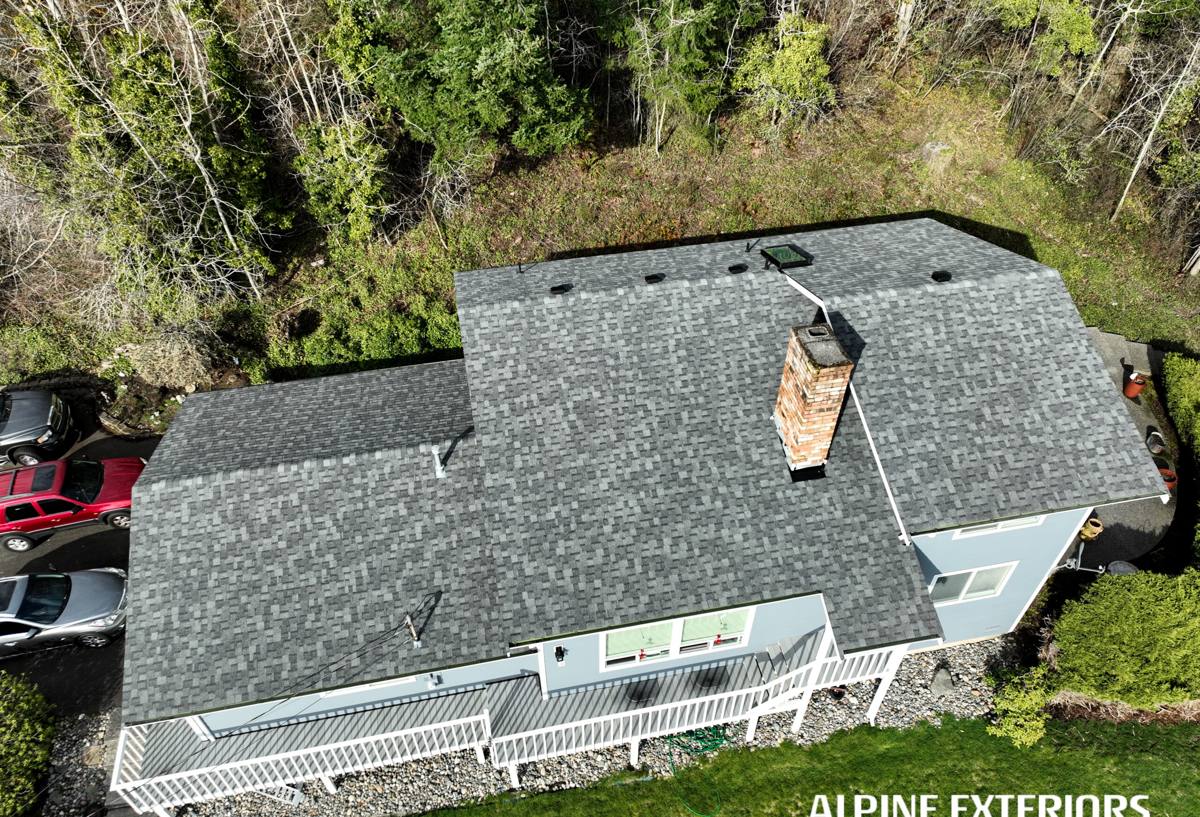
What Salt Air, Rain, and Moss Actually Do to a Roof
Salt air and corrosion
Airborne salt from Bellingham Bay settles on every exposed surface, including roofs several blocks inland. Over years, it accelerates corrosion on exposed metal — nail heads, flashing edges, vent stacks, and gutter hardware. A roof detailed with standard, non-coated fasteners in this environment tends to show rust streaks and loosened fasteners years before it should.
Driving rain and wind-driven water
Storms coming off the water don't just fall straight down; wind pushes rain sideways and up under laps, edges, and flashing that would stay dry in a calmer climate. That means underlayment quality, fastening patterns, and flashing details around chimneys, skylights, and valleys carry more weight here than they would on a roof in a drier region.
Moss and prolonged moisture
Whatcom County's cooler, wetter months give moss and algae a long window to establish themselves, especially on north-facing slopes and under tree cover. Moss doesn't just look bad — its root structure holds moisture against the shingle surface and can work its way under shingle edges, lifting them and creating a path for water intrusion that isn't obvious from the ground.
Signs a Fairhaven Roof Is Due for Replacement
Repairs make sense for isolated damage. Replacement becomes the honest recommendation when the roofing system itself — not just one section — has aged out or been compromised by the conditions above. Common signs we look for:
- Granule loss heavy enough that you can see bare, shiny patches on asphalt shingles
- Shingle edges curling, cupping, or lifting, especially where moss has taken hold
- Rust staining or visible corrosion on flashing, vent boots, or exposed fasteners
- Soft spots in the roof deck when walked, or sagging visible from the ground
- Daylight visible through the roof deck from inside the attic
- Repeated leaks in different spots after past patch repairs
- A roof approaching or past its expected service life for its material type
One or two of these items on their own might still be repairable. Several together, or any sign of deck damage, usually means the underlying system has been compromised long enough that a patch would only buy a short amount of time.
What a Correct Roof Replacement Involves
Full tear-off, not an overlay
Installing new shingles over old ones is faster and cheaper, but it hides deck problems, traps moisture between layers, and voids most manufacturer warranties. In a climate that already drives moisture into roofing assemblies, we don't consider overlays an honest option — a proper replacement means removing the old roofing down to the deck.
Deck inspection and repair
Once the old roofing is off, the deck gets inspected for soft, delaminated, or water-damaged sheathing. Any compromised sections get replaced before anything new goes down. Skipping this step is the single most common shortcut that leads to early failures.
Underlayment built for wet exposure
Given the driving rain this area sees, we use underlayment rated for extended wet exposure, with ice-and-water shield style membrane at eaves, valleys, and around penetrations where wind-driven water is most likely to find a way in.
Flashing and fastener details
Corrosion-resistant flashing and fasteners are non-negotiable this close to the water. Flashing gets properly stepped at walls and chimneys, valleys are lined correctly, and every penetration — vent stacks, skylights — gets sealed and flashed rather than just caulked.
Ventilation
A roof that traps heat and moisture in the attic ages faster from the inside out, and poor ventilation is a major contributor to moss and mildew problems. Balanced intake and exhaust ventilation is part of a correct replacement, not an optional add-on.
Material Options for Fairhaven's Climate
There's no single "best" roofing material for every home — budget, roof pitch, and the look of the house all factor in. What matters is understanding how each option actually performs in salt air, heavy rain, and moss-prone conditions.
| Material | Salt-Air / Moisture Performance | Moss Resistance | Typical Lifespan | Maintenance |
|---|---|---|---|---|
| Architectural asphalt shingles | Good, with corrosion-resistant fasteners and flashing | Moderate; algae-resistant granule options help | 20–30 years | Periodic moss/debris removal |
| Standing-seam metal | Very good when properly coated and fastened | High; sheds moss more easily due to smooth, sloped surface | 40–50+ years | Low; occasional fastener/seam checks |
| Synthetic composite shingles | Good; resists moisture absorption well | Moderate to high depending on product | 30–50 years | Low to moderate |
| Cedar shake | Requires diligent maintenance in wet climates | Low without regular treatment | 20–30 years with upkeep | High; treatment and cleaning needed |
We'll walk through these trade-offs against your budget and the style of your home rather than steering everyone toward the same product. Metal and composite options generally ask less of a homeowner over time in this climate, but a well-installed asphalt system with the right accessories still holds up reliably for decades.
Moss Management Isn't a One-Time Fix
Even the best roof replacement won't make a home immune to moss forever — Fairhaven's tree cover and marine humidity make some moss growth an ongoing reality. What a correct installation does is reduce how fast and how deep moss can take hold: proper ventilation to reduce trapped moisture, appropriate slope and drainage detailing, and, where the homeowner wants it, zinc or copper strips near the ridge that discourage regrowth as rainwater washes over them. We're upfront that this reduces moss pressure rather than eliminating it — anyone promising a moss-proof roof in this climate isn't being straight with you.
Our Fairhaven Roof Replacement Process
1. On-site inspection and honest assessment
We look at the whole system — shingles, deck, flashing, ventilation, and any moss or moisture damage — and tell you plainly whether you need a replacement or whether repair is still a reasonable option.
2. Written scope and material selection
You get a clear, written scope of work: tear-off, deck repair allowance, underlayment type, flashing details, ventilation plan, and material choice, with pricing tied to that specific scope rather than a vague estimate.
3. Scheduling around the weather
Given how much rain this area gets, we plan tear-off and dry-in around the forecast so your home isn't sitting exposed longer than necessary.
4. Tear-off, deck repair, and installation
Full removal, deck inspection and repair, then installation of underlayment, flashing, ventilation, and the finished roofing material to manufacturer specifications.
5. Final walkthrough
We walk the finished roof and the site with you, confirm cleanup is complete, and go over warranty paperwork and any maintenance recommendations specific to your roof and location.
What Affects the Cost of a Fairhaven Roof Replacement
Every roof is priced on its own specifics, but a few factors consistently move the number up or down in this area:
- Roof size and complexity — steep pitches, multiple valleys, and dormers all add labor and material
- Deck condition — hidden water damage found after tear-off adds repair cost that can't always be predicted in advance
- Material choice — asphalt, metal, and composite carry different upfront costs and long-term maintenance profiles
- Ventilation and flashing upgrades — bringing an older roof's ventilation up to a proper standard adds some cost but pays off in roof life
- Tear-off layers — homes with a prior overlay require removing more than one layer of old roofing
- Access and site conditions — tree cover, steep lots, and limited staging space affect labor time
Costs vary enough by home that we don't publish a flat rate — the honest number comes from seeing the actual roof, which is exactly what a free estimate is for.
Why a Sudden Valley-Based Crew Matters in Fairhaven
We're based in Sudden Valley, not a national chain dispatching whichever crew is available. That means the people on your roof are already familiar with how Whatcom County's rain patterns, salt exposure near the bay, and moss season actually behave on real roofs in this area — not just in a training manual. It also means we're a known, findable local business if you have a warranty question five years from now, not a name that shows up once and disappears. Being local isn't a marketing line here; it's the reason we spec corrosion-resistant fasteners as standard rather than an upsell, and why we don't guess at what this climate does to a roof over time.
Choosing a Contractor for Your Fairhaven Roof
Before you sign a contract with anyone, it's worth confirming a few basics:
- Current Washington contractor license and active liability insurance
- A written, itemized scope of work — not just a one-line price
- Manufacturer certification if you're choosing a product with an enhanced or extended warranty
- A clear explanation of tear-off, deck repair allowance, and disposal in the estimate
- Local references or a track record you can actually verify
- A specific plan for ventilation and flashing, not just "we'll replace the shingles"
Any contractor should be able to walk through these points with you without hesitation. If the answers are vague, that's worth paying attention to before work starts, not after.
If your Fairhaven roof is showing its age or you just want an honest read on where it stands, we're glad to come take a look. The estimate is free, there's no pressure to sign anything on the spot, and you'll get a straight answer about whether you need a replacement or not — just fill out the form below to get started.