 Sudden Valley Exterior
 Fairhaven's Siding Problem Isn't Like Inland Whatcom County
Fairhaven sits close enough to the water that homes here deal with a different mix of punishment than a house ten miles inland in Sudden Valley or Deming. Salt-laden air off Bellingham Bay works into seams and fastener heads. Driving rain off the water hits walls sideways, not straight down, which pushes moisture into laps and corner trim that a calmer site would never see. And Whatcom County's long, wet, low-sun stretch from October through April gives moss and algae months to gain a foothold on anything that stays damp and shaded. None of this is exotic — it's just a harsher version of what every siding product in Western Washington deals with, concentrated by proximity to the water.
That combination is exactly why the siding material and the installation details matter more here than in a drier climate. A product that's marginal on moisture handling, or a job that skips flashing details because "it usually doesn't rain that hard," shows its weaknesses faster in Fairhaven than almost anywhere else in the county.
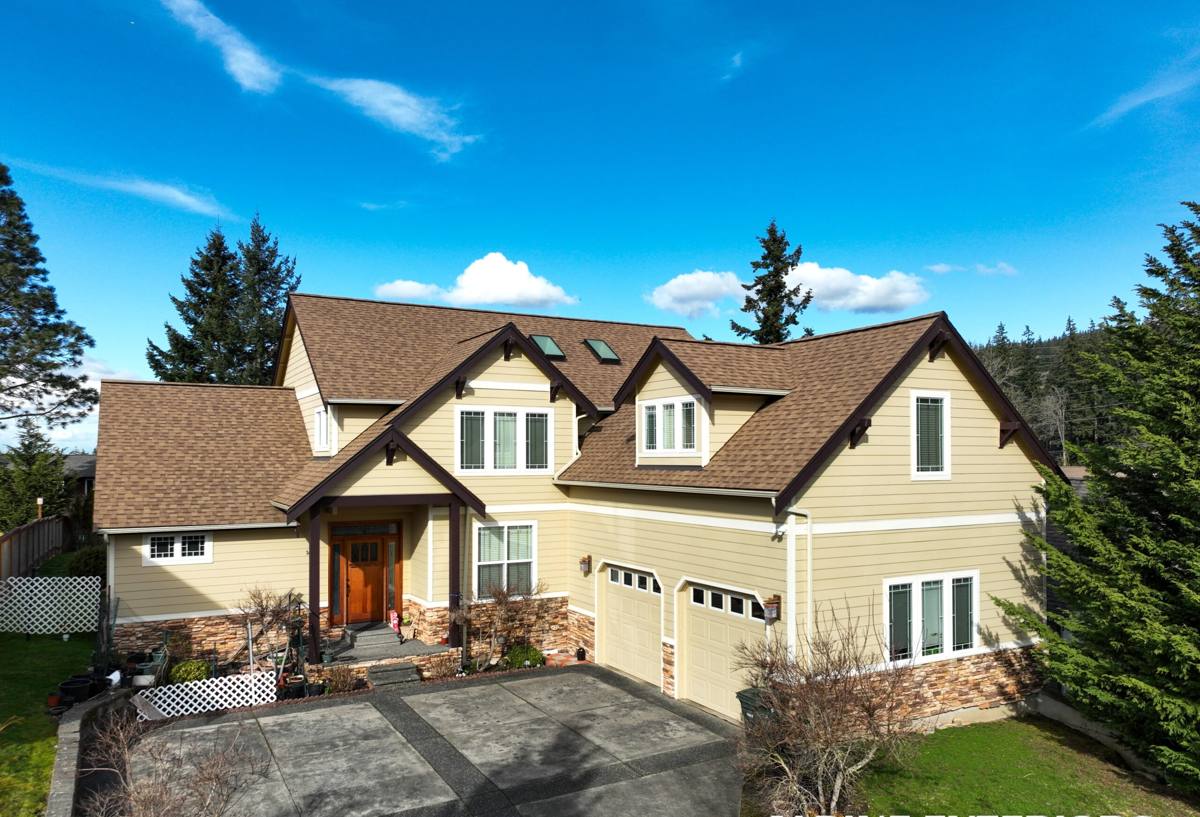
Why We Only Install James Hardie Fiber Cement
Sudden Valley Exterior Co installs James Hardie fiber cement siding exclusively. We don't install vinyl, LP SmartSide, Cemplank, Allura, or bare cedar and primed spruce. That's not a marketing line — it's a standard we hold because of what we've seen these products do over years of exposure to coastal Pacific Northwest weather, and what we don't want to be responsible for on a client's home.
Vinyl expands and contracts with temperature swings, and its seams and J-channels give salt spray and wind-driven rain a way in over time. Wood-based products — cedar, primed spruce, and engineered wood siding like LP SmartSide — perform fine when maintained on a strict schedule, but they depend on an intact factory or field-applied coating to keep water out of the wood fibers. Miss a re-coat cycle, or let moss sit against the substrate through a wet Whatcom winter, and that's where rot starts. Fiber cement products that aren't James Hardie can be reasonable, but we've standardized on one manufacturer so we know exactly how the product behaves, what its warranty actually covers, and how to install it to spec every time — rather than switching systems and details from job to job.
James Hardie fiber cement is non-combustible, doesn't feed moss and mildew the way wood fiber does, and comes with a factory-applied ColorPlus finish that's baked on and warranted separately from the substrate. For a neighborhood exposed to salt air and constant moisture cycling, that's the combination we're willing to put our name behind.
What This Means for a Fairhaven Home Specifically
- HardiePlank lap siding handles wind-driven rain better than lap products that rely on caulk and paint film alone to stay sealed
- ColorPlus finish resists the fading and chalking that salt air and UV accelerate on field-painted surfaces
- The material itself doesn't provide a food source for the moss and algae that thrive in Fairhaven's shaded, damp microclimates
- Factory engineering (HZ5 product line) is built for the specific freeze-thaw and moisture-cycling conditions of the Pacific Northwest
What a Correct Fiber Cement Job Looks Like Here
The siding panel itself is only part of the equation. In a coastal-influenced spot like Fairhaven, the installation details are what actually determine whether the wall stays dry for the next 30 years or starts showing problems in five.
Water Management Comes First
Every correct Hardie installation starts with a drainage plane — typically a weather-resistive barrier with a rainscreen gap behind the siding — so that any moisture that does get past the cladding has somewhere to go instead of sitting against the sheathing. On a home exposed to driving rain off the bay, this gap isn't optional detailing; it's the difference between a wall that dries out after a storm and one that stays damp for days.
Flashing and Fastening
Every window head, door, and horizontal trim transition needs proper flashing integrated with the weather barrier — not just caulked and hoped for. Fasteners need to be corrosion-resistant (we use fasteners rated for the exposure, not whatever's cheapest) and driven to Hardie's specified depth, since over-driven or under-driven nails are one of the most common causes of premature siding failure regardless of who installed it.
Clearances and Ventilation
Hardie specifies minimum clearances from grade, roof lines, and decks for a reason — siding that sits too close to grade or a lower roof pulls moisture up out of the ground or wicks it off a shaded roof surface, and in a wet climate like Whatcom County that clearance error compounds fast. We also make sure siding isn't buried against landscaping or trapped in permanently shaded, poorly ventilated corners where moss gets a running start.
Sudden Valley Exterior Co's Process for a Fairhaven Job
| Step | What Happens | Why It Matters in Fairhaven |
|---|---|---|
| Site assessment | Walk the home, note sun/shade exposure, wind direction, existing moisture damage | Fairhaven homes vary block to block depending on tree cover and how exposed they are to bay winds |
| Tear-off and sheathing check | Remove old siding, inspect sheathing for rot before covering it back up | Coastal moisture exposure means hidden damage is more common than in drier inland areas |
| Weather barrier and rainscreen | Install WRB and drainage gap per Hardie's installation requirements | Gives wind-driven rain a drainage path instead of a trap |
| Flashing and trim | Integrate flashing at every penetration and horizontal transition | Prevents the water intrusion points that show up first in salt-air, high-rain zones |
| Panel installation | Hardie planks or panels installed to spec fastening and clearance requirements | Correct clearances and fastening are what keep the warranty valid and the wall performing |
| Final inspection | Walk the finished job, check caulking, trim, and touch-up paint | Catches anything that could become a moss or moisture entry point later |
Why Local Experience in This Specific Area Matters
A crew that's worked houses throughout Sudden Valley and the greater Whatcom County area, including neighborhoods like Fairhaven, has already seen how the local wind patterns, shade cover, and rain exposure play out on real walls. That's different from general siding experience. We know which elevations on a typical Fairhaven-area lot take the brunt of the weather, where moss tends to establish first, and how much clearance actually holds up against a wet winter here versus what a spec sheet says in the abstract.
That local pattern recognition shows up in small decisions — where to add extra flashing attention, which corners need a closer look at ventilation, how aggressively to address existing moss before new siding goes on — that a crew unfamiliar with this specific coastal-influenced climate might not think to prioritize.
Maintenance Expectations After Installation
James Hardie fiber cement is low-maintenance, not no-maintenance. In a Fairhaven microclimate, homeowners should expect:
- Periodic gentle washing (garden hose and soft brush) to keep salt residue and organic growth from building up, especially on shaded north- and west-facing walls
- An occasional visual check of caulk joints at trim and penetrations, since caulk is the one component that does age faster than the siding itself
- Prompt attention to any moss establishing on adjacent roofing or trim, since it can spread onto siding surfaces below it
- No re-staining or re-sealing cycle — this is one of the practical advantages over cedar or primed wood siding in a climate this wet
Cost Factors for a Fairhaven Fiber Cement Project
Every home is different, so we won't quote a number without seeing the job, but the main factors that move the price on a Fairhaven-area fiber cement project are generally the same ones that matter anywhere on the coast:
| Factor | Why It Affects Cost |
|---|---|
| Existing sheathing condition | Hidden moisture damage from years of coastal exposure sometimes requires sheathing repair before new siding goes on |
| Home size and wall complexity | More corners, dormers, and trim details mean more flashing and cut work |
| Siding profile and finish | Lap width, panel style, and ColorPlus color selection affect material cost |
| Rainscreen requirement | Adding a full drainage gap system costs more upfront but pays off in a high-exposure location like Fairhaven |
| Access and site conditions | Tight lots, slopes, or mature landscaping near the home can add labor time |
Signs a Fairhaven Home May Need Attention Now
If your current siding is showing any of the following, it's worth a look before another wet season adds to the damage:
- Persistent moss or dark streaking on north- or west-facing walls that returns quickly after cleaning
- Soft spots, bubbling paint, or visible warping, especially near ground level or under windows
- Caulk that's cracked or pulled away at trim joints and corners
- Visible gaps or separation at lap joints after a windy storm
- A musty smell or interior wall staining that suggests moisture is getting past the exterior cladding
If you're weighing a siding replacement in Fairhaven or elsewhere around Sudden Valley, we're happy to walk the exterior with you, point out what we're actually seeing, and put together a straightforward, no-pressure estimate for James Hardie fiber cement done right for this climate.