 Sudden Valley Exterior
 Why Alger Homes Need a Different Approach to Windows
Alger sits in a stretch of Whatcom County where the weather doesn't do anything halfway. Homes here take on salt-laden air moving in off the water, driving rain that hits siding and window frames sideways instead of straight down, and a wet season that stretches long enough for moss and algae to get a foothold on anything that stays damp. Windows are one of the first places all three of those show up. A window that would be perfectly fine in a drier inland climate can start failing here years ahead of schedule — seals give out, frames swell or corrode, and glass fogs between the panes.
Energy-efficient windows aren't just about a lower power bill in this area, though that's real too. They're about a window assembly that's built and installed to shed wind-driven rain, resist moisture intrusion at the frame and sill, and hold its seal through repeated wet-dry cycles year after year. That's a different job than swapping in whatever's cheapest at a big-box store, and it's worth understanding what actually goes into it before you sign a contract.
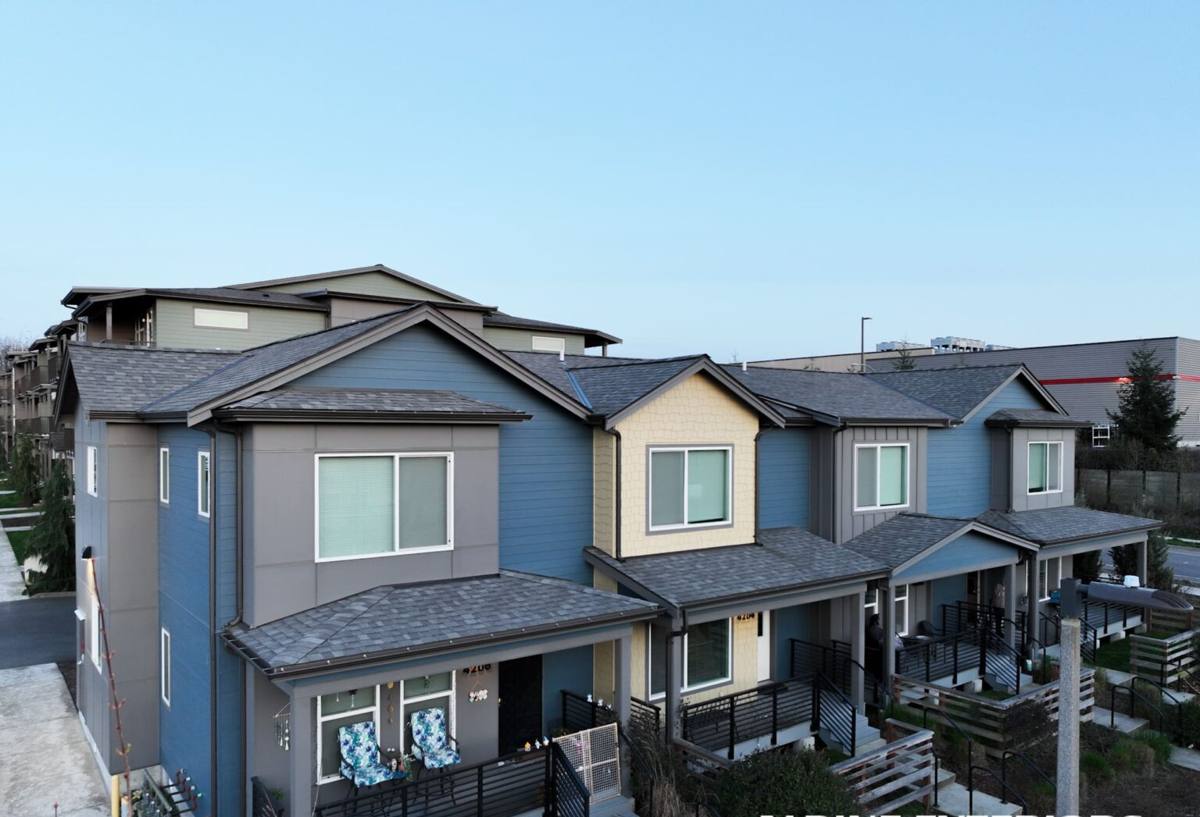
How the Local Climate Actually Wears Down Windows
Salt Air and Corrosion
Proximity to Puget Sound and the surrounding waterways means airborne salt is a real factor for exterior metal — hardware, hinges, and lower-grade aluminum components corrode faster here than they would further inland. Over time, corroded hardware means windows that stick, don't seal tight, or won't lock properly.
Driving Rain
Whatcom County storms frequently bring rain in sideways, not straight down. That matters enormously for window installation because it means water is regularly hitting seams, trim, and flashing under pressure — not just sitting and draining off a sill. A window that's caulked well but not properly flashed can look fine for a season or two and then start leaking into the wall cavity, where you won't see it until there's already damage.
Moss and Prolonged Moisture
The long wet season here means anything that holds moisture against a window frame — leaf debris in a track, a poorly sloped sill, vegetation growing too close to the house — gets extended contact time for moss, algae, and eventually wood rot to set in. Wood-frame windows without a durable clad exterior are especially exposed.
Signs Your Current Windows Are Already Losing the Fight
- Visible condensation or fogging between panes (a failed seal on double- or triple-pane glass)
- Drafts you can feel near the frame even when the window is latched shut
- Soft or discolored wood at the sill or lower corners of the frame
- Moss, algae, or black staining building up on the frame or exterior trim
- Windows that are hard to open, close, or lock — often a sign of corroded or swollen hardware
- A noticeable rise in heating costs without any other explanation
What "Energy-Efficient" Actually Means for a Window
The term gets used loosely in advertising, so it's worth being specific. A genuinely energy-efficient window in this climate is judged on a handful of measurable factors, not just a sticker on the glass:
- U-factor — how well the window resists heat transfer. Lower is better for our cool, wet winters.
- Solar Heat Gain Coefficient (SHGC) — how much solar heat passes through the glass. Matters less here than in sunnier climates, but still affects comfort in south- and west-facing rooms.
- Air leakage rating — how much air passes through the assembly when closed. This is often the single biggest factor in comfort and draft complaints.
- Frame material and construction — determines how the window handles moisture, temperature swings, and long-term maintenance.
- Glass package — double-pane with low-E coating and argon or krypton gas fill is standard for real efficiency gains; triple-pane adds more but at a higher cost and weight.
Frame Material Comparison for This Climate
| Frame Material | How It Handles Local Weather | Maintenance | Typical Lifespan |
|---|---|---|---|
| Vinyl | Good moisture resistance, doesn't corrode from salt air, some flex in temperature swings | Low — occasional cleaning | 20–30+ years |
| Fiberglass | Excellent stability, very low expansion/contraction, strong resistance to moisture damage | Low | 30–40+ years |
| Wood (unclad) | Attractive but vulnerable to rot and moss in a wet, coastal climate without diligent upkeep | High — repainting, sealing, rot inspection | Varies widely with maintenance |
| Wood-clad | Interior wood look with an exterior vinyl or aluminum shell that sheds moisture better | Moderate | 25–35 years |
| Aluminum | Strong but conducts heat/cold and is more prone to salt-air corrosion without quality coatings | Moderate | 20–30 years |
We steer most Alger homeowners toward vinyl or fiberglass frames for this reason — not because other materials are bad products, but because the maintenance burden and moisture exposure here favor materials that don't need repainting or rot inspection every few years. If you have your heart set on a wood-look interior, wood-clad options let you get that appearance without putting bare wood on the weather side of the house.
What a Correct Installation Actually Involves
The window unit itself is maybe half the job. The other half — the part that determines whether it actually performs in driving rain — is the installation. This is where a lot of window jobs quietly go wrong, because problems from a bad install often don't show up for a year or two.
Our Installation Checklist
- Remove old window and inspect the rough opening, sill, and surrounding framing for hidden rot or moisture damage before anything new goes in
- Repair or rebuild any compromised framing or sheathing — never install a new window over a damaged opening
- Install proper flashing at the head, jambs, and sill, integrated with the home's existing water-resistive barrier so water is directed out, not trapped in
- Set the window level, plumb, and square, shimmed correctly to avoid stress on the frame
- Seal with appropriate exterior-grade sealant at all penetration points, sized for the gaps involved
- Insulate the gap between the window frame and rough opening — not overpacked, which can bow the frame
- Finish exterior trim and caulking to shed water away from seams
- Test operation, locks, and seals before calling the job complete
Skipping the flashing and moisture-barrier integration is the single most common shortcut we see from underqualified installs, and it's the one that causes the most expensive problems later — hidden water damage inside the wall that isn't obvious until siding or drywall is opened up.
Our Process for Alger Window Projects
1. On-Site Assessment
We look at your existing windows, frame condition, and the specific exposure of your home — a window facing the prevailing wind and rain direction needs more attention to flashing and sealing than one that's more sheltered.
2. Product Recommendation
We walk through frame material, glass package, and budget options honestly, including trade-offs — we'd rather tell you a cheaper option is a reasonable choice for a low-exposure window than upsell you on something you don't need.
3. Installation
Full removal, inspection, repair as needed, and installation following the checklist above, done by people who install windows in this climate regularly — not a crew learning on your house.
4. Cleanup and Walkthrough
We clean up debris and walk you through operation, locking mechanisms, and basic care before we consider the job done.
Why It Matters That We Already Work in This Area
Window installation isn't identical everywhere, and a crew that mostly works drier inland climates can miss details that matter here. Working regularly in Whatcom County and around Sudden Valley means we've seen how driving rain finds weak points in flashing, how quickly moss and staining can build on north-facing frames that don't get much sun, and which frame materials actually hold up versus which ones look fine in a showroom and struggle after a few wet winters outside. That local pattern recognition is part of what you're paying for, alongside the labor and materials.
Cost Factors to Expect
Exact pricing depends on your home, but the factors below are what actually move the number up or down. We'd rather explain this upfront than have you guess.
| Factor | Why It Affects Cost |
|---|---|
| Number of windows | Per-window cost typically drops somewhat on larger jobs due to shared labor setup |
| Frame material | Vinyl is generally the most affordable; fiberglass and wood-clad cost more upfront but may save on maintenance |
| Glass package | Double-pane low-E with gas fill is standard; triple-pane and specialty coatings add cost |
| Condition of existing opening | Rot or framing damage discovered during removal adds repair time and materials |
| Window size and style | Larger units, custom shapes, and operable styles (casement, awning) cost more than standard sliders or single-hungs |
| Access and height | Second-story or hard-to-access windows take longer to install safely |
Broadly, homeowners in this region should expect a wide range depending on these factors — a single standard replacement window will cost far less than a full-house upgrade with higher-end glass packages. We give you a firm, itemized number after we've actually looked at your windows, not a phone-quote guess.
Protecting Your Investment After Installation
New windows still need some basic upkeep in this climate to get their full lifespan:
- Clear debris from tracks and sills regularly, especially during the wet moss season
- Rinse salt residue off exterior frames periodically if you're closer to open water or exposed to coastal wind
- Keep vegetation trimmed back from window exteriors so frames can dry out between rain events
- Check caulking and exterior sealant annually and touch up if it's cracking or pulling away
- Operate locks and hardware periodically even on windows you don't open often, to keep mechanisms from seizing
If your windows in Alger are drafty, fogged, or just old enough that you're wondering whether repair or replacement makes more sense, we're happy to take a look and give you a straight answer. Fill out the form below for a free, no-pressure estimate — no obligation, no pushy sales pitch, just an honest assessment of what your home actually needs.