 Sudden Valley Exterior
 Why Edgemoor Siding Wears Out Faster Than the Brochures Suggest
Homes around Edgemoor and the greater Sudden Valley area take a different kind of beating than siding manufacturers assume when they write their installation manuals. The combination of salt-laden air off the water, long stretches of driving, wind-pushed rain, and a moss season that can stretch for months puts constant moisture pressure on exterior walls. Most siding failures we see out here aren't dramatic — they're slow. A little bit of water gets behind a panel, a little bit of moss holds moisture against a north-facing wall, and five or ten years later a homeowner is looking at soft spots, peeling paint, or siding that's swollen and pulling away from the fasteners.
This is why we treat siding replacement in this area as a climate-specific job, not a generic one. What holds up on a dry-side property doesn't necessarily hold up here, and what passes a quick visual inspection from the curb often isn't telling the whole story about what's happening at the seams, the butt joints, and the bottom courses closest to grade.
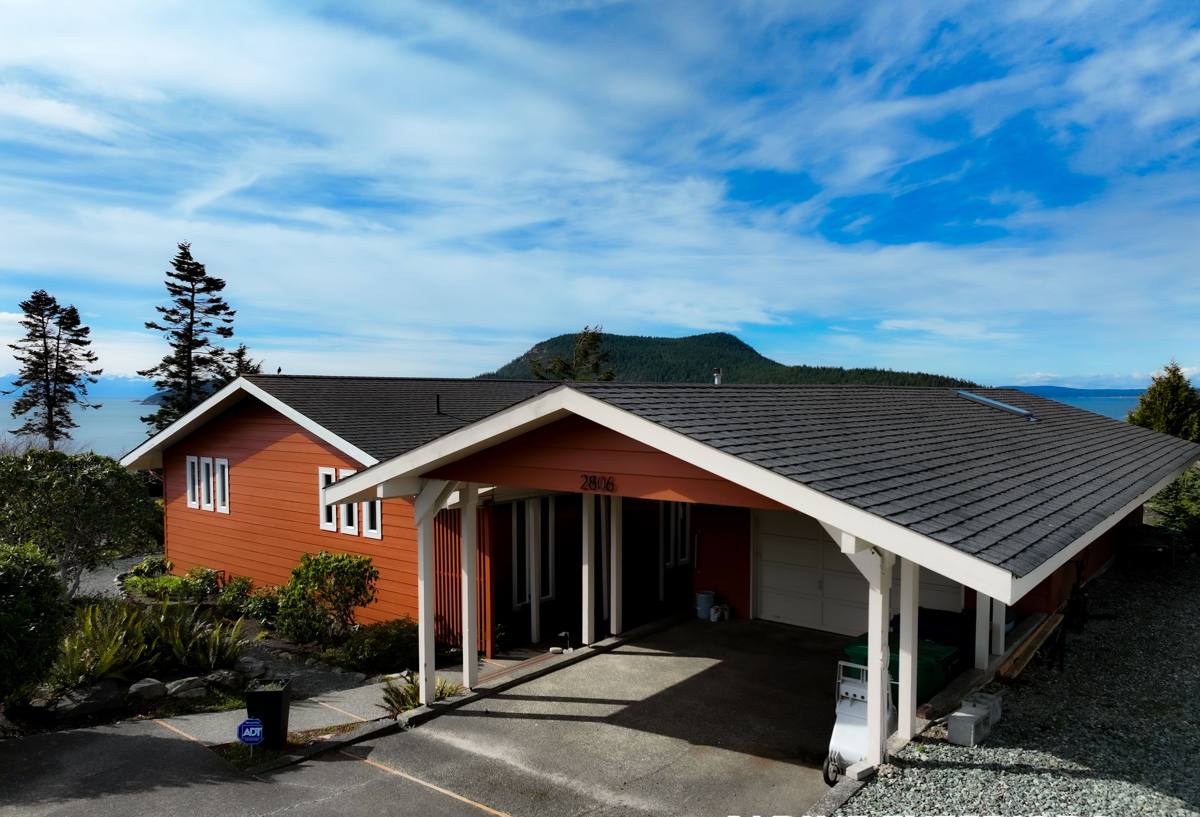
Signs an Edgemoor Home Actually Needs Siding Replacement
Not every siding problem means a full replacement — sometimes it's a flashing detail or a caulking issue. But there are patterns we see often enough in this neighborhood that they're worth flagging for homeowners trying to figure out whether it's time.
- Soft or spongy spots when you press on the siding, especially near the bottom of walls or under windows
- Paint that's bubbling, peeling, or needing repainting far more often than it should
- Visible warping, cupping, or gaps opening up between boards or panels
- Persistent moss or dark streaking on shaded or north-facing walls that keeps returning after cleaning
- Siding that feels cold or damp to the touch, or a musty smell near exterior walls inside the home
- Fastener heads showing through, popping, or leaving rust streaks
If you're seeing more than one of these, especially on the sides of the house that catch the most wind-driven rain, it's worth having someone look at the wall assembly, not just the surface.
What We Install: James Hardie Fiber Cement, and Why
We install James Hardie fiber cement siding exclusively. We don't install vinyl, LP SmartSide, cedar, primed spruce, or other fiber cement brands, and that's a deliberate standard, not a lack of options. For a climate like Whatcom County's — where moisture exposure is constant and the moss season is long — the material matters as much as the workmanship.
Fiber cement doesn't absorb and swell the way wood-based products can, and it doesn't soften or distort under sustained wet conditions. It's also non-combustible, which matters more each year as wildfire smoke and ember exposure become a broader Pacific Northwest concern, not just an eastern-Washington one. James Hardie's ColorPlus factory-applied finish is baked on under controlled conditions, which gives it more consistent, longer-lasting color adhesion than field-applied paint — a real advantage in an area where repainting is expensive and repeatedly disturbing old caulk and flashing lines is its own risk.
James Hardie also engineers specific product lines (their HZ5 line, for example) for regions with more moisture and temperature swing, which lines up well with what this part of Whatcom County actually experiences. We're not choosing Hardie because it's the only decent product on the market — we're choosing it because, installed correctly, it's the one that holds up best against the specific conditions Edgemoor homes deal with year after year, and it carries a strong transferable warranty that reflects that confidence.
How Hardie Compares on the Factors That Matter Here
| Factor | James Hardie Fiber Cement | Vinyl | Wood / Engineered Wood |
|---|---|---|---|
| Moisture behavior | Doesn't absorb or swell; engineered for wet climates | Doesn't absorb, but can warp/crack in temperature swings and trap moisture behind it if installed loose | Can absorb moisture at cut edges and joints over time |
| Fire resistance | Non-combustible | Melts/deforms under heat | Combustible |
| Finish longevity | Factory ColorPlus finish, long fade resistance | Color is through-body but can chalk and fade | Field-applied paint, needs more frequent repainting |
| Upfront cost | Mid-to-higher | Lower | Mid |
| Long-term maintenance | Low when installed to spec | Low, but limited repair options once damaged | Higher — repainting, caulking, moisture checks |
We're upfront that Hardie isn't the cheapest option on the shelf. It's the option we're willing to put our name behind for how long it needs to perform in this climate.
What a Correct Siding Replacement Actually Involves
The material is only part of the equation. A lot of siding failures we get called out to inspect trace back not to the product, but to shortcuts in how it was installed — gaps in flashing, missed weather-resistive barrier details, or fasteners driven wrong. A correct job includes:
- Full removal of old siding and inspection of the sheathing underneath for rot or hidden water damage before anything new goes up
- Repair or replacement of any compromised sheathing, framing, or trim found during tear-off
- Proper weather-resistive barrier installation, lapped correctly to shed water downward
- Correct flashing at windows, doors, and any wall penetrations — this is where most hidden leaks originate
- Fastening per James Hardie's specifications (fastener type, spacing, and depth) rather than "close enough"
- Proper clearance at grade, decks, and roof lines so siding isn't sitting in standing water or constant splash-back
- Factory-finished ColorPlus panels installed with touch-up done to spec, not just any matching paint
Skipping any one of these doesn't usually show up as a problem in year one. It shows up in year six or eight, as a soft spot behind a downspout or a moss-fed leak near a window head — the kind of failure that's expensive to trace back because it's hidden behind new-looking siding.
Our Process for Edgemoor Siding Replacement Projects
1. Assessment and Walkthrough
We start with a full exterior walkthrough, checking not just the visible siding condition but soft spots, trim, flashing, and areas most exposed to wind-driven rain and shade-driven moss growth. We'll tell you plainly if it's a full replacement, a partial repair, or something else entirely.
2. Scope and Estimate
You get a written scope covering tear-off, any sheathing repair allowance, the specific Hardie product and profile, color, and trim details — no vague line items.
3. Tear-Off and Inspection
Old siding comes off in sections so we can inspect the wall assembly as we go, not just at the start. This is when hidden moisture damage gets caught before it's covered up again.
4. Barrier, Flashing, and Repair
Any damaged sheathing or framing gets repaired, and the weather barrier and flashing get installed to spec before a single piece of new siding goes up.
5. Installation
Hardie panels or planks go up per manufacturer fastening specs, with attention to clearances at grade, decks, and roof intersections — the details that determine how the wall performs in year ten, not just how it looks on install day.
6. Final Walkthrough
We walk the finished job with you, checking trim lines, caulking, and touch-up before calling it done.
Why Local Experience in This Neighborhood Actually Matters
Siding installation isn't identical from one region to the next, and it isn't even identical from one side of a house to the other in a place like this. A crew that's replaced siding on other homes in and around Sudden Valley already knows which wall orientations take the worst of the wind-driven rain, which shaded areas are prone to moss buildup, and where moisture tends to collect at grade in this specific terrain. That's the kind of judgment that doesn't come from a manual — it comes from having done the work here before, repeatedly, and having seen what fails and what holds up over the years that follow.
It also means fewer surprises during the estimate. We're not guessing at what Whatcom County weather does to a wall over a decade — we're pricing and building for what we've already seen it do.
Maintaining Hardie Siding After Replacement
One of the practical advantages of switching to fiber cement in this climate is how little ongoing maintenance it demands compared to what you may be used to. Occasional rinsing to keep moss and organic buildup from taking hold on shaded walls, prompt caulk touch-ups where trim meets siding, and keeping gutters and downspouts clear so water isn't sheeting down the wall face are really the main upkeep items. There's no repainting cycle to plan around, and no swelling or rot to monitor at the cut edges, provided the install was done correctly in the first place.
Ready to Talk About Your Home?
If you're seeing early warning signs on your siding, or you're just planning ahead for a home in Edgemoor or elsewhere around Sudden Valley, we're happy to take a look and give you an honest read on where things stand. There's no pressure and no cost to get an estimate — just a straightforward assessment from a crew that installs one product, does it to spec, and knows this area's weather firsthand.