 Sudden Valley Exterior
 Why Windows Wear Out Faster Out Here
Deming and the Sudden Valley area sit in one of the wetter pockets of Whatcom County, and the weather doesn't take much of a break. Rain comes in sideways more often than people expect, humidity sits heavy against the house for weeks at a time, and moss finds a foothold on anything that stays damp long enough. Windows take the brunt of all three. A window that would coast along fine in a drier climate can start failing here in half the time, because the frame, the seals, and the glass are never really given a chance to dry out between storms.
What that means in practice: seals that break down early, frames that trap moisture instead of shedding it, and glass that fogs between the panes long before it "should." None of that is a manufacturing defect in most cases — it's a mismatch between the product and the climate it was asked to survive in. Our job is picking and installing windows that are actually built for this kind of exposure, not just windows that look good on a showroom floor.
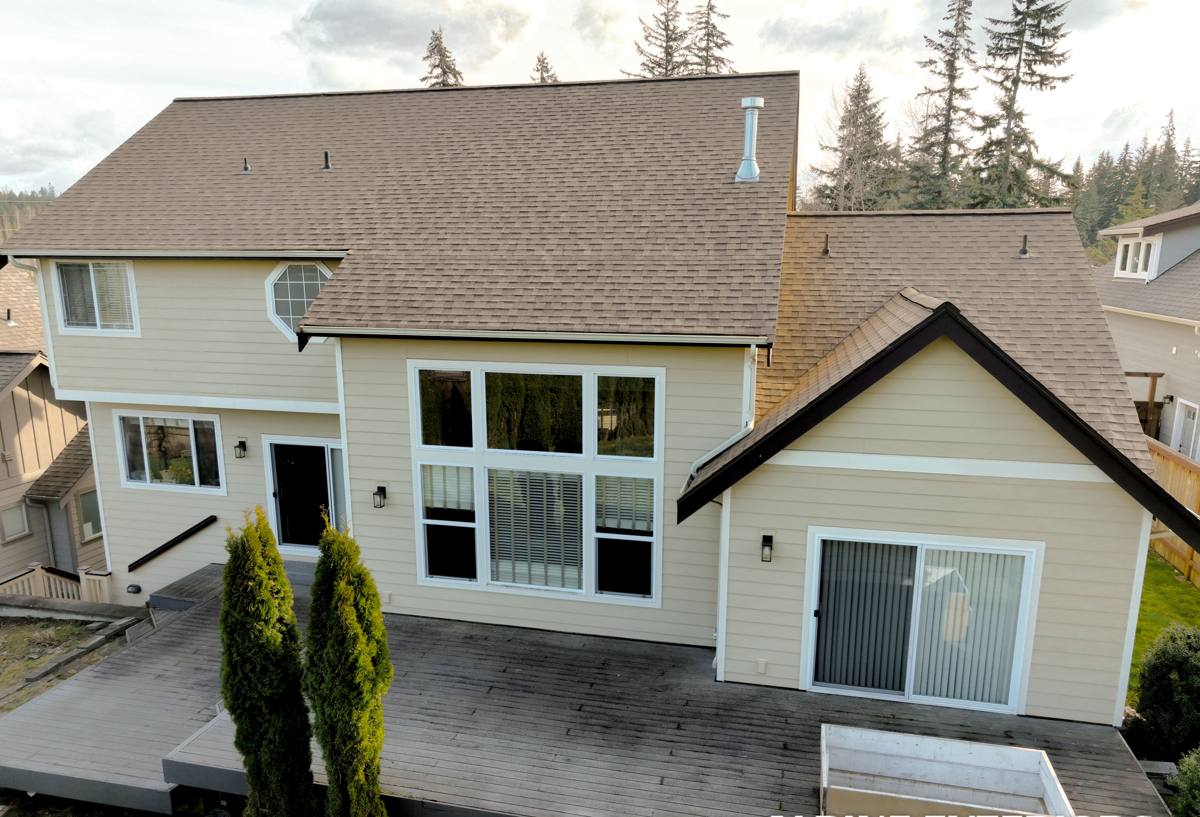
What "Energy-Efficient" Actually Means Here
Energy efficiency isn't one number — it's a combination of factors that all matter differently depending on which direction your house faces and how exposed it is to wind-driven rain.
U-Factor and Solar Heat Gain
U-factor measures how well a window resists heat loss — lower is better, and it's the number that matters most for our winters, when the goal is keeping heat inside the house. Solar heat gain coefficient (SHGC) matters more on south- and west-facing glass, where you're managing how much sun-driven heat gets in during the brief stretches of clear weather. In a marine climate like ours, we generally lean toward lower U-factor over aggressive SHGC control — the priority is keeping heat in, not keeping sun out, since sun isn't the problem most of the year.
Frame Material Trade-Offs
The frame matters as much as the glass. In a climate with this much sustained moisture, a frame that moves, swells, or holds water against the sealant will undercut even the best glass package.
| Frame Type | Moisture Behavior | Maintenance | Typical Fit for This Climate |
|---|---|---|---|
| Vinyl | Doesn't absorb water, won't rot | Low — occasional cleaning | Good value option, solid performer if installed correctly |
| Fiberglass | Very stable, minimal expansion/contraction | Low | Strong long-term choice for high-exposure walls |
| Wood-clad | Vulnerable at any cladding breach; needs a sound moisture barrier behind it | Higher — periodic inspection of cladding seams | Fine when detailed carefully; riskier if flashing is cut corners |
| Aluminum | Conducts cold, prone to condensation without thermal break | Low | Rarely our first recommendation for houses here |
We're not against wood-clad windows as a category — plenty perform well for decades. Our standard is that any frame going into a Deming or Sudden Valley home gets installed with flashing and a drainage plane that assumes it will get wet, because out here, it will.
Signs Your Current Windows Are Costing You
Most homeowners don't notice window failure as a single event — it shows up as a slow drain on comfort and heating bills. Here's what to check for:
- Moss or dark streaking building up on the sill or lower frame, especially on north- and west-facing windows
- A cold draft you can feel with your hand near the sash even when the window is latched shut
- Fogging or a permanent haze between the panes of double-pane glass — a sign the seal has failed and the gas fill is gone
- Paint or finish that's bubbling or peeling right at the window trim, which usually points to trapped moisture behind it
- Wood trim that feels soft or spongy when you press on it near the corners
- Noticeably higher heating bills in the coldest months compared to similar-sized homes nearby
- Difficulty opening, closing, or latching that wasn't there a few years ago
Any one of these on its own isn't an emergency. Several of them together, especially combined with visible moss or staining, usually means moisture has been getting past the window for a while.
What a Correct Installation Actually Involves
The window itself is maybe half the job. The other half is how it's tied into the wall, and that's where most of the long-term failures we get called out to actually start.
Flashing and Moisture Management
Every opening needs a flashing sequence that directs water down and out, never into the framing. That means the sill pan, the side flashing, and the head flashing all lap in the right order — head over sides, sides over sill — so water sheds like shingles rather than pooling anywhere. Skipping or shortcutting this step is invisible from the outside for years, until it isn't.
Fit, Fastening, and Sealing
A window that's shimmed out of square will bind, leak, or both, even if it's a premium unit. We check the opening is square and plumb before the window goes in, fasten per the manufacturer's schedule (not a "close enough" pattern), and use the right sealant at the right joints — not caulk smeared over everything as a catch-all. Interior and exterior sealing are two different jobs with two different products, and both need to happen.
Our Process for Deming and Sudden Valley Projects
Assessment
We start by looking at the existing window and, more importantly, the wall around it — checking for the moisture and rot signs above before we ever talk product selection. If there's hidden damage behind a window, that needs to be addressed as part of the job, not discovered mid-install.
Install Day
Old windows come out carefully so we can inspect the opening before anything new goes in. Any soft framing or compromised sheathing gets repaired at that point. Flashing goes in per the sequence above, the new window gets shimmed and fastened, and both interior and exterior seals are completed before we move to the next opening.
Follow-Up
We walk the finished windows with the homeowner, check operation on every unit, and make sure the sealant lines are clean and complete. If anything settles or needs attention after the first real stretch of wet weather, that's a callback, not a new invoice.
Why a Crew That Already Works This Area Matters
A lot of window problems in Whatcom County come down to installers applying a technique that works fine in a drier region but isn't built for this much sustained moisture. A crew that regularly works Deming and Sudden Valley homes already knows which orientations take the worst weather, which older housing stock tends to have thin or missing flashing behind the trim, and where moss buildup is a sign of something more than a cosmetic issue. That local pattern recognition is the difference between a window that's still sealed tight in ten years and one that needs attention again in three.
Cost Factors to Expect
Every home is different, but the line items that move the price are consistent. As a rough starting point, full-window replacement (unit plus installation) commonly runs somewhere in the range of $600 to $1,200-plus per window installed, with the spread driven mostly by size, frame material, and what the crew finds once the old window comes out.
| Factor | Why It Moves the Price |
|---|---|
| Frame material | Vinyl is typically the most budget-friendly; fiberglass and wood-clad cost more upfront |
| Window size and count | Larger openings and whole-house jobs bring per-unit cost down slightly through efficiency of scale |
| Hidden rot or framing damage | Discovered once old windows are out; repair adds labor and material before the new unit goes in |
| Access and height | Second-story or hard-to-reach openings take more time and staging |
| Glass package | Upgraded low-E coatings or gas fills add cost but pay back faster in a climate this damp and cold |
Living With Long Moss Season
Even a well-installed window benefits from a little attention during Whatcom County's long wet stretch. Keep sills and tracks clear of standing debris where moss likes to start, rinse frames periodically rather than letting organic buildup sit against the finish, and keep an eye on caulk lines at the trim — a hairline gap there is cheap to reseal and expensive to ignore. None of this replaces a correct installation, but it extends the life of one.
If your windows are showing any of the signs above, or you're just ready for a straight answer about what's worth replacing versus repairing, we're happy to take a look. The estimate is free, there's no pressure, and you'll get a clear breakdown of what we'd actually recommend for your home — use the form below to get started.