 Sudden Valley Exterior
 Why Decks in Cordata Wear Out Faster Than People Expect
Most homeowners in Cordata don't think about their deck until a board flexes underfoot or a railing post wiggles. By then, the damage is usually well past the surface. Whatcom County's climate is hard on exterior wood structures in a specific way: long stretches of steady, low-intensity rain, humidity that lingers under decks and between boards, and a moss season that can run from fall through spring. None of that is dramatic on its own, but it adds up year after year, especially on decks that were built to a budget rather than built for this climate.
A deck replacement isn't just swapping old boards for new ones. It's a chance to fix the structural and moisture problems that caused the failure in the first place — problems that will just reappear on a new deck surface if the framing underneath isn't addressed.
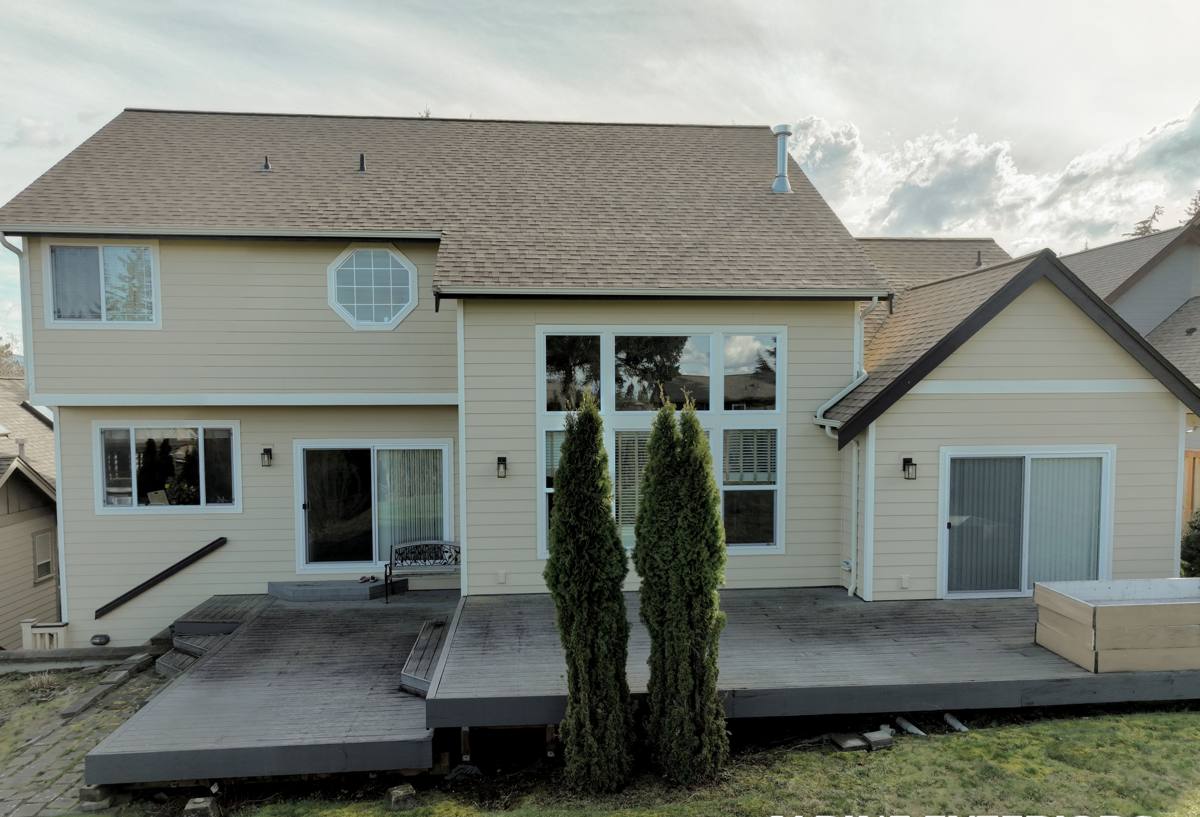
What Our Climate Actually Does to a Deck
Driving rain in this part of Washington doesn't just fall straight down — wind pushes it sideways into ledger boards, under railings, and into any gap where flashing is missing or was never installed correctly. Combined with the near-constant moisture and a long moss season, this creates a few predictable failure patterns:
- Moss and algae growth on decking and steps, which holds moisture against the wood and creates a slip hazard, especially on shaded sides of the house
- Rot at the ledger board — where the deck attaches to the house — from water that gets behind poorly flashed connections
- Fastener corrosion from repeated wet-dry cycling, which weakens joist hangers and structural screws over time
- Cupping and splitting in lower-grade lumber that absorbs and releases moisture unevenly
- Soft or spongy framing hidden beneath decking that looks fine from above
This is why two decks built the same year, in the same neighborhood, can age completely differently. The one that lasts is almost always the one that was flashed, fastened, and ventilated correctly to begin with.
Signs You Need a Replacement, Not Another Repair
Repairing a board here and there makes sense when the framing underneath is sound. Full replacement makes sense once the structure itself is compromised. Here's how to tell which situation you're in:
- A screwdriver or awl sinks easily into joists, beams, or the ledger board — a clear sign of rot
- The deck feels bouncy or springy in the middle, not just at one weak board
- Railing posts move or flex when pushed, which often points to rotted post bases or missing structural connections
- You can see daylight or gaps where the ledger board meets the house, or no visible flashing at that joint
- Multiple support posts show cracking, checking, or soft spots at the base where they sit closest to the ground or concrete
- The deck was built more than 20-25 years ago with untreated fasteners or minimal flashing, common in older construction throughout Whatcom County
- Repairs have already been made two or three times in the same areas and keep coming back
If even one or two of these apply, it's worth having someone look at the framing before spending money on cosmetic fixes.
What a Correct Deck Replacement Involves
The Ledger Board and Flashing
The ledger board is the single most common failure point on decks in wet climates, and it's the detail most likely to be done wrong by an unqualified crew. Correct practice means flashing that directs water away from the house, proper fasteners rated for exterior structural use, and a gap or drainage path so water doesn't pool against the siding. On a replacement, we don't just reuse the old ledger connection — we open it up, check the rim joist and sheathing behind it for hidden rot, and rebuild that joint correctly.
Framing, Footings, and Structural Layout
Joist spacing, beam sizing, and footing depth all need to match the actual size and load of the deck being built, not just copy what was there before. If the original footings were undersized or set too shallow, we address that during replacement rather than building a new deck on an old, marginal foundation.
Ventilation Under the Deck
Low decks with little airflow underneath trap moisture and encourage rot from below. Where possible, we build in enough clearance and drainage so air can move under the structure, which matters more here than in drier climates because there are simply more wet days for moisture to sit and do damage.
Choosing Decking Material for a Wet, Mossy Climate
The material you put on top of a well-built frame matters less than the frame itself, but it still affects how much maintenance you'll do and how the deck holds up to moss and constant moisture.
| Material | Upfront Cost | Maintenance in This Climate | Moss/Moisture Behavior | Typical Lifespan |
|---|---|---|---|---|
| Pressure-treated lumber | Lowest | Annual cleaning and periodic sealing | Absorbs moisture, prone to moss without upkeep | 15-20 years with maintenance |
| Cedar | Moderate | Regular sealing to hold color and resist moisture | Naturally moisture-resistant but still needs care | 15-20 years |
| Uncapped composite | Moderate-High | Low, occasional cleaning | Can still trap surface moisture and grow algae if not cleaned | 20-25 years |
| Capped composite/PVC | Highest | Lowest, mostly rinsing | Sheds water well, most resistant to moss buildup | 25+ years |
There's no universally "right" answer here — it's a trade-off between upfront cost and how much time you want to spend cleaning and sealing a deck through our long wet season. We'll walk through the real trade-offs for your project rather than push one material by default.
Railings, Guardrails, and Permits
Most jurisdictions in Washington require guardrails at a set height once a deck is a certain distance above grade, along with baluster spacing tight enough to prevent a child from passing through. Requirements can vary by local building department, and a deck replacement of any real size typically requires a permit and inspection, not just a courtesy notice. We handle the permit process as part of the job rather than leaving it for the homeowner to sort out, and we build to current code even if the deck being replaced wasn't.
Our Deck Replacement Process
- On-site assessment — we check the framing, ledger connection, footings, and railings, not just the visible decking surface
- Written scope and estimate — what's being replaced, what materials are being used, and why, in plain language
- Permit handling — we pull the necessary permit and schedule required inspections
- Demolition and disposal — old decking and framing removed and hauled off, with a check for hidden rot in the ledger and rim joist once everything is exposed
- Structural rebuild — framing, footings, and ledger flashing brought up to correct, current practice
- Decking, railing, and stair installation — installed to the manufacturer's fastening spec, which matters for both warranty and long-term performance
- Final walkthrough — we go over the finished deck with you before calling the job done
What Deck Replacement Typically Costs
Exact pricing depends on size, material, height, and how much of the structure needs rebuilding versus reusing, but a few factors consistently drive the number up or down:
| Cost Factor | Why It Matters |
|---|---|
| Deck size and shape | More square footage and more complex layouts (angles, multiple levels) mean more material and labor |
| Decking material chosen | Pressure-treated lumber, cedar, and composite/PVC span a wide price range |
| Height above grade | Taller decks need more substantial framing, footings, and stairs |
| Condition of existing footings | Reusing sound footings costs less than replacing undersized or frost-damaged ones |
| Railing style | Cable, glass, and custom railings cost more than standard wood or composite balusters |
| Permit and inspection requirements | Larger or taller decks typically require more inspection steps |
We give a written estimate broken down by these factors so you can see where the money is going, rather than a single lump number.
Keeping a New Deck Looking Good Through the Moss Season
A correctly built deck will still need some seasonal attention in a climate like ours. A yearly rinse or gentle wash before moss and algae get established in fall and winter goes a long way, along with keeping gutters and nearby vegetation from dumping extra water and debris onto the deck surface. Composite and PVC decking need far less of this than wood, but even capped composite benefits from an occasional cleaning in a climate with this much sustained moisture.
Why Hiring a Crew That Already Works in Cordata Matters
Deck framing and flashing details that work fine in a dry climate can fail within a few years here if they're copied from a generic build. A crew that regularly works Cordata and the surrounding Whatcom County area already knows which details need extra attention — ledger flashing, footing depth, and material choices that hold up through our specific pattern of driving rain and extended damp seasons. That local pattern recognition is the difference between a deck that needs attention again in five years and one that doesn't.
If your deck is showing any of the warning signs above, or you're just weighing repair versus replacement, we're happy to take a look and give you a straightforward, no-pressure estimate — no obligation, just an honest read on where things stand.