 Sudden Valley Exterior
 Deck Repair Built for Silver Beach's Wet Season, Not Just a Warm-Weather Fix
Silver Beach sits close to the water in an area that stays damp for most of the year. Between the long stretch of driving rain typical of Whatcom County winters, the marine-influenced air that moves through the region, and a moss season that can run from fall well into spring, decks here work harder than decks in drier parts of the state. A repair that looks fine when it's done can fail again in a year or two if it doesn't account for how much moisture this ground and this air hold onto.
We repair decks in Silver Beach and throughout Sudden Valley regularly, and the pattern is consistent: the damage almost never starts with the boards people notice first. It starts underneath, in framing and connections that stay wet far longer than the surface does.
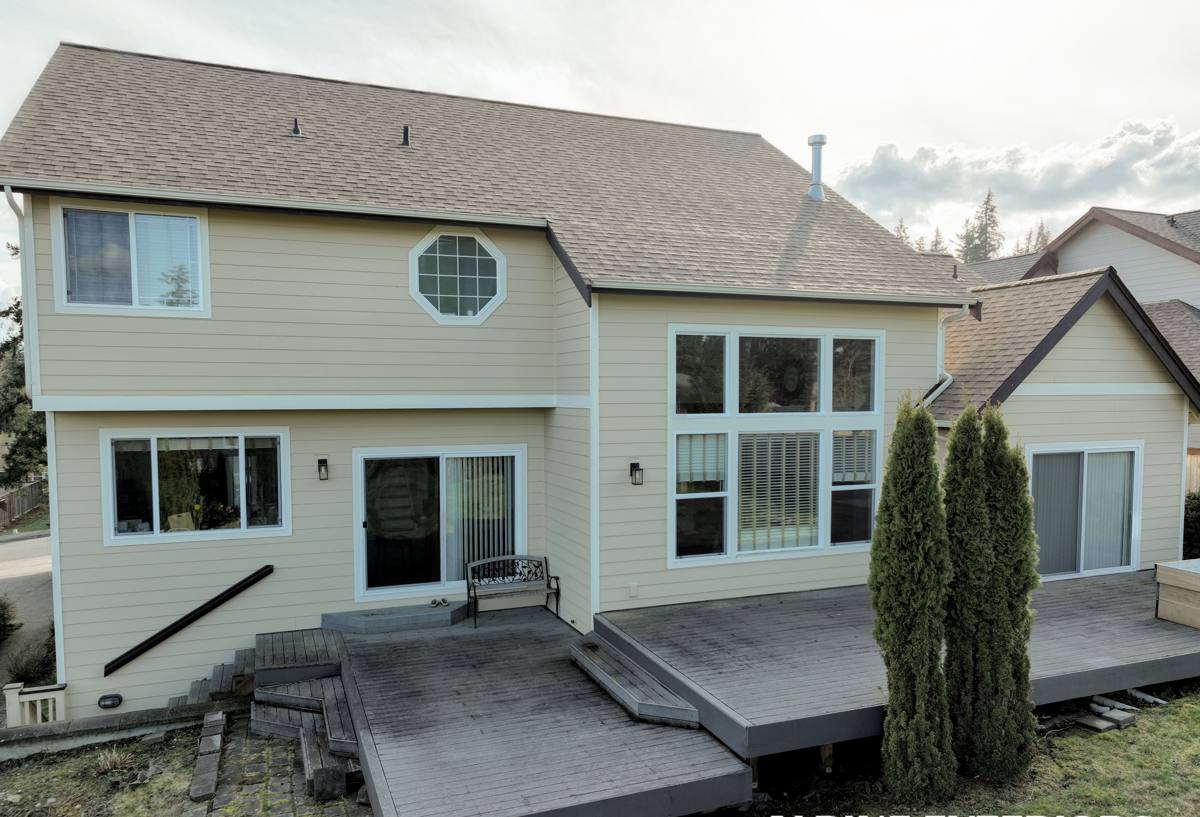
What This Climate Actually Does to a Deck Over Time
A deck doesn't fail because of one bad storm. It fails from repeated cycles of wetting and drying, freeze and thaw, and organic growth that holds moisture against wood and fasteners. In this part of Whatcom County, a few specific patterns show up over and over:
- Moss and algae hold water against the decking — once moss establishes on a north-facing or shaded deck, it acts like a sponge sitting directly on the wood, keeping that surface wet long after the rest of the yard has dried out.
- Driving rain gets pushed sideways — wind-driven rain doesn't just fall on a deck, it gets forced under railings, into ledger board connections, and behind fascia trim where it's harder to see and slower to dry.
- Salt-tinged marine air accelerates fastener corrosion — screws, nails, and hardware that aren't rated for coastal or near-coastal exposure corrode faster here than the same products would inland, and corroded fasteners are one of the most common hidden causes of a deck that feels "loose" or "springy."
- Shorter, cooler drying windows — even after rain stops, overcast humid stretches mean wet wood stays wet longer, extending the window where rot organisms can take hold.
Why This Matters More Near the Water
Decks in Silver Beach tend to sit lower, closer to grade, and closer to tree cover than decks further up the hillside in Sudden Valley. That combination — less airflow, more shade, more standing moisture — means the structural members underneath (joists, beams, ledger boards) are often the first thing to show real damage, even when the top decking still looks presentable.
Signs Your Deck Needs Repair, Not Just a Cleaning
A pressure wash can make a tired deck look better without fixing anything that actually matters. Before you spend money on cosmetic cleanup, walk your deck and check for these:
- Boards that feel spongy, soft, or flex noticeably when you step on them
- A screwdriver or awl sinks easily into a joist, beam, or the ledger board where the deck attaches to the house
- Rust streaking around fastener heads or hardware
- Gaps opening up where the ledger meets the house, or daylight visible behind flashing
- Railings or posts that wiggle at the base
- Persistent moss or dark staining that comes back within weeks of cleaning
- Stairs that feel uneven, bouncy, or have visibly sagging stringers
Any one of these is worth a look. Several together usually means the problem is structural, not cosmetic.
What a Correct Deck Repair Actually Involves
Deck repair gets treated too casually in this trade — swap a few obviously bad boards, caulk a gap, call it done. That approach doesn't hold up in this climate. A repair that's actually going to last starts from the framing out:
1. Structural Inspection First
Before replacing a single board, we check the ledger board attachment, joist hangers, beam and post condition, and footings. Surface rot is often a symptom of a moisture source — a failed flashing detail, a low spot pooling water, or fasteners that have already let go underneath.
2. Fix the Water Path, Not Just the Symptom
If a deck is rotting in the same spot repeatedly, water is getting in and not getting out. That might mean correcting the ledger flashing, adjusting board spacing for drainage, or improving airflow underneath. Replacing boards without addressing why they failed just resets the clock.
3. Match or Upgrade Fasteners and Hardware
Given how fast standard hardware corrodes in this air, we use fasteners and structural connectors rated for exterior, corrosion-prone environments — not whatever happens to be the cheapest box at the hardware store.
4. Replace What's Actually Compromised
Good repair work is selective. We don't upsell a full rebuild when a targeted repair will genuinely hold — but we also won't leave a soft joist in place because replacing three boards was the original ask. We'll tell you which is which and why.
Repair vs. Replace: How We Help You Decide
| Factor | Repair Usually Makes Sense | Replacement Usually Makes Sense |
|---|---|---|
| Framing condition | Joists, beams, and ledger are sound; damage is limited to surface boards | Multiple structural members show rot or fastener failure |
| Age of the deck | Deck is younger, or framing was built with quality lumber and connections | Deck is old enough that framing is likely at the end of its service life |
| Extent of moss/moisture damage | Isolated to one shaded section or a single low spot | Widespread across the whole structure, especially underneath |
| Code and attachment details | Ledger attachment and flashing meet current standards | Ledger, footings, or railings don't meet current safety requirements |
| Cost over time | Targeted repair is a fraction of replacement cost | Repeated repairs are starting to approach rebuild cost |
We give you a straight answer on which category your deck falls into after inspection — not the answer that happens to be more profitable for us.
Our Process for a Silver Beach Deck Repair
- On-site inspection — we check framing, fasteners, flashing, and drainage, not just the visible decking.
- Written scope — you get a clear explanation of what's failing, why, and what's actually needed to fix it.
- Material selection — matched to your existing deck where possible, or upgraded materials where the original choice was part of the problem.
- Repair work — framing and connections corrected first, then decking, railings, and stairs.
- Walkthrough — we show you what was found and what was done before we consider the job finished.
Materials That Hold Up in This Climate
For framing repairs we use lumber and connectors rated for wet, exterior use. For decking surfaces, both quality pressure-treated wood and composite decking can perform well here — the deciding factors are usually your maintenance preference, budget, and how shaded the deck is (heavier shade means more moss regardless of material, so drainage and airflow matter as much as the board itself). We'll talk through the honest maintenance trade-offs of each option rather than push whatever we have easiest access to.
Why a Crew That Already Works Silver Beach Matters
Deck problems in this neighborhood tend to look similar from house to house because the climate driving them is the same. A crew that's already repaired decks around Sudden Valley and Silver Beach isn't guessing at how bad the framing might be under a deck with visible moss — we've opened up enough of them to know where to look first and what usually caused it. That means a faster, more accurate inspection and fewer surprises mid-repair.
It also means realistic expectations. A deck repair that would hold up fine in a dry inland climate can undersell what's actually needed here. We'd rather tell you upfront that a repair needs to include better drainage or corrosion-resistant hardware than have you pay twice.
After the Repair: Keeping It From Happening Again
A repaired deck still needs some seasonal attention in this climate, especially through the wet months:
- Sweep leaves and debris off the deck surface regularly in fall, when moss gets its start
- Check that gaps between boards stay clear so water can drain rather than pool
- Look at the ledger board and flashing once a year for any gaps or staining
- Keep nearby vegetation trimmed back to improve airflow and sun exposure where possible
- Address small moss spots as soon as they appear rather than waiting for a full cleaning
None of this is complicated, but skipping it is exactly how a good repair turns into a repeat repair a few years later.
If your deck in Silver Beach or elsewhere in Sudden Valley is showing soft spots, moss that won't quit, or just feels less solid than it used to, we're happy to take a look and give you a straight assessment. Use the form below to request a free, no-pressure estimate.