 Sudden Valley Exterior
 Deck Repair Built for Barkley's Wet, Wooded Climate
Homes in and around Barkley sit in one of the wetter, more heavily shaded pockets of Whatcom County, close enough to Sudden Valley and Lake Whatcom that the same marine-influenced weather pattern applies: long stretches of driving rain, humid air carrying a salt tinge in off the Salish Sea, and tree cover that keeps outdoor surfaces damp long after a storm passes. A deck out here doesn't fail the way one does in a drier climate. It fails from the inside out — moisture working into end grain, fasteners corroding where nobody can see them, and moss quietly holding water against boards for months at a time. Repairing a deck correctly in this area means understanding that pattern, not just replacing whatever board looks bad on top.
We repair decks throughout the Barkley area and the broader Sudden Valley/Lake Whatcom corridor, and most of what we find on service calls traces back to the same handful of climate-driven causes. Below is what we look for, what a proper repair involves, and how to tell a real fix from a cosmetic patch.
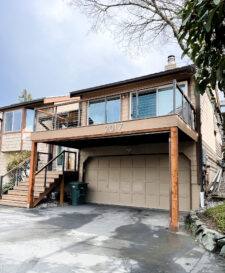
What Whatcom County's Climate Does to a Deck
Driving Rain and Trapped Moisture
Wind-driven rain doesn't just fall on a deck — it gets pushed sideways into ledger connections, under railing posts, and into the gaps between boards. On a shaded lot, that water has nowhere to go quickly. Instead of drying within a day, damp framing and decking can stay wet for a week or more during a typical Whatcom County wet stretch, which is long enough for rot to take hold in untreated or poorly sealed wood.
Salt-Tinged Air and Fastener Corrosion
Whatcom County's proximity to the Salish Sea means the air carries a faint but real salt content, especially compared to inland regions of the state. That salt-laden moisture accelerates corrosion in lower-grade fasteners, joist hangers, and structural screws — hardware that might hold up fine in a dry climate can rust and lose strength years earlier here. A deck can look structurally sound on top while its hidden hardware is quietly failing underneath.
A Long Moss and Algae Season
Shade, humidity, and mild temperatures keep moss and algae active for most of the year in this part of the county. On a deck, that growth does more than look bad — it holds moisture directly against the wood surface, breaks down wood fiber over time, and turns boards slick and genuinely dangerous underfoot, particularly on stairs and near entry points. A deck with heavy moss coverage almost always has more moisture damage underneath than what's visible from the surface.
The Deck Problems We Find Most Often in This Area
Ledger Board and House Connection Failures
The ledger board — where the deck attaches to the house — is the single most common point of serious failure we find on older decks in wet climates like this one. If flashing was missing, undersized, or installed incorrectly when the deck was built, water has likely been getting behind the siding and into the rim joist for years. This is a structural safety issue, not a cosmetic one, since the ledger connection carries a significant share of the deck's total load.
Rotted Joists, Beams, and Posts
Framing members that stay damp for extended periods — especially where they contact concrete footings, sit under low decking with poor airflow, or collect debris from overhead trees — soften and lose load capacity well before the damage becomes visible from above. We check framing wherever moisture has an obvious path to collect, not just where a homeowner has noticed a problem.
Corroded Hardware and Fasteners
Joist hangers, structural screws, and post bases that aren't rated for the corrosion exposure common in this region will rust, weaken, and eventually fail well before the wood around them does. This is one of the most overlooked deck problems, because the deck can look fine while the connections holding it together are compromised.
Failing Railings and Guard Posts
Railing posts anchored into damp framing or set without proper flashing are frequently the first thing to go loose on an older deck. A wobbly railing isn't just an inconvenience — it's a fall hazard, and it's one of the more common code compliance issues we run into on repair calls.
What a Correct Deck Repair Actually Involves
Diagnosing Structural vs. Cosmetic Damage
A proper repair starts with distinguishing between what's cosmetic — a few splitting boards, faded finish, surface mold — and what's structural, meaning framing, ledger connections, fasteners, or footings. Replacing a handful of deck boards while ignoring soft framing underneath is a common shortcut that leaves the underlying problem to resurface, usually sooner than a homeowner expects.
Matching Hardware to the Climate
Given the corrosion exposure in this part of Whatcom County, we use fasteners and structural connectors rated for the moisture and salt content in the air here — typically hot-dip galvanized or stainless steel hardware, matched to the decking and framing material being used, rather than whatever standard-grade hardware happens to be cheapest. Mismatched metals at connection points can also accelerate corrosion through galvanic reaction, so hardware and fastener choice has to be considered as a system, not picked piece by piece.
Flashing and Water Management at the Ledger
Any ledger board repair or reattachment needs proper flashing integrated with the house's water barrier — not caulk alone, which fails over time and gives a false sense of security. This is the detail that most often separates a repair that lasts from one that has to be redone in a few years.
Repair or Replace? How We Make That Call
Not every deck problem calls for a full rebuild, and not every deck is worth patching. The table below covers the factors we actually weigh on a Barkley-area inspection.
| Factor | Repair Is Usually Enough | Replacement Is Usually Needed |
|---|---|---|
| Ledger board condition | Solid wood, flashing just needs correcting | Soft or rotted ledger, or evidence of long-term water intrusion into the house rim joist |
| Framing (joists/beams) | Isolated soft spots near a known moisture source | Widespread softness or rot across multiple framing members |
| Fasteners and hardware | Localized corrosion, easily accessed for replacement | Systemic corrosion throughout the connection points |
| Decking surface | Isolated cracked, cupped, or splintering boards | Widespread surface failure across most of the deck |
| Footings and posts | Stable, properly sized, and correctly set | Undersized, heaving, or not meeting current code depth/bearing requirements |
| Age and prior maintenance | Well-maintained deck with a clear, isolated issue | Long-neglected deck reaching the end of its structural service life |
Our Deck Repair Process
- Full inspection — we check the ledger connection, framing, footings, hardware, and decking surface, not just the area a homeowner flagged as a concern.
- Written scope — a clear explanation of what's structural, what's cosmetic, and what we recommend addressing now versus monitoring.
- Structural repairs first — ledger, framing, footings, and hardware are corrected before any surface or cosmetic work begins.
- Climate-appropriate materials — decking, fasteners, and flashing chosen to hold up to this area's rain, humidity, and salt-air exposure.
- Final walkthrough — we go over what was repaired, what to expect from the materials used, and a realistic maintenance schedule going forward.
Decking Materials: Repair Considerations
Wood and composite decking behave differently when it comes to repair, and the right call depends on the existing deck and the homeowner's tolerance for upkeep.
- Pressure-treated lumber — the most common decking material we repair here; performs well when boards are properly sealed at cut ends and gaps are maintained for drainage, but requires ongoing refinishing to keep moisture out.
- Cedar decking — naturally resists some decay but still absorbs moisture readily in a shaded, wet climate and needs regular refinishing to avoid graying, splitting, and surface rot.
- Composite decking — resists rot and doesn't need refinishing, but repair options are more limited if a board is damaged; matching an older composite line's color and profile can also be difficult years after the original installation.
- Hidden framing and structure — regardless of what the surface decking is made from, the framing underneath is almost always wood, and it's the framing that determines how long a repair actually lasts.
Why a Crew That Already Works the Barkley Area Matters
A contractor who regularly works decks in and around Barkley and the Sudden Valley/Lake Whatcom corridor already knows which failure patterns show up on which kinds of lots — which elevations stay shaded and damp longest, where salt-tinged, wind-driven rain tends to hit hardest, and which older hardware and construction practices from prior decades are now showing their age. That local pattern recognition speeds up diagnosis and helps avoid both under-scoping a repair and recommending more work than a deck actually needs.
Questions Worth Asking Before You Hire
- Will they inspect the ledger connection and framing, or just the visible decking surface?
- What hardware and fastener grade do they use, and is it rated for this area's moisture and salt exposure?
- Do they provide a written scope that separates structural repairs from cosmetic ones?
- Are they familiar with current code requirements for ledger attachment, guardrails, and footings?
- Do they explain a realistic maintenance schedule for the materials used, rather than presenting the repair as a one-time fix?
Keeping a Repaired Deck in Good Shape
A correct repair goes a lot further with a little regular upkeep, especially in a climate that keeps surfaces damp as long as this one does.
- Clear leaves, needles, and debris from between boards and off ledger flashing regularly, especially in fall
- Treat moss and algae growth promptly rather than letting it establish and hold moisture against the surface
- Check railings and stair connections for looseness at least once a year
- Reseal or refinish wood decking on the schedule the material actually requires, not just when it visibly needs it
- Keep gutters and downspouts near the deck clear so runoff isn't draining directly onto or under it
If you're noticing soft spots, loose railings, moss buildup, or visible wear on a deck in the Barkley area, we're happy to take a look and give you a straight answer about what it needs. Reach out for a free, no-pressure estimate using the form below.