 Sudden Valley Exterior
 Deck Building in Sunnyland: What the Local Climate Actually Demands
A deck in Sunnyland doesn't fail the way a deck fails in a dry climate. It doesn't crack from sun exposure first — it rots from the inside, loosens at the fasteners, and grows a slick green film that makes it dangerous before it ever looks obviously "old." Around Sudden Valley and the greater Whatcom County area, homes deal with a long wet season, moisture-laden marine air drifting in off the Sound and Strait, and shade from mature Pacific Northwest tree cover that keeps surfaces damp for days after a storm passes. Add in driving rain that gets pushed sideways under railings and stair treads, and you have a set of conditions that punishes decks built to a generic, one-size-fits-all spec.
This page is about one job, done right, for one area: deck building for Sunnyland homes near Sudden Valley. We're not going to give you a national-magazine version of deck construction. We're going to walk through what actually holds up here, what a correct build looks like from the ground up, and what our process looks like when we're on your property.
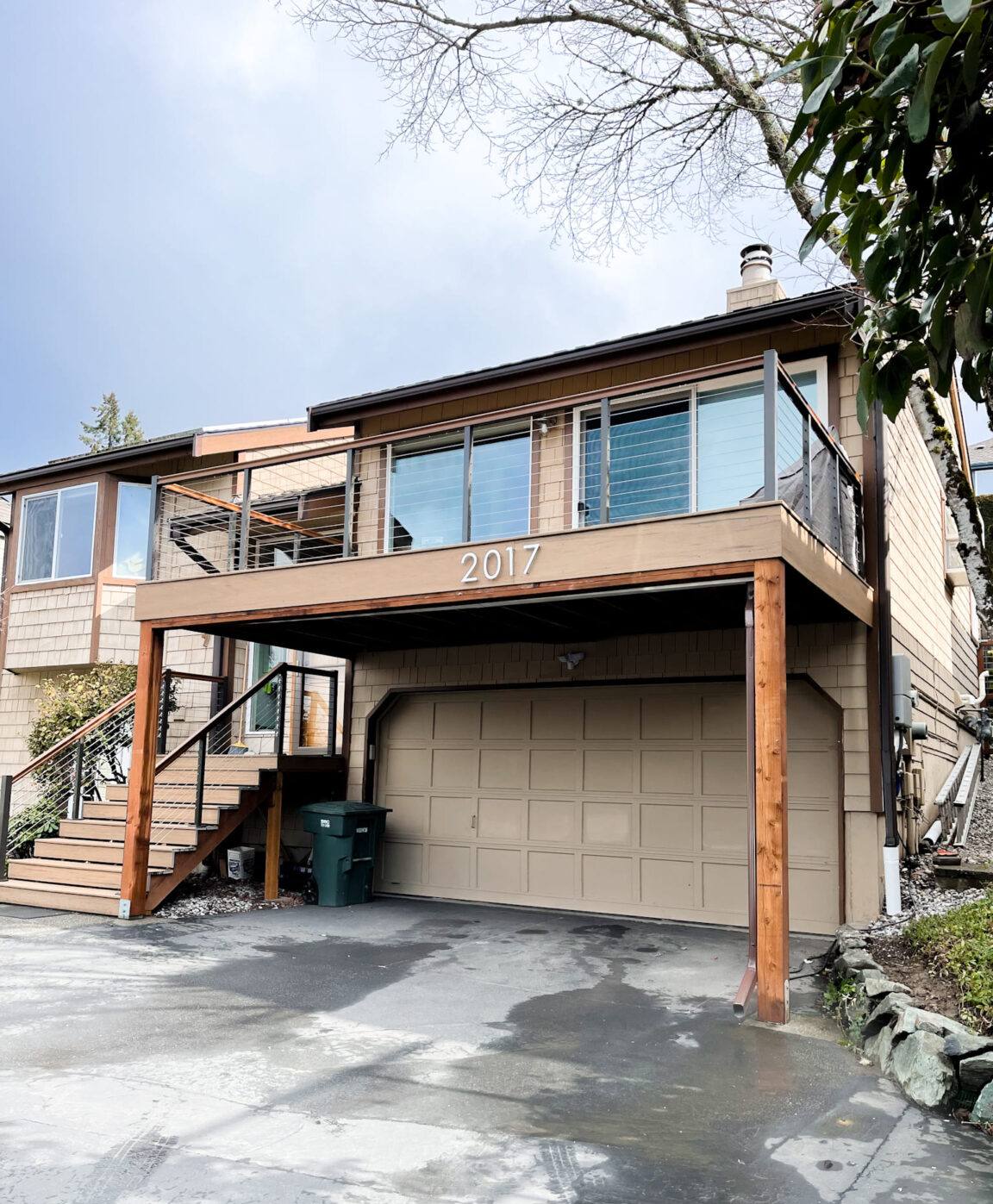
Why Sunnyland's Conditions Are Hard on Decks
Moisture That Doesn't Let Up
The wet season in this part of Whatcom County isn't just about total rainfall — it's about how long things stay wet between storms. Overcast skies, tree canopy, and humidity off the water all slow down drying time. A deck board that would dry out in an afternoon in a drier climate can stay damp for days here, especially on the shaded side of a house or under overhangs.
Salt-Tinged Marine Air
Being close to Puget Sound air currents means fasteners, brackets, and any exposed metal hardware are exposed to more corrosive moisture than an inland build would see. Cheap coated screws and generic joist hangers show rust streaks and weakened holding power years before they should, and that's usually the first sign an older deck was built to a lower standard than the climate calls for.
Moss, Algae, and a Slick Surface
Whatcom County's moss season runs long — shaded, damp decking is exactly the surface moss and algae prefer. Beyond looking neglected, a mossy deck surface is a real slip hazard, especially on stairs and near entry doors. The boards themselves also hold moisture longer once organic growth takes hold, which accelerates rot underneath the surface film.
Freeze-Thaw Cycling
Whatcom County gets enough cold snaps that water trapped in wood grain, fastener holes, or ledger connections can freeze, expand, and force gaps open. Over a few winters, that's how you get soft spots, popped nails, and railings that develop a wobble.
What a Correctly Built Deck Includes
A deck that's actually built for this climate isn't dramatically more expensive than a bare-minimum build — but it's different in specific, deliberate ways. Here's what we consider non-negotiable for a Sunnyland-area deck:
- Proper footing depth and drainage — footings set below frost depth with gravel or drainage rock underneath so water doesn't pool against concrete and heave it over time.
- Ledger board flashing done correctly — the single most common source of hidden rot on older decks is a ledger board attached to the house without proper flashing to shed water away from the rim joist.
- Corrosion-resistant fasteners and hardware — hot-dip galvanized or stainless-rated hardware sized for the actual load, not the cheapest box on the shelf.
- Joist tape or a moisture barrier on framing — a strip of self-adhering flashing over the top of every joist keeps water from wicking into end grain where deck screws penetrate.
- Airflow underneath — enough clearance and, where the site allows it, skirting that doesn't seal off ventilation, so the underside of the deck can actually dry between storms.
- Grading and drainage away from the structure — a deck built over standing water or poor drainage will fight you every year no matter what decking material sits on top.
Decking Material Options, Compared Honestly
There's no single "right" decking material for every Sunnyland project — it depends on your budget, how much maintenance you're willing to do, and how long you want to go between refinishing. Here's how the common options actually compare in this climate:
| Material | Moisture Behavior Here | Maintenance | Typical Lifespan |
|---|---|---|---|
| Pressure-treated wood | Handles moisture well when properly sealed and maintained; end cuts need re-sealing | Annual cleaning and re-staining or sealing recommended | 15-25 years with upkeep |
| Cedar | Naturally moisture- and insect-resistant, but still needs sealing to control graying and moss growth | Periodic cleaning and finish renewal | 15-20 years with upkeep |
| Composite decking | Doesn't rot, but lower-quality composites can still trap moisture and grow surface algae in constant shade | Periodic washing; no staining or sealing | 25-30+ years, brand-dependent warranty |
| PVC/capped polymer | Fully moisture-resistant surface; best resistance to moss staining and algae | Occasional washing | 25-30+ years, brand-dependent warranty |
We'll walk you through the real trade-offs for your specific site rather than pushing one product line. A heavily shaded lot near mature trees is a different decision than a lot with more open sky exposure — the amount of moss pressure your deck will actually face should factor into which material makes sense for you.
Why We're Selective About Which Composite Products We Install
Not every composite or capped-polymer board on the market performs the same in a wet, shaded climate. Our standard is to install products with a warranty structure and installation spec we can actually stand behind, and to skip lines where the manufacturer's own moisture and fastening tolerances are tighter than what a Sunnyland install realistically allows for. That's a maintenance-and-installation call on our end, not a claim that other products are defective — it's about matching the product to conditions it was actually designed to handle.
Our Process for a Sunnyland Deck Build
- Site walk and assessment — we look at drainage, shade exposure, tree cover, existing structure condition (if this is a rebuild), and how the deck will tie into your home.
- Design and material selection — we talk through decking material, railing style, and layout based on how you'll actually use the space and how much upkeep you want to take on.
- Permitting — most deck projects in Whatcom County require a building permit, especially for anything attached to the house or built above a certain height. We handle the paperwork and inspections as part of the job.
- Demolition (if applicable) — for a rebuild, we assess the existing footings and framing to determine what can be reused safely versus what needs to be replaced.
- Framing — footings, posts, beams, and joists built to current code with proper flashing and moisture barriers from day one.
- Decking and railing installation — installed per manufacturer spacing and fastening specs, which matters more in a wet climate than people expect — tight, incorrect spacing is a common cause of premature warping.
- Final walkthrough — we go over maintenance expectations with you before we consider the job done, not after.
Local Considerations Specific to Sudden Valley and Sunnyland
Sites in and around Sudden Valley often sit on sloped lots with mature tree cover, which affects both the structural approach and the amount of shade a deck will get through the year. A deck tucked under heavy canopy is going to face more moss and algae pressure than one with more open exposure, and that should shape both material choice and how often you plan to clean it. Whatcom County's permitting requirements and inspection process apply regardless of neighborhood, and lots with slope or limited access can affect equipment staging and footing work — something we plan for before the crew ever shows up, not something we discover mid-project.
We also pay attention to how a deck ties into existing drainage on the property. On a lot with any grade to it, water management around the footings and underneath the structure is often the difference between a deck that's still solid in fifteen years and one that starts showing soft spots in five.
Maintaining a Deck Once It's Built
Even a well-built deck needs some seasonal attention in this climate. Here's the realistic maintenance checklist we give homeowners after a build:
- Sweep off leaves, needles, and debris regularly — trapped organic matter holds moisture and feeds moss growth.
- Rinse the deck surface at least once or twice a year to knock back algae and moss before it gets established.
- Check railings and stair connections annually for looseness, especially after the first hard freeze of the season.
- Re-seal or re-stain wood decking on the schedule the product calls for — don't wait until it's visibly gray and dry.
- Keep gutters and downspouts clear so roof runoff isn't dumping extra water directly onto or under the deck.
- Trim back overhanging branches where practical to reduce shade and debris load on the deck surface.
Cost Factors to Understand Before You Budget
Every deck project is different, and we won't quote a number without seeing the site, but these are the factors that move the price up or down on a typical Sunnyland-area build:
| Factor | Why It Matters |
|---|---|
| Site access and slope | Difficult access or a sloped lot adds labor time for material staging and footing work |
| Height above grade | Taller decks need more substantial railings, stairs, and structural bracing |
| Decking material | Wood, composite, and PVC span a wide cost range and carry different long-term maintenance costs |
| Existing structure condition | A rebuild that can reuse sound footings costs less than a full teardown and rebuild |
| Railing and stair complexity | Custom railing styles and multiple stair sets add both material and labor |
| Permit and inspection scope | Larger or taller decks may require additional engineering or inspection steps |
Why a Crew That Already Works This Area Matters
A contractor who builds decks across a lot of different climates has to relearn local conditions every time they take on a project somewhere new. A crew that already works Sudden Valley and Sunnyland regularly already knows how the moss season behaves on shaded lots, which fastener specs actually hold up against the marine air here, and how local permitting and inspection typically go. That familiarity shows up in fewer surprises during the build and a deck that's specified correctly for this climate from the first footing, not adjusted after the fact once problems show up.
If you're planning a new deck or need to replace one that's showing its age, we're glad to take a look and talk through what makes sense for your property. Reach out for a free, no-pressure estimate using the form below.