 Sudden Valley Exterior
 Why South Hill Windows Take More Abuse Than Most
South Hill sits in a part of Whatcom County where the weather doesn't do anything by half measures. Rain comes in sideways more often than straight down, salt-tinged marine air works its way inland off the Sound, and the wet season here doesn't really end so much as taper off. Add in the moss and algae growth that shows up on shaded rooflines, siding, and trim during those long gray stretches, and you've got a set of conditions that will find every weakness in a window installation, sometimes within a single winter.
Windows themselves are built to handle wind and rain — that's not the issue. The issue is almost always what's around the window: the flashing, the sealant joints, the rough opening, the way water is directed away from the wall assembly instead of into it. A good window installed poorly will leak and rot out a wall in a few seasons flat. A correctly installed window, even a mid-range one, will outlast the siding around it. In South Hill, where wind-driven rain is a normal Tuesday and not a storm event, that difference matters more than it does in drier parts of the state.
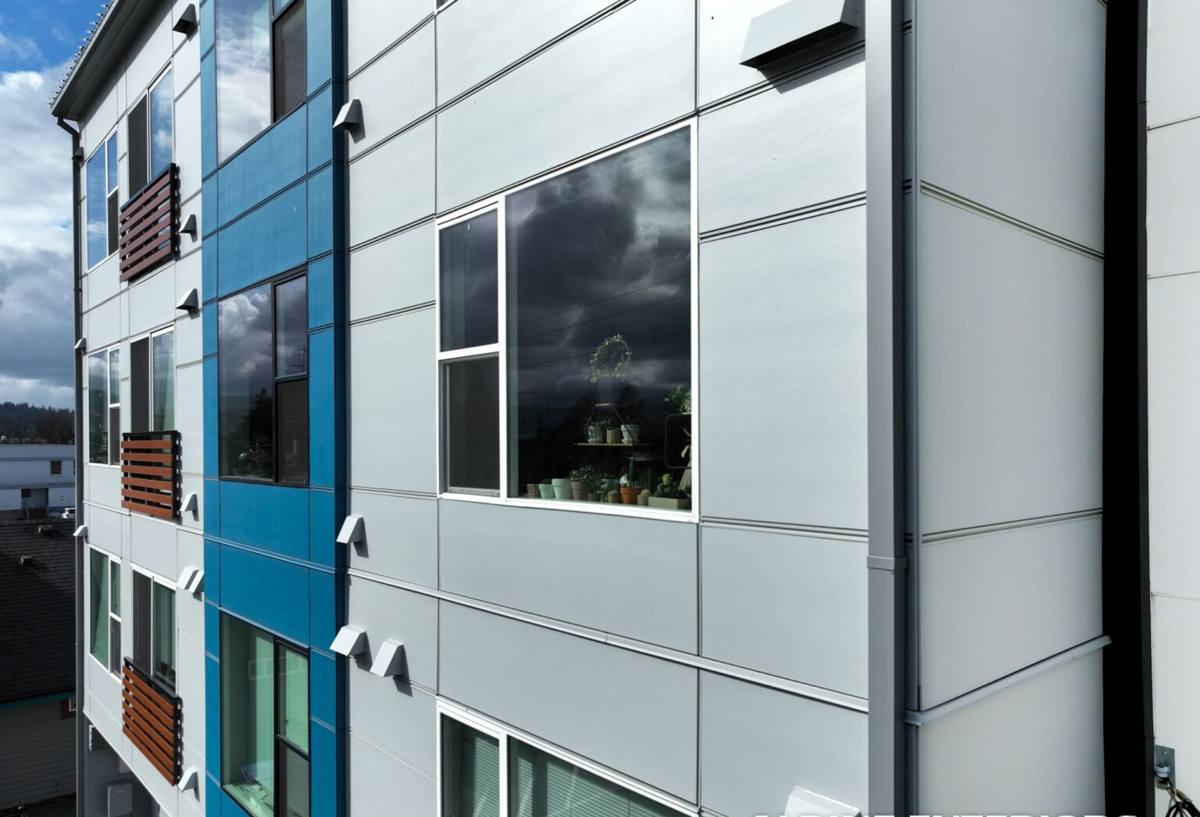
What a Correct Installation Actually Involves
Flashing and Water Management
The window itself is the easy part. The flashing sequence around it is where jobs succeed or fail. A correct install integrates a sill pan (sloped so any water that gets past the window drains back outside, not into the framing), side flashing that laps over the sill pan, and head flashing that ties into the weather-resistive barrier above the opening. Every layer has to shed water downward and outward, in the right order, before the siding goes back on. Skip a layer, or install it out of sequence, and you've built a pocket that holds water against wood framing — exactly the setup that leads to rot behind the trim, which is a common and avoidable repair call in this area.
Fit, Insulation, and Air Sealing
Rough openings on older South Hill homes are rarely perfectly square, and a custom window has to be built or shimmed to fit that reality without racking the frame — a racked frame won't operate smoothly and won't seal evenly under wind pressure. After the window is set plumb, level, and square, the gap between the frame and the rough opening needs continuous low-expansion foam or backer rod and sealant, not just fiberglass batt stuffed in by hand. That gap is a major source of both drafts and condensation if it's not filled correctly.
Choosing the Right Window for These Conditions
Frame material matters more here than in a dry climate, because the frame is what's exposed to driving rain and marine air day after day. There's no single "best" material for every house — it depends on exposure, budget, and how the rest of your home's trim is finished.
Frame Material Comparison
| Frame Material | Moisture Resistance | Maintenance | Typical Lifespan |
|---|---|---|---|
| Vinyl | Good — won't rot, but can flex in extreme temperature swings | Low — occasional cleaning | 20–30 years |
| Fiberglass | Excellent — dimensionally stable, handles wet/dry cycling well | Low | 30–40+ years |
| Wood (unclad) | Requires ongoing protection; vulnerable in driving rain exposure | High — repainting/sealing on a schedule | Varies widely with upkeep |
| Wood with aluminum/vinyl cladding | Good — cladding shields the wood on the exterior face | Moderate | 25–35 years |
We steer most South Hill customers away from unclad wood on exposed elevations — not because wood is a bad material, but because keeping up with the recoating schedule in a climate this wet is a real ongoing commitment, and a missed cycle shortens the window's life fast. Fiberglass and quality vinyl carry that burden far better.
Glass and Glazing
Double-pane, low-E glass is the baseline we'd recommend for this area; the insulating value matters for comfort and for keeping condensation off the interior glass during cold, humid stretches. Triple-pane is worth discussing on north-facing rooms or homes with persistent condensation history, but it adds weight and cost, so it's a case-by-case call rather than an automatic upgrade.
Moss, Trim, and What Happens Around the Window
Moss doesn't grow on the glass, but it absolutely affects your windows. It takes hold on shaded siding, trim boards, and sills, and once established it holds moisture against the wood far longer than open air would. Where that happens right next to a window — on a sill, a casing board, or the trim above the head flashing — it accelerates exactly the kind of rot that a good flashing job is designed to prevent. Part of doing a window right in this area is finishing the surrounding trim in a way that sheds water and doesn't give moss an easy foothold, and flagging it to the homeowner if we see conditions (heavy shade, poor gutter drainage) that will keep encouraging growth regardless of the window work itself.
Our Process for a South Hill Window Project
- On-site assessment. We look at each opening, check for existing water damage or rot in the framing, and measure for accurate, custom-fit units rather than assuming standard sizes.
- Product selection. We walk through frame material, glass package, and grille or configuration options based on your budget and the specific exposure of each wall.
- Removal and inspection. Old windows come out carefully so we can inspect the rough opening and sill for hidden rot or moisture damage before anything new goes in.
- Repair as needed. Any damaged framing or sheathing gets replaced — installing a new window into a compromised opening just repeats the same failure on a delay.
- Flashing and installation. Sill pan, side flashing, head flashing, and air sealing go in following the sequence above, integrated with your existing weather-resistive barrier and siding.
- Interior and exterior finish. Trim, caulking, and paint or stain are completed to match the rest of the house.
- Walkthrough. We check operation, look at the finished sealant lines, and answer questions before we call the job done.
What Affects the Cost of a Custom Window Project
| Factor | Why It Matters |
|---|---|
| Number of openings | More windows means more labor and material, but per-window cost often drops slightly on larger projects |
| Frame material and glass package | Fiberglass and triple-pane cost more upfront than vinyl and double-pane |
| Condition of existing framing | Rot or water damage found during removal adds repair time before the new window can go in |
| Access and story height | Second-story or hard-to-reach openings take longer and may need staging |
| Custom sizing or shapes | Non-standard openings (arched, oversized, odd angles) require custom manufacturing lead time and cost |
We'd rather walk your specific house and give you real numbers than quote a broad range that doesn't mean much for your situation — that's what the estimate is for.
Signs a South Hill Home May Need New Windows
- Visible condensation or fogging between the panes (a failed seal, not a cleaning issue)
- Drafts you can feel near the frame even when the window is fully latched
- Soft or discolored wood on the sill, casing, or the wall just below the window
- Difficulty opening, closing, or locking that's gotten worse over time
- Paint or caulking around the frame that keeps failing no matter how often it's redone
- Noticeably higher heating bills than a similar-sized home nearby
Why It Matters to Hire a Crew That Already Works This Area
Window installation isn't exotic work, but doing it well in a climate like this rewards familiarity. A crew that regularly works South Hill and the surrounding Sudden Valley area already knows what wind-driven rain does to a poorly flashed opening, has seen how moss and shade patterns play out on specific elevations, and isn't guessing at how the local wet season will treat a given detail over the next ten years. That translates into fewer surprises mid-project, a flashing approach that's already proven in these conditions, and a contractor who's easy to reach if a question comes up after the job is done — not a company that did one job in the neighborhood and moved on.
If you're weighing whether your current windows need replacing or just want a straight answer on what a custom window project would look like for your home, we're glad to come take a look. The estimate is free, there's no pressure attached to it, and you can request one using the form below.