 Sudden Valley Exterior
 Decks Built for Geneva's Version of Pacific Northwest Weather
Geneva sits close enough to the water and deep enough into Whatcom County's marine climate that a deck here works harder than a deck built somewhere drier. Salt-tinged air off the water, long stretches of driving rain from fall through spring, and a moss season that can run half the year all put steady stress on wood, fasteners, and framing. A deck that looks fine going up in July can start showing problems by the second wet winter if it wasn't built with this specific climate in mind.
We build and repair decks throughout the Sudden Valley area, and Geneva properties come with their own set of considerations — tree cover that keeps surfaces damp longer, sloped lots that affect drainage and footing depth, and homes where the deck is the main outdoor living space for much of the year. This page walks through what actually matters for a Geneva deck project: material choices, structural details, our process, and the maintenance reality once it's built.
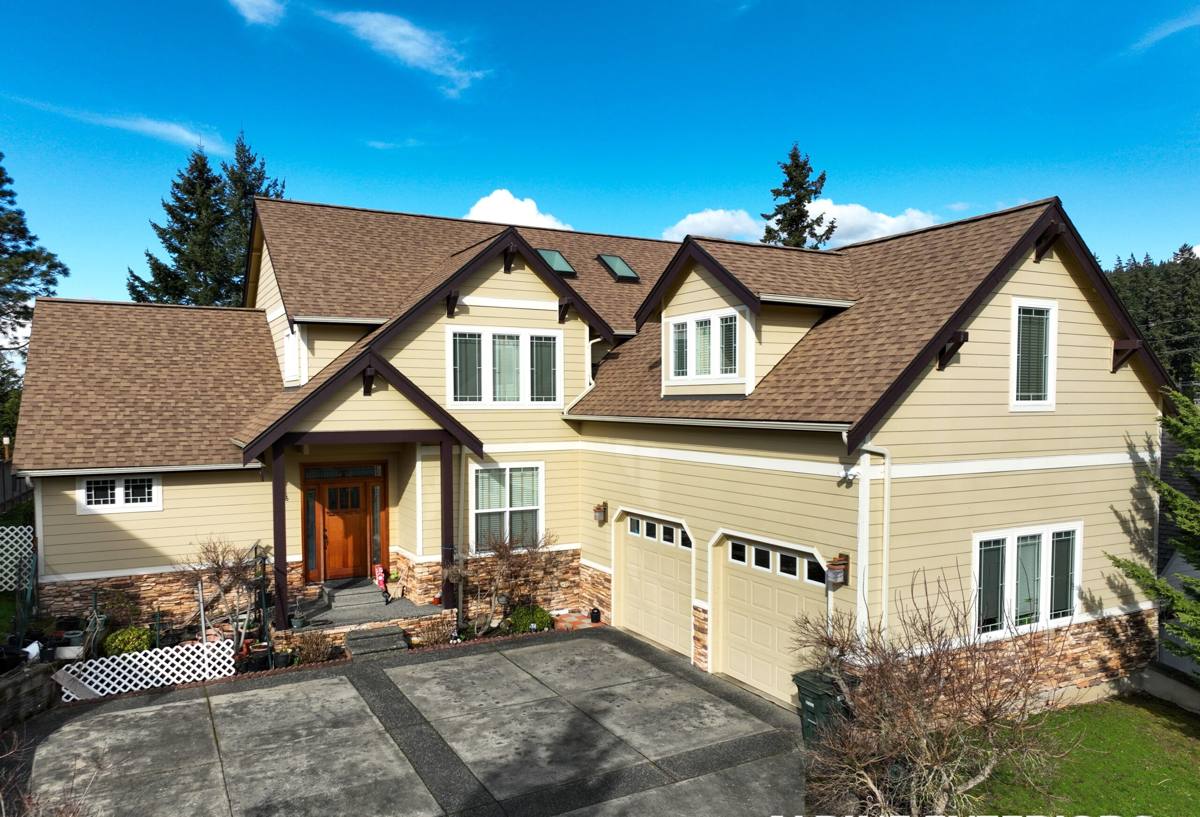
What the Local Climate Actually Does to a Deck
It helps to be specific about the failure points, because "the weather is rough here" doesn't tell you what to build differently.
Driving rain and moisture cycling
Whatcom County doesn't just get a lot of rain — it gets sustained, wind-driven rain that pushes water sideways into joints, ledger connections, and end grain. Decks that dry out slowly between storms are the ones that rot from the inside first, often at spots you can't see from the top: joist hangers, the ledger-to-house connection, and post bases set in or near soil.
Moss and organic growth
A long moss season means anything that holds moisture — low airflow under the deck, tight board spacing, north-facing or shaded sections — will grow moss and algae well before the wood itself fails. Moss holds water against the surface, and on wood decking that moisture eventually works into the grain. On composite decking, moss is mostly cosmetic but still needs regular cleaning to keep the surface from getting slick.
Salt-influenced air
Even away from direct shoreline exposure, salt-laden air moving through the region accelerates corrosion on fasteners, hardware, and any exposed metal. This is one of the most overlooked factors in deck longevity — a deck can have great lumber and still fail early because standard fasteners corroded and lost their grip.
Choosing Decking Material for a Geneva Property
There's no single "best" decking material — the right call depends on how much sun and shade the site gets, how much maintenance you want to do, and your budget. Here's how the common options hold up against local conditions.
| Material | Moisture & Moss Resistance | Maintenance | Typical Lifespan Locally |
|---|---|---|---|
| Pressure-treated wood | Good if properly sealed and drained; moss-prone in shaded spots without upkeep | Annual cleaning and re-sealing recommended | 15-20 years with maintenance |
| Cedar | Naturally moisture- and insect-resistant, but still needs sealing to resist graying and moss | Sealing every 2-3 years | 15-25 years with maintenance |
| Composite decking | Very good — doesn't absorb water or rot, but moss/algae can still grow on the surface film | Periodic washing, no sealing or staining | 25-30+ years |
| PVC decking | Excellent moisture resistance; least prone to moss taking hold | Occasional washing | 25-30+ years |
We don't push one product line over another. Each of these can be the right choice depending on the project — the difference between a deck that lasts and one that doesn't usually comes down to installation details, not just which material you picked.
The Structural Details That Matter More Than the Decking
Homeowners naturally focus on what the decking surface looks like, but the parts you don't see are what determine whether a deck survives Whatcom County winters.
Ledger board flashing
Where a deck attaches to the house is the single most common point of water intrusion and structural failure on decks in this region. Proper flashing — installed so water sheds outward and down, never trapped behind the ledger — is non-negotiable on every attached deck we build.
Footings and post bases
Sloped or partially shaded lots common around Geneva mean soil can stay saturated longer after storms. Footings need to be sized and set to local frost and load requirements, and post bases should hold the post above grade and off standing water rather than embedding wood directly in soil or concrete.
Fastener selection
Given the corrosion pressure from salt-influenced air, we use fasteners and connectors rated for coastal or high-moisture exposure, not standard interior-grade hardware. This is a small cost difference upfront and a major difference in how long the connections hold.
Airflow underneath
Decks built low to the ground or over poorly ventilated crawlspaces trap moisture and accelerate both rot and moss growth. Where grade and code allow, we build in enough clearance and gapping for air to actually move underneath.
How We Approach a Geneva Deck Project
- Site walk and assessment — we look at sun/shade exposure, slope, drainage patterns, and existing structure (for replacements or repairs) before recommending anything.
- Design and material selection — sized to how you'll actually use the space, with material recommendations based on your maintenance appetite and the site's exposure.
- Permitting — deck permits and inspections are handled through Whatcom County; we manage that process so it doesn't fall on you.
- Demo and site prep — removal of any failing structure, grading adjustments if drainage needs correcting.
- Framing and flashing — the structural work described above, done to hold up through wet seasons, not just pass inspection.
- Decking installation — proper board spacing for drainage and airflow, fastening appropriate to the material.
- Final walkthrough — we go over maintenance expectations specific to the material you chose so there are no surprises in year two or three.
Keeping Moss and Rot from Taking Over
Whatever material you choose, a deck in this area needs some seasonal attention. Skipping it is the single biggest reason decks fail early here.
- Sweep debris and standing leaves off the surface regularly through fall — trapped organic matter is what feeds moss growth
- Rinse or wash the deck surface at least once or twice a year, more often in shaded areas
- Check for moss buildup in board gaps and between boards where water collects
- Inspect fasteners and hardware annually for early corrosion, especially near the ledger
- Reseal or restain wood decking on the schedule appropriate to the product — don't wait until it's visibly gray and dry
- Confirm gutters and downspouts near the deck aren't dumping extra water onto or under it
- Keep vegetation trimmed back enough that sections of the deck aren't in permanent shade and dampness
Cost Factors for a Custom Deck
Every deck project is different, but the same variables tend to drive the price up or down. Rather than quote a number that won't match your specific lot, here's what actually moves the cost.
| Factor | Why It Matters |
|---|---|
| Size and shape | Larger and multi-level decks require more framing, footings, and labor |
| Material choice | Composite and PVC cost more upfront than wood but less in long-term maintenance |
| Site access and slope | Sloped or hard-to-access lots (common around Sudden Valley) increase footing and labor complexity |
| Attached vs. freestanding | Attached decks require ledger flashing work; freestanding decks need their own full support structure |
| Railing and features | Custom railing, built-in seating, or multiple stair sets add material and labor |
| Permitting requirements | Deck height, size, and proximity to property lines can affect permit scope |
We'll walk your specific site and give you a real number, not a range pulled from a generic price list.
Why Local Experience Matters for This Job
Deck-building isn't unique to Whatcom County, but the failure points here are shaped by conditions that a crew unfamiliar with the area won't necessarily plan for — how far to size overhangs against driving rain, when to spec coastal-rated hardware even for an inland lot, or how much airflow clearance a shaded, moss-prone site actually needs. A crew that already works in and around Sudden Valley and Geneva has already seen which details cause callbacks two winters later and builds to avoid them from the start, rather than learning it on your project.
Local experience also means a smoother permitting process, since Whatcom County's requirements and inspection expectations are already familiar, and it means being reachable for warranty or maintenance questions without a long drive.
Questions Worth Asking Before You Hire
- Is the deck permitted through Whatcom County, and who's handling that paperwork?
- What fastener and hardware grade is being used, given the corrosion exposure in this area?
- How is the ledger board being flashed where it meets the house?
- What's the maintenance schedule for the specific material being installed?
- Is the footing depth and post base detail suited to the actual slope and soil on your lot?
- What warranty applies to labor versus materials, and who do you call if something needs attention?
If you're planning a new deck or replacing one that's showing rot, moss buildup, or soft spots, we're happy to come take a look. Reach out for a free, no-pressure estimate using the form below — we'll walk the site, talk through material options that fit your budget and exposure, and give you a straight answer on what the job actually needs.