 Sudden Valley Exterior
 Why Cordata Homes Put Different Demands on Siding
Cordata sits close enough to the water and the lowland drainage of Whatcom County that homes here deal with a specific combination of stresses most siding products were never designed around: salt-laden air moving in off the Sound, long stretches of driving rain rather than gentle showers, and a moss season that can run half the year on north-facing walls and anything shaded by mature trees. None of these on their own is unusual for western Washington. Together, on the same wall, they add up fast.
Salt air accelerates corrosion on fasteners, trim flashing, and any exposed metal detailing. Driving rain doesn't just wet a wall — it drives moisture sideways and upward into laps, seams, and butt joints that a vertical-rain assumption would never account for. And moss doesn't just look bad; it holds moisture against the siding face for weeks at a time, which is exactly the condition that causes paint failure, substrate swelling, and rot in products that aren't built to shrug off standing damp.
A siding installation in Cordata that ignores any one of these three factors will look fine for a year or two and then start showing problems exactly where you'd expect: north and west elevations, anywhere water sheets off a roofline, and low corners where splash-back and ground moisture combine.
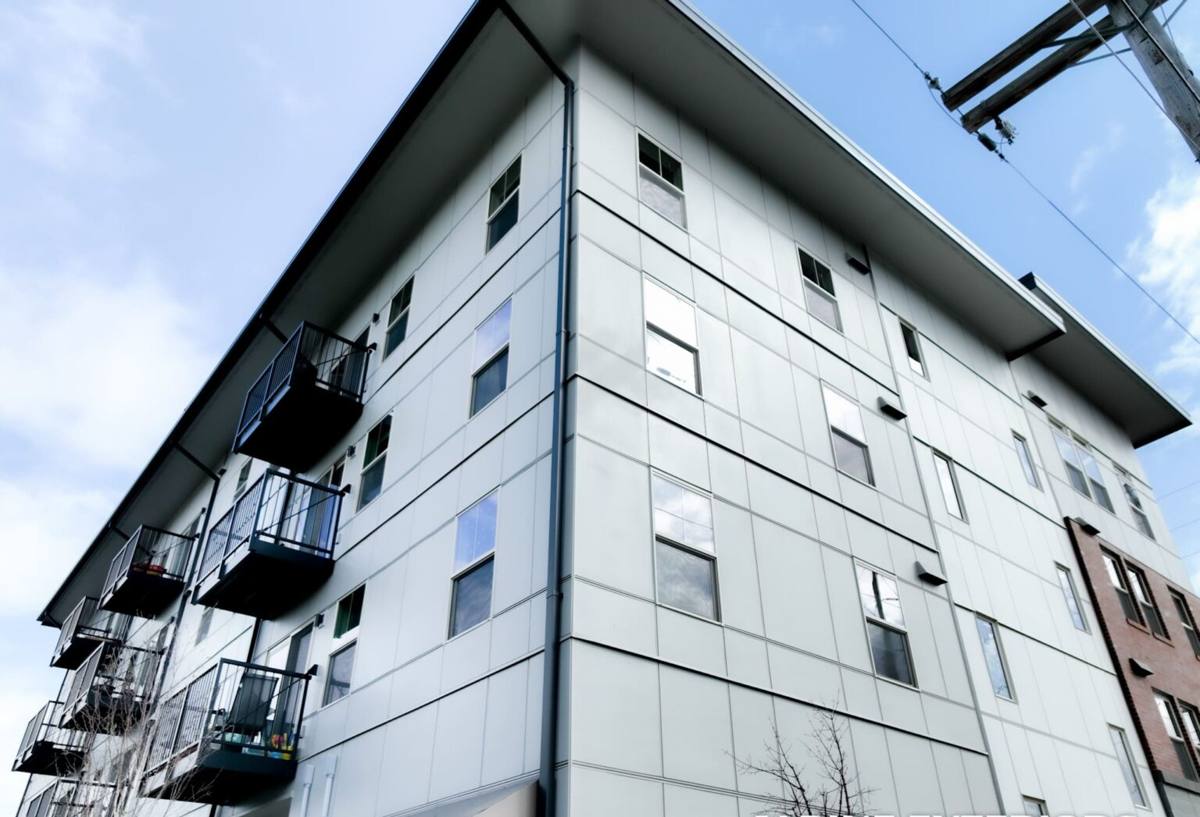
What a Correctly Installed Siding Job Actually Involves
The Weather-Resistive Barrier Comes First
Before a single piece of siding goes up, the wall needs a continuous, properly lapped weather-resistive barrier with all penetrations — outlets, hose bibs, vents, light fixtures — flashed and sealed in the correct shingle-lap order. This layer is what actually keeps bulk water out of the wall assembly. The siding itself is the second line of defense, not the first, and skipping or rushing this step is the single most common reason a siding job fails early in a climate like this one.
Flashing and Joint Detail
Every horizontal joint, window head, and butt seam is a place water can get behind the cladding if it isn't flashed correctly. In a driving-rain climate, kick-out flashing at roof-to-wall intersections and properly lapped z-flashing above trim boards aren't optional extras — they're the difference between a wall that sheds water and one that slowly saturates behind the surface where nobody can see it happening.
Fastening and Clearances
Fastener spacing, type, and depth have to match the manufacturer's published installation instructions — not a general contractor's habit from installing something else for twenty years. Ground clearance, deck and patio clearance, and gaps at inside/outside corners all need to be held to spec so the assembly can drain and dry the way it was engineered to.
Installation Checklist We Hold Every Cordata Job To
- Continuous weather-resistive barrier, correctly lapped, with every penetration flashed
- Manufacturer-specified fastener type, spacing, and embedment depth
- Proper clearance from grade, roofing, decks, and patios
- Kick-out flashing at every roof-to-wall intersection
- Factory-primed or factory-finished cut edges sealed per spec
- Caulking only where the manufacturer calls for it — not as a substitute for correct flashing
- Final walk-through comparing the finished job against written installation standards
Why We Install Only James Hardie Fiber Cement
We made a decision as a company to install one siding system, on every job, in every neighborhood we work — James Hardie fiber cement. That's not a marketing position; it's a maintenance and moisture-behavior decision built around exactly the conditions Cordata homes face.
Fiber cement is non-combustible and dimensionally stable — it doesn't swell, cup, or delaminate the way wood-based and some engineered wood products can when they take on repeated moisture cycling. Hardie's ColorPlus factory finish is baked on under controlled conditions rather than field-applied, which matters directly for moss and algae resistance and for how the color holds up under years of coastal UV and salt exposure. Hardie's HZ5 product line in particular is engineered for the freeze-thaw and moisture conditions common to the Pacific Northwest, and the transferable warranty is structured around correct installation — which is exactly why we hold every job to the checklist above.
We're not going to tell you every other siding product on the market is bad — most have a legitimate use case somewhere. But we stopped installing vinyl, LP SmartSide, and primed wood siding because, in this specific climate, the long-term maintenance burden and moisture risk didn't match what we're willing to put our name behind. Fiber cement, installed correctly, does.
Our Installation Process, Start to Finish
- On-site assessment — we walk the exterior, check current siding condition, look for existing moisture or moss damage, and note flashing and drainage issues before quoting anything.
- Written scope and material plan — product line, color, trim details, and a clear breakdown of what's included, so there's no ambiguity about what's being installed.
- Tear-off and substrate check — old siding comes off and the sheathing underneath gets inspected for hidden rot before anything new goes up.
- Weather barrier and flashing — installed and inspected before the first piece of siding is hung.
- Hardie installation to manufacturer spec — correct fastening, clearances, and joint treatment throughout.
- Trim, caulking, and touch-up — finished to match ColorPlus factory color where field touch-up is needed.
- Final walk-through — we go over the finished exterior with you before calling the job done.
Signs a Cordata Home's Siding Needs a Closer Look
- Dark streaking or persistent moss growth on north or shaded walls
- Soft spots, bubbling, or visible swelling around butt joints and corners
- Paint that's peeling or bubbling rather than fading evenly
- Gaps opening up at trim boards or window casings
- Visible rust staining below fasteners or metal flashing
- Increased heating bills that suggest the wall assembly is no longer performing as insulation
Any one of these on its own might just be cosmetic. Two or three together, especially on the weather-exposed side of the house, usually mean water has been getting past the surface for a while.
What Drives Cost on a Cordata Siding Job
| Factor | Why It Matters Here |
|---|---|
| Home size and wall complexity | More corners, dormers, and roof-wall intersections mean more flashing detail and labor time |
| Current siding removal | Tear-off, disposal, and any hidden sheathing repair add time before new siding can start |
| Substrate condition | Moss and moisture damage found during tear-off can mean sheathing replacement before install continues |
| Trim and detail level | Window casings, corner boards, and accent trim all add material and labor beyond flat wall coverage |
| Product line and color | Hardie's HZ5 and premium ColorPlus finishes cost more than base trim boards but reduce long-term maintenance |
| Access and site conditions | Steep lots, mature landscaping, or limited equipment access can add time to any Cordata property |
We don't quote broad numbers on a page because every one of these factors changes the total, sometimes significantly. What we can tell you is that a correct installation — barrier, flashing, and fastening done to spec — costs less over ten years than a cheaper job that has to be partially redone because water got behind it.
Why Hiring a Crew That Already Works in Cordata Matters
A crew that's spent time on siding jobs throughout Sudden Valley and the surrounding Whatcom County area already knows which elevations take the worst of the driving rain, where moss tends to establish first, and how salt exposure shows up differently than it does even twenty miles inland. That's not a substitute for following manufacturer spec — nothing is — but it does mean fewer surprises during tear-off and a flashing plan that's already accounting for how water actually moves across a wall in this specific area, rather than a generic assumption imported from a drier climate.
It also means accountability. A local crew has a reputation in the neighborhoods it works, and a warranty is only as good as the company standing behind it five or ten years from now.
Caring for Hardie Siding After Installation
One of the practical advantages of fiber cement in a moss-prone climate is how little it asks of you afterward. An occasional gentle wash to knock back algae or moss buildup on shaded walls, a visual check of caulking and trim joints once a year, and prompt attention if you ever notice a fastener working loose or a corner detail opening up is about the extent of it. There's no repainting cycle to manage the way there is with wood, and no annual sealing schedule to track.
If your Cordata home's siding is showing its age, or you're planning ahead of a renovation, we're happy to take a look and give you a straightforward, no-pressure estimate — no obligation, just an honest read on what your home actually needs. Use the form below to get started.