 Sudden Valley Exterior
 Composite Decking Built for Columbia's Climate
Homes in the Columbia area of Sudden Valley sit in one of the wetter, greener pockets of Whatcom County. Between the driving rain off Lake Whatcom, the salt-tinged air that moves through the region, and a moss season that can stretch for months, an outdoor deck here takes a beating that decks in drier parts of the state never see. Composite decking has become the go-to answer for homeowners who are tired of sanding, staining, and chasing rot every couple of years — but only when it's installed correctly for these conditions. A composite deck put in the same way you'd build one in a dry climate will still trap moisture, grow moss in the wrong places, and fail early. This page is about what a composite deck actually needs to hold up in Columbia, and what a job done right looks like.
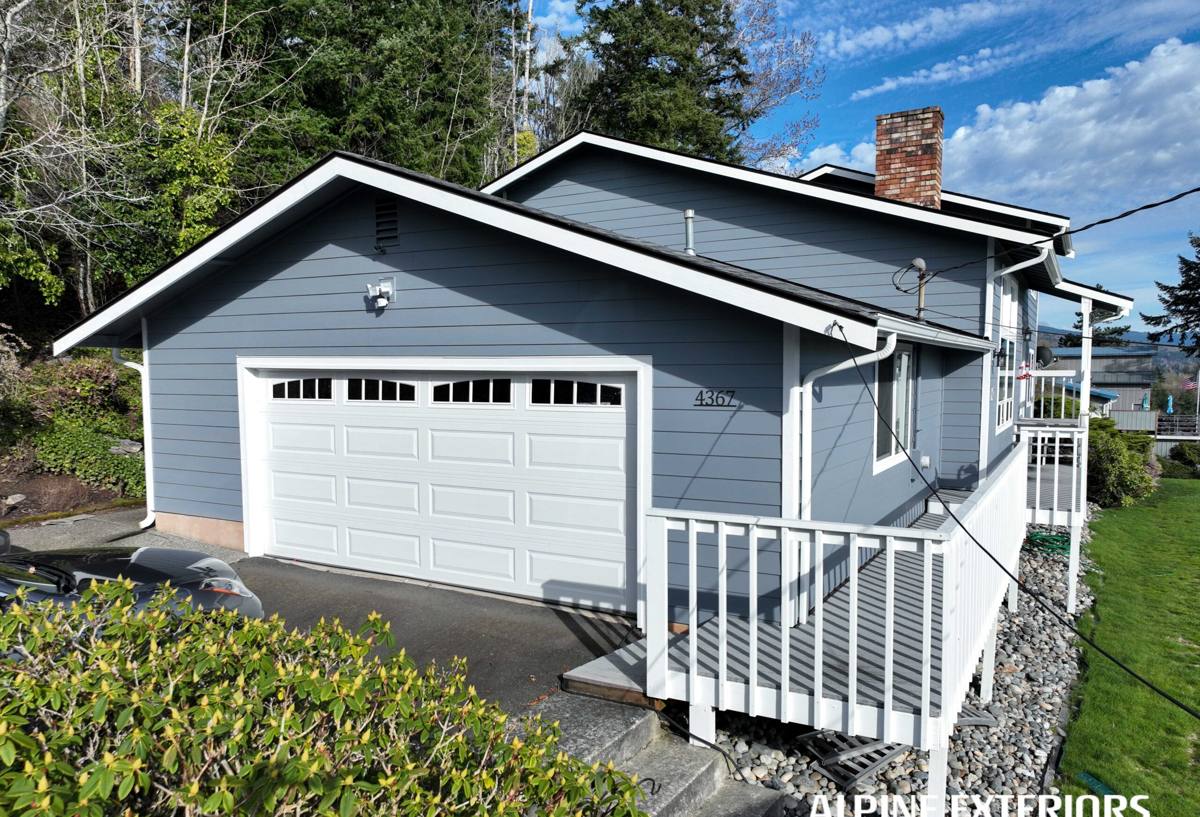
Why Wood Decking Struggles in This Part of Whatcom County
Most of the deck problems we get called out for in the Sudden Valley area start with wood. Untreated or poorly maintained wood decking soaks up moisture during the long wet stretches of fall and winter, then dries slowly because the surrounding tree cover and lake-effect humidity don't give it much of a chance to fully dry between rain events. That cycle is what drives splintering, cupping boards, and rot around fastener holes. Moss and algae take hold on any wood surface that stays shaded or damp for more than a few days, which makes the deck slick and accelerates surface decay. Homeowners end up on a yearly cycle of pressure washing, sanding, and re-staining just to keep a wood deck looking presentable, and that maintenance schedule only gets harder to keep up with as a deck ages.
What Composite Decking Needs to Get Right Here
Composite boards solve the surface problems — they don't splinter, they don't need staining, and they resist rot in the board itself. But the board is only part of the system. The substructure, fasteners, and drainage details underneath are what determine whether a composite deck actually performs in a climate like this one, and those are the details that get skipped on a rushed job.
Substructure and Drainage
Composite boards don't rot, but the joists and framing underneath them still can if water isn't given somewhere to go. We build with proper joist spacing for the specific board being installed, use joist tape to protect the framing lumber from standing moisture, and make sure the deck has a slight pitch away from the house so water sheets off instead of pooling under the boards.
Fasteners and Hardware
Corrosion-resistant, coated fasteners and structural hardware matter more here than in drier regions. Cheap or mismatched hardware is one of the most common causes of premature deck failure we see, since a fastener that starts to corrode can stain the decking and loosen boards long before the composite material itself shows any wear.
Ledger Attachment and Flashing
Where the deck ties into the house is the single most common leak point on any deck, wood or composite. Correct flashing at the ledger board, with proper waterproofing behind it, keeps rain from tracking into the rim joist and the house framing — a detail that's easy to shortcut and expensive to fix later.
Board Spacing and Airflow
Composite boards expand and contract with temperature, and they need consistent gapping to shed water and dry out between rain events. Tight or uneven spacing traps debris and moisture between boards, which is exactly the environment moss and mildew need to get started on the deck surface.
Choosing the Right Composite Board
Not all composite decking is built the same way, and the differences matter more in a wet, moss-prone climate than they would somewhere dry. Here's how the main categories compare for a home in this area:
| Board Type | Moisture Behavior | Moss/Mold Resistance | Maintenance | Typical Cost Tier |
|---|---|---|---|---|
| Uncapped composite | Can absorb some surface moisture over time | Lower — surface can support growth if not cleaned | Occasional cleaning, no staining | Lower |
| Capped composite | Protective outer shell resists moisture absorption | Higher — smoother, sealed surface sheds growth more easily | Rinse and light cleaning as needed | Mid to upper |
| Cellular PVC decking | Fully moisture-resistant core | High, though surface still needs periodic cleaning | Low — mainly surface cleaning | Upper |
For most Columbia homes, we lean toward capped composite as the practical middle ground — it holds up to the wet season significantly better than uncapped product without pushing the budget into full PVC territory. The right call still depends on the deck's exposure to shade, tree cover, and how much direct rain and standing moisture it sees.
Our Process
On-Site Assessment
We start by walking the site and looking at how water currently moves around the house — where runoff collects, how much shade the deck area gets, and whether the existing structure (if there is one) has any moisture damage that needs to be addressed before new decking goes down.
Structural Prep
Any compromised framing gets replaced, not covered up. We confirm joist spacing and ledger attachment meet code and match the manufacturer's specifications for the board being installed, since composite products often have tighter spacing requirements than traditional wood decking.
Installation
Boards go down with the fastening system specified for that product — typically hidden clips or coated screws — with consistent gapping for drainage and expansion. Picture-framing, stair details, and railing are built to shed water rather than trap it at seams and corners.
Final Detailing and Walkthrough
We check fastener lines, board alignment, and drainage before calling a job finished, and we walk the homeowner through basic care for their specific board so there are no surprises the first time it needs cleaning.
Maintaining a Composite Deck Through the Wet Season
Composite decking cuts maintenance dramatically compared to wood, but "low-maintenance" doesn't mean "no-maintenance" in a climate that grows moss on almost anything left damp and shaded. A little seasonal upkeep goes a long way toward keeping the deck looking good and draining properly:
- Sweep debris and fallen leaves off the deck regularly, especially in fall — trapped organic matter holds moisture and feeds moss growth
- Rinse the deck surface a few times a year with a garden hose or low-pressure washer, following the manufacturer's cleaning guidance
- Keep gutters and downspouts near the deck clear so overflow isn't dumping extra water onto the decking or framing below
- Check that gaps between boards stay clear of packed debris so water can still drain through
- Trim back overhanging branches or brush where possible to cut down on shade and moisture buildup on the deck surface
- Inspect railing posts and stair connections annually for any movement, since hardware is usually the first thing to show wear
What Composite Decking Typically Costs
Pricing depends on the size of the deck, the board tier chosen, and how much structural work is needed underneath. In general terms, the main cost drivers break down like this:
| Cost Factor | Why It Matters |
|---|---|
| Deck size and shape | More square footage and complex angles or curves increase material and labor |
| Board tier | Uncapped, capped, and PVC composite products span a wide price range |
| Substructure condition | Replacing rotted or undersized framing adds cost but is not optional for a safe deck |
| Height and railing requirements | Elevated decks need engineered railing and stair systems that cost more than ground-level installs |
| Site access | Difficult access for equipment and material delivery can add labor time |
We give firm, written quotes after seeing the site in person rather than ballparking over the phone — a deck built on rotted framing and one built on solid, code-correct framing are not the same job, even if they look identical from the yard.
Why a Crew That Already Works in Columbia and Sudden Valley Matters
A contractor who has worked in this specific area already knows how the local moisture patterns behave, which sides of a house tend to hold shade and dampness longest, and what framing condition to expect on homes of different ages around Lake Whatcom. Some homes in this part of Sudden Valley are also subject to community association guidelines on exterior work, so it helps to work with a crew that knows to check on that up front rather than after materials are ordered. Familiarity with Whatcom County permitting requirements for deck construction also keeps a project moving instead of stalling on paperwork. None of that replaces good installation practice, but it does mean fewer surprises and a smoother project from estimate to final walkthrough.
If you're weighing a new composite deck or replacing an aging wood one in Columbia, we're happy to take a look and give you an honest, no-pressure estimate — just fill out the form below to get started.