 Sudden Valley Exterior
 Why Decks in Columbia Wear Out Faster Than You'd Expect
Homeowners in the Columbia area of Sudden Valley often call us thinking their deck has "just gotten old." Most of the time, the deck isn't old at all — it's been fighting a climate that's harder on exterior wood than people realize. Whatcom County sits in a pocket of the Pacific Northwest where salt-laden marine air, driving rain off the water, and a moss season that can run half the year all work on a deck at the same time. None of those factors is dramatic on its own. Together, over several seasons, they're what turns a solid deck into one with soft spots, rusted fasteners, and a slick, green surface by late fall.
A deck built or repaired without that climate in mind will look fine for a year or two and then fail in a handful of predictable places. Our job is to fix the failure that's already there and stop the next one from starting in the same spot.
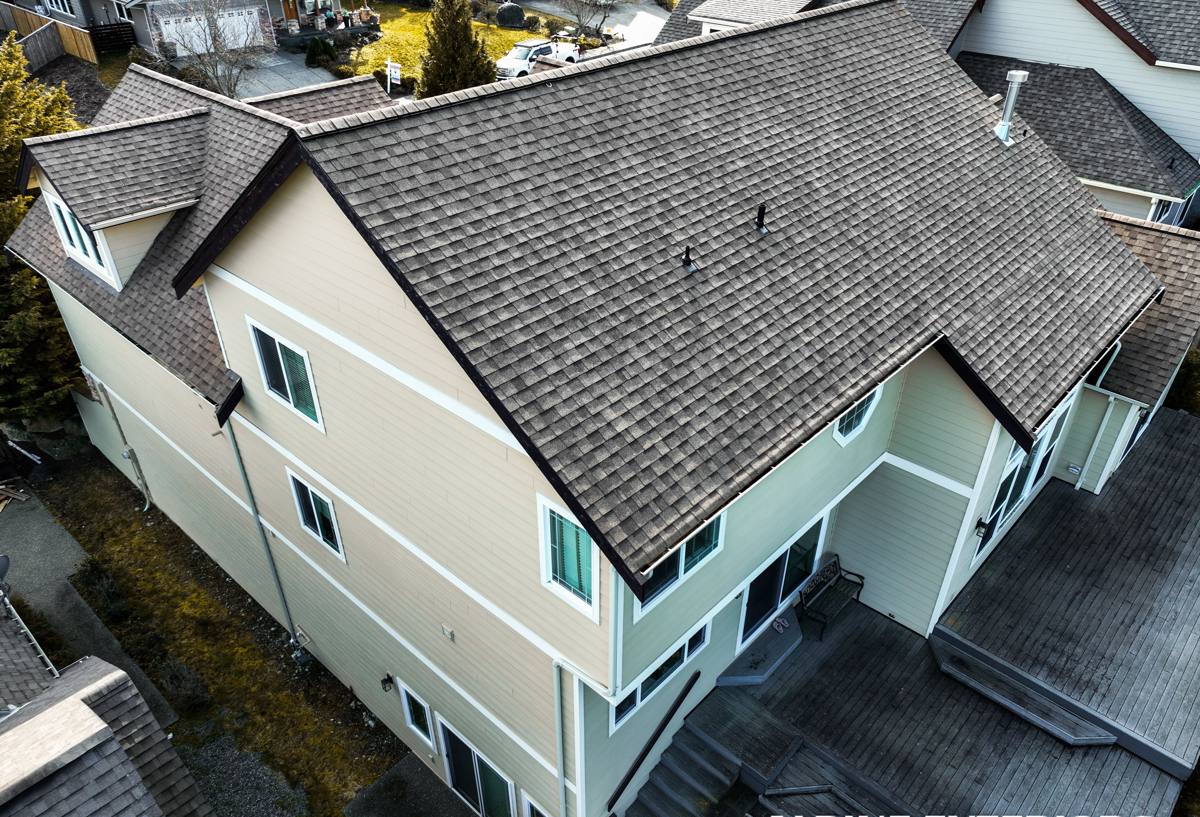
How the Local Climate Actually Damages a Deck
Moisture Intrusion
Driving rain doesn't just fall straight down here — wind pushes it sideways, up under railings, and into any gap where flashing or fasteners have failed. Once water gets behind a ledger board or under a decking board, it doesn't dry out quickly in our humidity. That's where rot starts, usually invisible from above until a board flexes underfoot.
Moss and Organic Growth
A long moss season means organic growth gets a real foothold on any deck surface that doesn't get regular sun or airflow — which describes a lot of decks tucked under trees around Sudden Valley. Moss holds moisture against the wood surface, and its root structure works into the wood grain itself, accelerating surface decay well beyond what plain rain exposure would cause.
Salt Air and Corrosion
Marine air carries fine salt particles that settle on metal hardware — joist hangers, structural screws, bolts, and railing brackets. Standard fasteners corrode faster in this environment than they would inland, and a corroded fastener is a structural problem long before it's a cosmetic one. Once a hanger or bolt starts rusting, it loses holding strength even if the wood around it still looks sound.
What Correct Deck Repair Actually Involves
A lot of "deck repair" in this region is really just cosmetic — a board swap or a coat of stain over a problem that's still there underneath. Correct repair means identifying whether the issue is surface-level or structural, and treating them differently.
Structural Repairs
- Ledger board inspection and reattachment where flashing has failed and water has reached the house band joist
- Joist sistering or replacement where rot has softened the framing
- Post and footing checks for movement, rot at grade contact, or undersized original construction
- Fastener and hardware replacement with corrosion-rated hardware suited to this climate
- Railing post attachment checks — a leading cause of deck injury when overlooked
Surface and Finish Repairs
- Deck board replacement matched to existing spacing and fastening pattern
- Moss and biological growth removal using methods that don't damage the wood fiber
- Re-sealing or refinishing with products rated for sustained wet exposure
- Drainage correction so water sheds off the deck surface instead of pooling
Skipping the structural check and going straight to surface repair is the single most common mistake we see corrected on older Columbia decks. New boards over a compromised frame just buy a little time before the same failure returns.
Our Deck Repair Process
1. On-Site Inspection
We check the deck from the ground up — literally. That means looking at footings and post bases, not just the visible decking surface. We probe suspect boards and framing with a screwdriver or awl; wood that should feel solid and instead feels soft or spongy tells us where rot has already progressed.
2. Honest Scope and Options
We tell you plainly whether you're looking at a targeted repair or something closer to a partial rebuild, and why. If a deck only needs a few boards and some hardware, we say so — we don't upsell a full tear-off when it isn't warranted.
3. The Repair Itself
We match existing board dimensions and spacing so repairs blend into the rest of the deck rather than standing out as a patch. Structural work is brought up to current fastening standards even where the original build wasn't, since a repair is the natural point to correct an under-built connection.
4. Finish and Weather Protection
Every repair gets sealed or finished appropriately for wood exposed to sustained coastal rainfall, and we flag any drainage or ventilation issues under the deck that would shorten the life of the work we just did.
Repair or Rebuild? How to Tell
| Sign | Usually Means | Typical Fix |
|---|---|---|
| A few soft boards, rest of deck solid | Localized water exposure or age | Board-level repair |
| Soft spot near the house wall | Ledger flashing failure | Ledger repair, re-flashing |
| Rust streaks under hardware | Fastener corrosion from salt air | Hardware replacement |
| Multiple joists soft or springy | Widespread framing rot | Partial to full reframe |
| Posts loose or leaning | Footing movement or post-base rot | Post/footing rebuild — safety priority |
| Deck bounces noticeably when walked on | Undersized or failing structural members | Structural rebuild |
As a rough guide, isolated board and hardware repairs on an otherwise sound deck tend to fall in a modest, low four-figure range or less. Once ledger, joist, or footing work is involved, costs climb because that work requires temporarily supporting the deck and often removing decking to access the frame. We'll always give you a firm number after inspection rather than a guess over the phone.
Materials: What We Use and Why
Material choice matters more here than in drier climates, because whatever you choose has to hold up to sustained moisture and salt air, not just occasional rain.
| Material | Strength in This Climate | Trade-Off |
|---|---|---|
| Pressure-treated lumber | Cost-effective, widely available, familiar to repair | Needs regular resealing; can still rot if finish is neglected |
| Cedar | Naturally rot- and insect-resistant, ages well visually | Softer wood, more prone to surface wear and needs upkeep |
| Composite decking | Low maintenance, resists moisture and moss buildup | Higher upfront cost; some products trap moisture underneath if not installed with proper airflow |
| Structural hardware | Stainless or heavy-coated fasteners resist salt corrosion | Costs more than standard galvanized, but avoids early hardware failure |
We don't push one material as universally "best." We match the material to the specific deck — its sun exposure, tree cover, and how much upkeep the homeowner realistically wants to do. A shaded, moss-prone deck is a different repair conversation than one that gets full sun most of the day.
Maintenance That Actually Extends a Repaired Deck's Life
- Clear moss and debris from the deck surface and between boards before it has a chance to establish, especially going into fall
- Keep gutters and downspouts near the deck clear so runoff isn't dumping extra water onto or under it
- Check railing posts and stair connections for looseness once a year — this is a safety item, not just maintenance
- Reseal or refinish wood decking on the schedule the product calls for, not just when it visibly needs it
- Trim back overhanging branches to reduce shade and organic debris buildup on the surface
- Look underneath the deck occasionally for standing water, soft framing, or early rust on hardware
None of this takes long, but skipping it is exactly how a deck that was repaired correctly ends up needing the same repair again in five years instead of fifteen.
Why It Matters That We Already Work in Sudden Valley
Deck repair done right depends on understanding how a specific climate attacks a specific structure, not on generic building knowledge. Working regularly in and around Columbia and the rest of Sudden Valley means we've already seen how ledger flashing fails on homes built to older standards, which fastener types hold up against the salt air coming off the water, and which decks in shaded, moss-heavy lots need a different maintenance conversation than ones in full sun. That's knowledge you don't get from a crew passing through Whatcom County for a single job — it comes from repairing decks in this exact climate, on this exact terrain, season after season.
It also means we're accountable locally. If a repair doesn't hold up the way it should, we're not far away and we're not hard to find.
Get a Straight Answer on Your Deck
If your deck has a soft board, a rusting bracket, or just doesn't feel as solid as it used to, it's worth having someone look at it before winter rain and the next moss season make the problem worse. We offer free, no-pressure estimates for deck repair throughout Columbia and the rest of Sudden Valley — use the form below to get one scheduled.