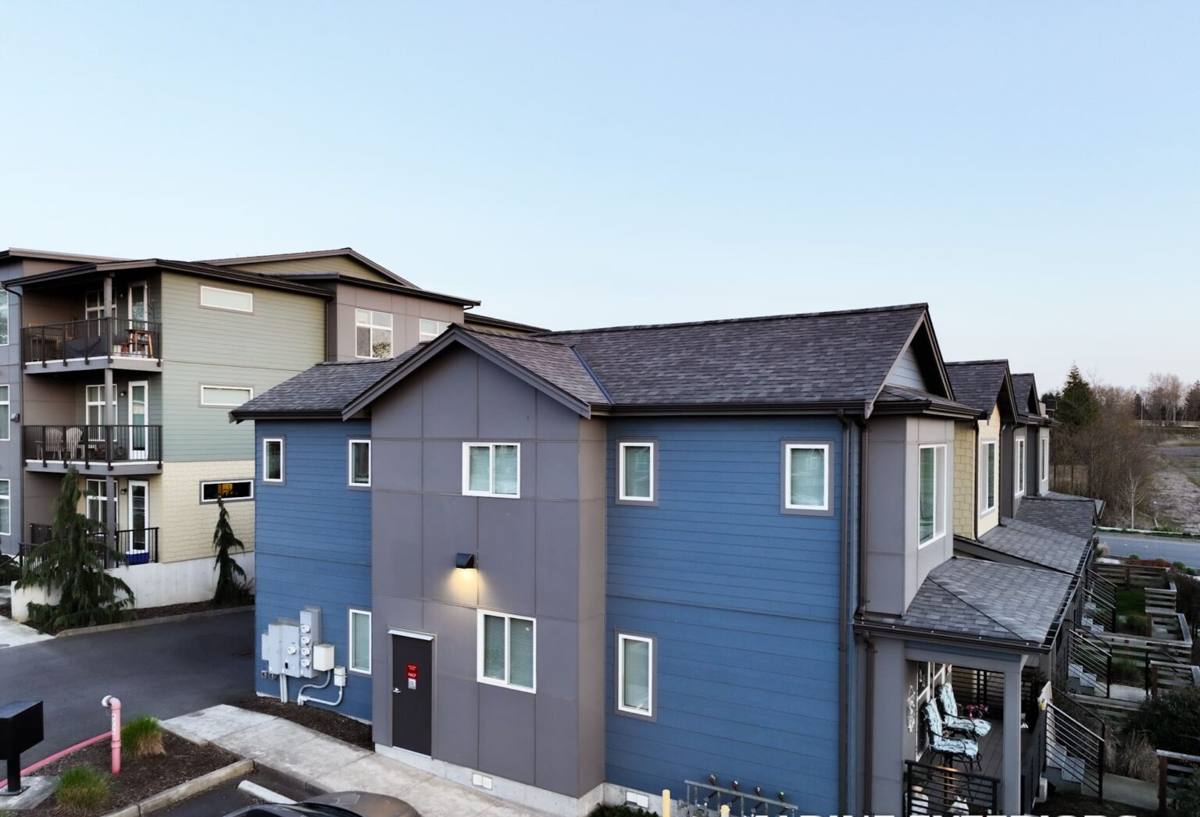
 Sudden Valley Exterior
 Bellingham's Marine Climate Is Hard on Roofs
Sudden Valley sits back in the trees along Lake Whatcom, close enough to Bellingham and the Salish Sea that homes here still deal with salt-laden air moving in off the water. Combine that with Whatcom County's long wet season, driving rain that comes in sideways during fall and winter storms, and the heavy tree canopy that keeps large sections of every roof shaded for most of the day, and you get a climate that is genuinely tougher on roofing than a lot of homeowners realize. A roof in a drier, sunnier region gets to dry out between storms. A roof in Sudden Valley often doesn't, and that changes what "repair" needs to mean here.
A patch that would hold up fine in a low-moisture climate can fail within a season under this kind of repeated wetting. That's the standard we build every repair to: not just stopping today's leak, but accounting for the moisture load this roof will keep taking on for years to come.
The Repairs We See Most Often Around Sudden Valley and Bellingham
Certain failure patterns show up again and again on roofs in this part of Whatcom County. Most trace back to the same root causes: moisture that lingers, wind-driven rain that finds gaps, and organic growth that holds water against the roofing material.
- Moss colonies lifting shingle edges and holding granules against the mat, which accelerates wear underneath the moss itself
- Flashing failures at chimneys, skylights, and dormer walls, where metal has worked loose or was never lapped correctly to begin with
- Overflowing or undersized gutters and valleys during heavy rain events, leading to fascia and soffit rot at the edges
- Lifted or cracked shingle tabs from wind-driven rain forcing water sideways and under the shingle course instead of over it
- Slow-drying moisture at roof-to-wall intersections that sit in shade most of the day, which eventually shows up as staining or soft decking
None of these are unusual or a sign of a poorly built home. They're what you'd expect from this specific combination of tree cover, rainfall volume, and coastal air, and they're very repairable when caught before they reach the decking.
What a Correct Roof Repair Actually Involves
Finding the Real Leak Path, Not Just the Wet Spot Inside
Water rarely enters a roof directly above where a homeowner sees a stain on the ceiling. It travels along rafters, follows sheathing seams, and shows up several feet from its actual entry point. A repair that only addresses the visible stain, without tracing the path back to the source, usually comes back within a year. Our process starts with inspecting both the attic side and the exterior roof surface, checking flashing sequencing at every penetration, and looking at the underlayment and decking condition wherever we can access it, before we touch a single shingle.
Matching Materials and Detailing to Last
Once we know the actual source, the fix has to be built to the same standard as the surrounding roof, not just sealed over. That means matching shingle courses so the repair sheds water the way the rest of the roof does, installing flashing with correct overlap and fastening rather than relying on sealant to do the work, and adding underlayment or ice-and-water membrane in vulnerable spots like valleys and wall intersections. A sealant-only patch might buy a season, but in a climate with this much sustained rain, it's not a repair we consider finished work.
Repair or Replace? How We Help You Decide
Not every roof problem calls for a full replacement, and not every leak is a simple patch. The honest answer depends on a handful of factors we walk through with you before recommending either direction.
| Factor | Usually Points to Repair | Usually Points to Replacement |
|---|---|---|
| Roof age | Well within its expected service life, single layer | At or past the manufacturer's rated lifespan |
| Damage extent | Localized to one area, slope, or penetration | Widespread across multiple slopes or the whole roof |
| Moss coverage | Light to moderate, shingles still sound underneath | Heavy, long-term moss with granule loss across large areas |
| Decking condition | Solid, no soft spots found during inspection | Soft, delaminated, or visibly rotted sheathing |
| Repair history | First or infrequent repair on this roof | Repeated repairs to the same areas over recent years |
We'll tell you plainly when a repair makes sense and when it doesn't. Recommending a repair we don't believe will hold isn't good for either of us, and neither is pushing a full replacement on a roof that has years of honest life left in it.
Our Roof Repair Process, Start to Finish
- Inspection and diagnosis — exterior and attic-side where accessible, tracing the actual leak path rather than guessing from the interior stain
- Written scope and honest cost range — what we found, what we're fixing, and why, before any work starts
- Material matching — sourcing shingles, flashing, and underlayment that match the existing roof's age, profile, and color as closely as possible
- The repair itself — proper flashing and underlayment detailing, not shortcuts, with attention to how water will move through the area afterward
- Cleanup and debris removal — old material, fasteners, and moss debris cleared from gutters and the ground
- Walk-through — we show you what was done and why, and flag anything else worth watching
Living Under the Trees: Moss, Debris, and Long-Term Roof Health
Sudden Valley's tree canopy is one of the things people love about living here, and it's also the single biggest factor in how fast a roof ages. Needle litter collects in valleys and behind chimneys, holding moisture against the shingle surface long after a storm has passed. Shaded north-facing slopes stay damp for days at a time, which is exactly the environment moss needs to establish and spread. Once moss takes hold, it doesn't just sit on top of the shingle, it works underneath the tabs and holds water against the granule layer, which is what actually protects the shingle mat from UV and weather.
The fix isn't a one-time treatment. It's a maintenance rhythm: periodic moss removal done carefully so it doesn't strip granules along with it, regular gutter and valley clearing so debris doesn't dam water during heavy rain, and keeping an eye on which slopes are staying wet longest so problem areas get attention before they turn into repairs.
Materials and Methods We Stand Behind
We're not tied to one manufacturer or one shingle line, but we do hold every repair to the same internal standard regardless of brand. That means using properly formed flashing metal instead of relying on tar or sealant as a primary water barrier, matching underlayment specifications to the manufacturer's requirements rather than whatever is on the truck, and being upfront when a repair method carries a real maintenance trade-off, whether that's appearance, long-term moisture behavior, or how it affects an existing warranty. If a shortcut would save money today but create a maintenance headache in five years, we'll tell you that up front rather than let you find out the hard way.
Why Hiring a Crew That Already Works Sudden Valley and Bellingham Matters
A roof repair crew that's spent time on roofs throughout this area already knows which slopes hold moss the longest, which flashing details tend to fail first under this rainfall pattern, and roughly what age and style of roofing to expect on homes in the neighborhood. That local familiarity shortens the diagnosis phase and reduces guesswork. It also means faster response after a wind or rain event, since we're not driving in from across the county to get eyes on a leak. For homes inside Sudden Valley specifically, we're also familiar with the kind of exterior review that private communities often require, so material and color choices for a repair don't create a surprise down the line.
Signs Your Bellingham-Area Roof Needs Attention Now
- Granules collecting in gutters or at the base of downspouts
- Visible moss or dark streaking on shaded slopes, especially north-facing sections
- Curling, cupping, or lifted shingle tabs anywhere on the roof
- Water stains on interior ceilings or upper walls, even faint ones
- Daylight visible through the roof deck from inside the attic
- Metal flashing around chimneys or skylights that looks rusted, lifted, or loosely fastened
- Sagging or soft-feeling spots when walked on gently by a professional
Catching any of these early is almost always the difference between a straightforward repair and a much larger project once water has reached the decking or framing underneath.
If you're seeing any of these signs on a home in Sudden Valley or elsewhere around Bellingham, we're glad to take a look and give you a straight answer about what's going on. There's no pressure and no cost to get an estimate — just fill out the form below and we'll go from there.