 Sudden Valley Exterior
 Why Barkley Homes Take a Different Kind of Beating
Homes in and around Barkley near Sudden Valley sit in a stretch of Whatcom County where the weather doesn't let up for long. Moist air off the water carries salt that works into seams and fastener heads. Driving rain comes in sideways during fall and winter storms, testing every lap and joint in a wall system. And because the sun disappears for months at a time, north- and west-facing walls stay damp long enough to grow moss and algae almost year-round. None of this is unusual for western Washington, but it adds up faster than most homeowners expect, and it shows up first in the siding.
Older siding materials were never engineered for this specific combination of salt exposure, sustained moisture, and low sun. That's the starting point for almost every siding replacement conversation we have with Barkley homeowners: not "is the siding ugly," but "is the siding still doing its job of keeping water out of the wall."
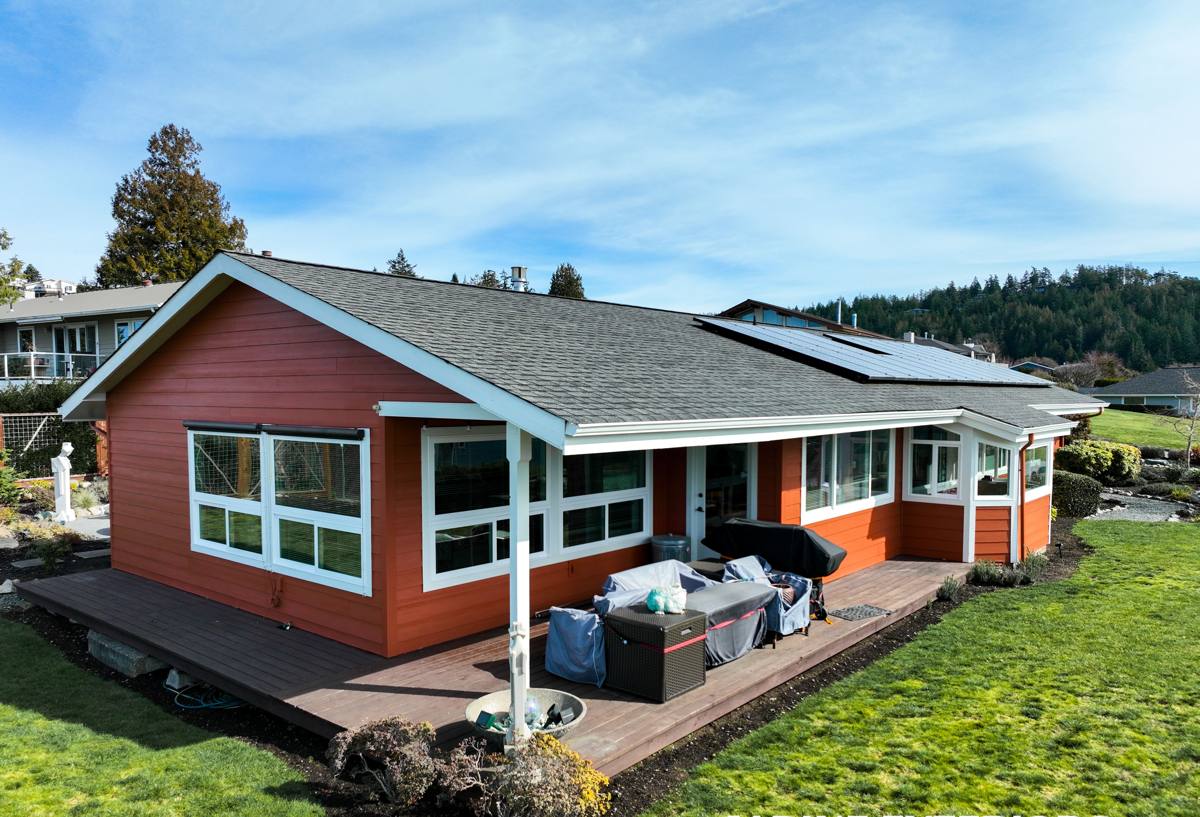
Signs a Barkley Home Needs Siding Replacement, Not Just Repair
Siding fails in stages. Catching it early is cheaper than catching it late, but by the time most homeowners call us, several of these signs are already present:
- Soft or spongy spots when you press on the siding, especially near the bottom courses or around window trim
- Persistent black or green staining that comes right back within weeks of being cleaned
- Paint that's bubbling, peeling, or won't hold a fresh coat for more than a season or two
- Visible cupping, warping, or separation at seams and butt joints
- Rising energy bills with no other explanation, which often points to a wall assembly that's no longer sealing properly
- Musty odors or moisture inside on exterior walls, a sign water has already gotten past the siding
One or two of these on their own might mean a repair. Several together, especially combined with the age of the siding, usually means the underlying material has reached the end of its useful life and full replacement is the more honest recommendation.
Why "It Still Looks Fine From the Street" Isn't the Full Story
Siding damage in this climate tends to start on the back side of the panel or board, where it sits against the wall and holds moisture the longest. By the time damage is visible from the sidewalk, the water intrusion has often been happening for a year or more. That's part of why we look closely at the lower courses, inside corners, and anywhere trim meets siding — those are the spots that fail first around Sudden Valley and Barkley, well before the rest of the wall shows a problem.
What a Correct Siding Replacement Actually Involves
Siding replacement is not simply pulling off old boards and nailing up new ones. Done correctly, it's a full rebuild of the wall's water management system, and skipping steps here is exactly how a brand-new siding job ends up with the same rot problem five years later.
Tear-Off and Inspection
We remove the existing siding and inspect the sheathing underneath for rot, soft spots, or prior water damage. Any damaged sheathing gets replaced before anything new goes up — new siding over compromised sheathing just hides a problem instead of fixing it.
Weather-Resistive Barrier
A new, correctly lapped weather-resistive barrier goes over the sheathing. This layer is what actually stops bulk water from reaching the wall structure; the siding itself is the first line of defense, but the barrier behind it is what protects you if water gets past that first line.
Flashing at Every Penetration
Windows, doors, hose bibs, vents, and any other penetration in the wall get properly flashed and integrated with the weather barrier. In a climate with as much driving, wind-blown rain as Whatcom County sees, flashing details are usually where a mediocre installation fails first.
Fastening and Clearances
Fastener type, spacing, and depth all follow the manufacturer's specifications, not a generic "close enough." We also maintain proper clearance between the bottom of the siding and grade, decks, and roof lines, since ground and roof splash-back is a major, underestimated source of moisture damage on homes near Lake Whatcom and throughout the Sudden Valley area.
Why We Install Only James Hardie Fiber Cement
We made a deliberate decision to install one siding system: James Hardie fiber cement. We don't offer vinyl, LP SmartSide, primed wood, or other fiber cement brands, and that's worth explaining rather than glossing over.
Vinyl siding is inexpensive and low-maintenance in mild climates, but it softens and warps in sustained heat and can become brittle and crack in freezing temperatures — and it has no real fire resistance. Wood-based and engineered-wood siding products can perform well when maintained meticulously, but they depend on an intact factory or field-applied coating to keep moisture out; once that coating is compromised, the substrate is vulnerable to exactly the kind of prolonged dampness this region produces. Fiber cement products from other manufacturers exist too, but factory finish quality, engineering-zone specific formulations, and warranty structures vary significantly between brands.
James Hardie fiber cement is non-combustible, doesn't support the moss and mildew growth the way wood-based products can, and is engineered in specific product lines (HZ5) for climates with exactly this kind of moisture exposure. The ColorPlus factory finish is baked on under controlled conditions, which gives it more consistent, longer-lasting color than field-applied paint on most other siding materials. It's a system that holds up to salt-laden marine air and months of gray, wet weather without the maintenance cycle that wood and some engineered products require. That's why it's what goes on every home we side, including replacements in Barkley.
Comparing Siding Materials for This Climate
| Material | Moisture Resistance | Fire Resistance | Maintenance | Typical Lifespan |
|---|---|---|---|---|
| Vinyl | Moderate; can warp with heat/cold cycling | Low; melts/deforms under heat | Low, but limited repair options | 15-25 years |
| Primed wood / engineered wood | Depends entirely on coating integrity | Combustible | High; repainting and caulking cycle | 10-20 years if well maintained |
| Other fiber cement brands | Generally good; varies by formulation | Non-combustible | Low to moderate | Varies by brand and finish |
| James Hardie fiber cement | Engineered for high-moisture climates (HZ5) | Non-combustible | Low; factory-baked ColorPlus finish | Decades with correct installation |
This table is a starting point for a conversation, not the whole decision. The right choice for any specific home also depends on its exposure, existing structure, and budget, which is why we walk every property individually before recommending anything.
What Drives the Cost of a Barkley Siding Replacement
| Factor | Why It Matters |
|---|---|
| Sheathing condition | Rot discovered during tear-off adds repair scope before new siding can go up |
| Home size and wall complexity | More corners, gables, and trim details mean more labor and material waste |
| Siding profile and accessories | Lap width, trim boards, and soffit/fascia work all affect the bid |
| Access and site conditions | Slopes, tight side yards, or limited equipment access near the lake add time |
| Window and door count | Every penetration needs flashing and trim work, which adds labor |
We'd rather walk you through these factors on-site than quote a number sight unseen — general ranges without seeing the home tend to be either misleadingly low or padded to cover unknowns.
Our Process, Start to Finish
- On-site inspection and honest assessment of whether you need repair or full replacement
- Written estimate covering material, tear-off, sheathing contingency, and labor
- Scheduling that accounts for our wet season, since we plan tear-off around forecasted dry windows whenever possible
- Tear-off, sheathing inspection and repair, and installation of new weather-resistive barrier and flashing
- James Hardie installation to manufacturer specification, including fastening, clearances, and caulking at trim
- Final walkthrough so you can see the completed work and ask questions before we consider the job done
Why a Crew That Already Works Barkley Matters
Siding installation isn't a one-size-fits-all trade. A crew that regularly works homes around Sudden Valley and Barkley already knows which wall orientations take the worst of the wind-driven rain, how much moss growth to expect on shaded elevations, and how to sequence a tear-off around a wet forecast instead of getting caught mid-project when a storm rolls in off the water. That local pattern recognition doesn't show up on a spec sheet, but it shows up in how few callbacks a job generates a few winters later.
It also matters for something more basic: accountability. A contractor who works this specific area regularly has a reputation to protect with your neighbors, not just with you. That's a different incentive than a crew passing through from out of the area for a single job.
Protecting the Investment After Installation
Correctly installed James Hardie siding is genuinely low-maintenance, but "low-maintenance" doesn't mean "no maintenance." A yearly rinse to knock off pollen, algae film, and road grit keeps the ColorPlus finish looking its best. It's also worth doing a quick visual check after major storms for anything that's come loose around trim or flashing, since catching a small issue early is always cheaper than letting water find its way behind the wall again.
If you're seeing warning signs on a Barkley-area home, or you just want an honest read on how much life is left in your current siding, we're happy to take a look. Use the form below to request a free, no-pressure estimate.