 Sudden Valley Exterior
 Why Barkley Homes Take a Beating From This Climate
Barkley sits close enough to open water and heavy tree cover that its siding problems look different from what you'd see on a home fifty miles inland. Salt-laden air corrodes fasteners and finishes faster than dry-climate manufacturers ever account for. Driving rain — the kind that comes in sideways during a Whatcom County windstorm — finds every gap in flashing, trim, and butt joints instead of just running down the wall face. And because so many lots here sit in partial shade under conifers, siding stays damp longer after every rain event, which is exactly what moss, algae, and mildew need to take hold.
None of that means siding is doomed to fail here. It means the material and the installation have to be chosen and executed with this specific exposure in mind, not the generic version of "Pacific Northwest weather" that gets used in national siding marketing. A product and a crew that haven't been tested against salt air and a genuine moss season will show it within a few years, usually right at the seams and the bottom courses first.
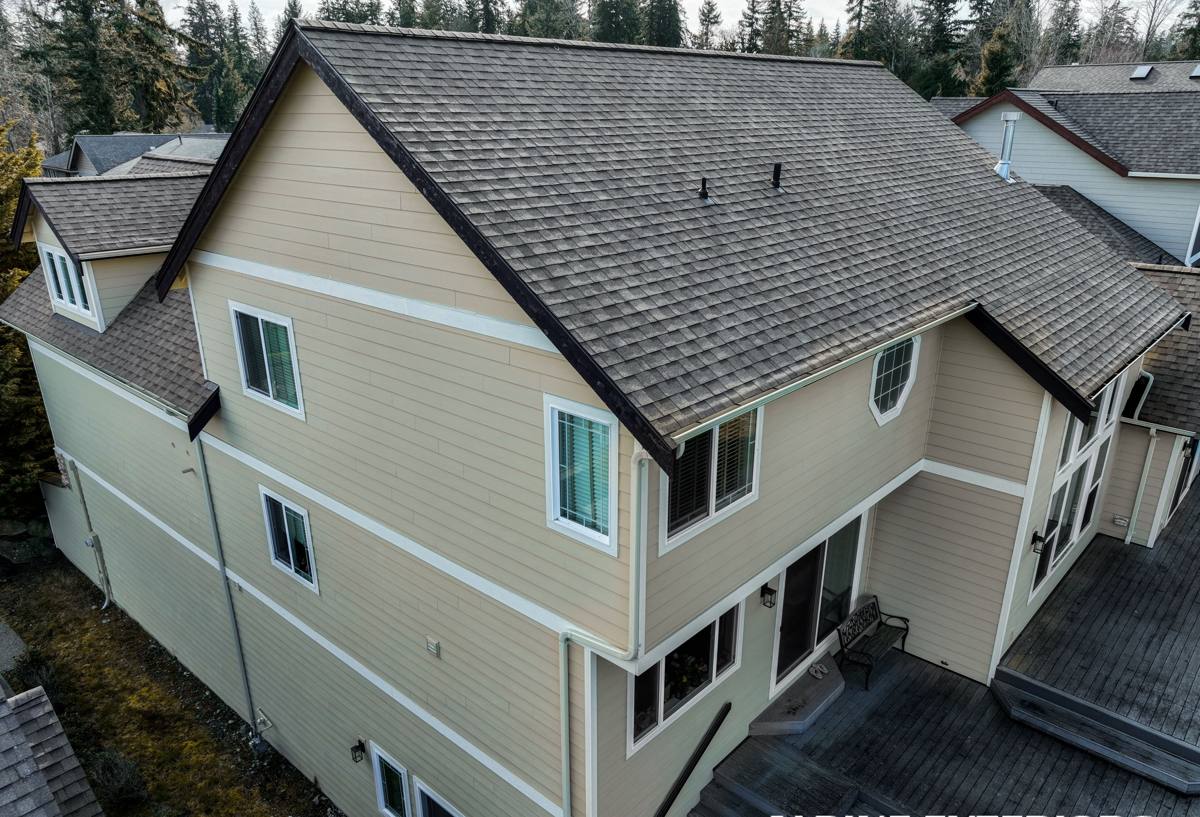
Signs Your Siding Is Past Its Useful Life
Moisture and Rot Signs
Soft spots when you press on the wall, paint that bubbles or peels in the same spots every year, and dark staining that spreads from a single point are all signs that moisture is getting behind the siding rather than shedding off of it. On older wood or engineered wood siding, this often shows up first at the bottom few feet of a wall or below window sills, where water collects and dwells the longest.
Moss, Algae, and Persistent Staining
A little surface algae after a wet winter is normal and mostly cosmetic. What's not normal is moss that keeps coming back to the same course of siding no matter how many times it's cleaned, or green-black staining that seems to be growing into the material rather than sitting on top of it. That pattern usually means the siding surface itself is porous or damaged enough to hold moisture, which is a maintenance and replacement conversation, not just a pressure-washing one.
What a Correct Siding Installation Actually Involves
Siding is a system, not a single product nailed to a wall. A correct installation on a Barkley home accounts for how water moves down the wall assembly and gives it a way out, rather than trapping it against the sheathing. Skipping any one of the following is where most premature siding failures in this region actually start — not the siding material itself, but the details around it.
- Weather-resistive barrier installed and lapped correctly, shingle-style, so water runs down and out rather than behind the layer below
- Flashing at every window, door, and roof-to-wall transition, integrated with the barrier rather than caulked over the top as an afterthought
- Rainscreen or drainage gap behind the siding so any moisture that does get past the surface can drain and dry instead of sitting against the sheathing
- Correct fastener schedule and type — the right nail or screw, spaced and set to manufacturer specification, not just "enough to hold it up"
- Proper clearance from grade, decks, and roof lines, so siding isn't wicking moisture from soil or standing water
- Sealed joints and butt seams using products rated for the exposure, not general-purpose caulk that fails within a season or two
Any of these can be done wrong while the finished wall still looks fine on installation day. The problems show up two, three, or five years later — which is exactly why the crew's habits and attention to these details matter more than the brand name on the siding itself.
Why We Install Only James Hardie Fiber Cement
We made a decision to install one siding system — James Hardie fiber cement — rather than offer a menu of products at different price points. In a climate like this one, we'd rather stand behind one system we trust completely than sell a homeowner something we know will underperform in salt air, standing moisture, and a moss season that can run half the year.
Hardie's fiber cement is non-combustible, doesn't swell or delaminate from repeated wetting the way wood-based products can, and comes through the factory with a baked-on ColorPlus finish rather than a coat of paint applied on site. Hardie also engineers specific product lines (HZ5 in this case) for climate zones like ours, which affects how the material handles moisture cycling over the long term. That's a meaningfully different starting point than a product designed as a general-purpose national offering. We're happy to talk through the trade-offs of other siding materials with any homeowner who asks — we just don't install them, because we've seen how they perform after a few Whatcom County winters and don't think that's a fair trade for a lower sticker price.
Our Process for Barkley Siding Projects
Assessment and Estimate
We start by walking the exterior with you, looking at the current siding condition, trim, flashing, and any areas showing moisture or moss patterns. That walkthrough is where we catch problems — like soft sheathing or failed flashing — before they turn into surprises mid-project. You get a written estimate that reflects what your specific home needs, not a generic per-square-foot number.
Preparation and Removal
Old siding comes off, and we inspect the sheathing underneath. Whatcom County's moisture load means it's not unusual to find some rot or water damage at this stage, especially around old window flashing or lower wall sections. We'll flag anything that needs repair before new siding goes on — covering damaged sheathing instead of fixing it just relocates the problem behind a new wall.
Installation
Weather-resistive barrier, flashing, and drainage plane go in first, followed by the Hardie siding itself, installed to manufacturer fastening and clearance specifications. Trim, corners, and joints get sealed with products rated for sustained exposure to wind-driven rain, not just occasional weather.
Final Walkthrough
We walk the finished job with you, check details up close, and make sure everything — including paint touch-ups, caulking lines, and trim reveals — meets the standard we'd want on our own homes.
What Siding Installation Costs Depend On
Every Barkley home is different, so we won't quote a number without seeing the house — but these are the factors that actually move the price, in rough order of impact:
| Factor | Why It Matters |
|---|---|
| Home size and wall complexity | More square footage and more corners, gables, and transitions mean more material and more labor-intensive detail work |
| Condition of existing sheathing | Rot or water damage found during removal adds repair costs but is far cheaper to fix now than after new siding covers it up |
| Siding profile | Lap siding, shingle-style panels, and board-and-batten each have different material and labor requirements |
| Trim and accessory detail | Custom trim widths, window surrounds, and accent details add labor time beyond flat wall coverage |
| Site access | Tight lots, slopes, or limited staging area near the wall can slow the work compared to an open, flat site |
Why a Crew That Already Works Barkley Matters
Siding crews that only occasionally work this far into Whatcom County tend to install to a generic standard — the one that works fine in a drier climate but leaves gaps here. A crew that's already worked Barkley and the surrounding Sudden Valley area knows to plan around the wetter stretches of the year, knows what moisture damage in this specific exposure actually looks like when opening up a wall, and isn't guessing at how much drainage detail a given elevation needs based on sun and wind exposure. That local pattern recognition is the difference between a job that looks right on day one and one that's still performing correctly five winters later.
There's also a practical scheduling piece: siding installation goes faster and holds up better when it's not fighting active rain, so a crew familiar with the local weather rhythm times tear-off and installation around drier windows rather than working through conditions that compromise the barrier and flashing work.
Caring for Your New Siding
Fiber cement is low-maintenance, not no-maintenance. A little seasonal attention keeps it performing the way it's designed to for decades.
- Rinse siding with a garden hose once or twice a year, more often in shaded areas prone to moss and algae
- Keep gutters clear so overflow doesn't run down the wall face and concentrate moisture at specific spots
- Trim back vegetation and tree limbs that keep sections of the wall shaded and damp longer than the rest of the house
- Check caulking at trim and joints every year or two and have any cracked or failed sections resealed
- Address any impact damage or chipped corners promptly rather than letting moisture get behind the finish
If you're weighing a siding project on a Barkley home, we're glad to come take a look and walk you through what your specific house needs — no pressure, no generic quote. Reach out for a free estimate using the form below.