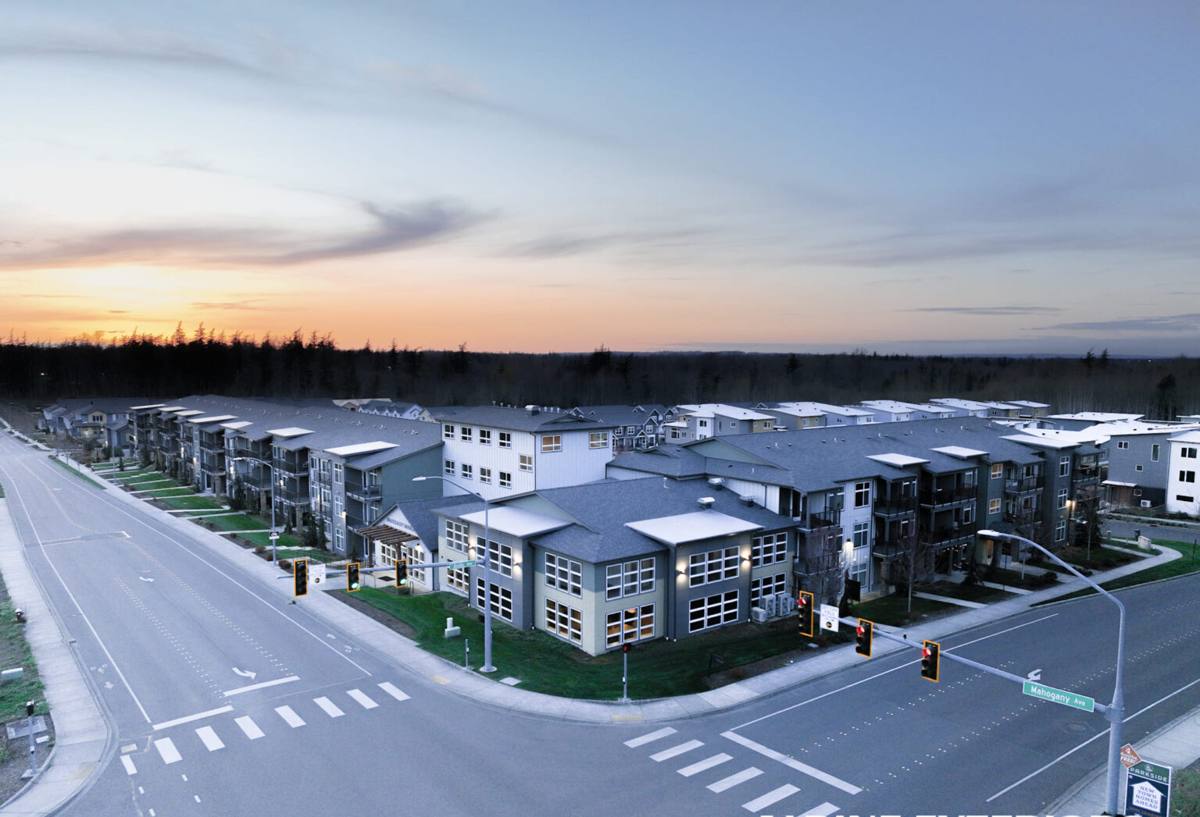
 Sudden Valley Exterior
 Bellingham's Climate Is Hard on a Roof — Here's Why
A roof in Bellingham does more work than a roof almost anywhere else in the state. You've got salt-laden air rolling in off the bay, long stretches of driving rain that comes in sideways as often as it comes straight down, and a moss season that can stretch from fall through spring in a wet year. None of these things alone would wreck a roof. Together, over years, they find every weak point in a shingle system — the fasteners, the flashing, the underlayment, the ventilation — and they find it faster than they would in a drier, calmer climate.
Asphalt shingle roofing is still the right call for the large majority of Bellingham homes. It's proven, it's repairable, and it's priced so that a homeowner can protect the house without gutting a remodel budget elsewhere. But "asphalt shingles" done right here looks a little different than the same words in Spokane or Sacramento. This page is about what that difference actually is, and what to expect if you're getting a roof replaced or repaired in Bellingham specifically.
What Local Roofs Are Actually Up Against
Salt Air and Corrosion
Homes closer to Bellingham Bay deal with airborne salt that accelerates corrosion on exposed metal — nail heads, flashing, gutter fasteners, vent caps. A roof that uses the wrong-grade fasteners or unprotected flashing in a salt-air zone will show rust streaks and early metal failure well before the shingles themselves are worn out. This is a materials-selection issue, not a shingle-brand issue, and it's one of the first things a Bellingham-savvy crew checks before quoting a job.
Driving Rain and Wind-Driven Water
Whatcom County storms don't always come straight down. Wind-driven rain gets pushed sideways and upward under shingle edges, around chimneys, and into valleys — spots a roof in a calmer climate could get away with treating casually. That means underlayment coverage, valley detailing, and flashing overlap all matter more here than the shingle brand printed on the wrapper.
Moss, Algae, and Constant Moisture
Shade, humidity, and a long wet season are a near-perfect recipe for moss and algae growth on a roof surface. Moss isn't just cosmetic — its root structure holds moisture against the shingle mat and can lift shingle edges over time, which is exactly the kind of slow damage that turns into a leak two or three years down the road. Roofs on tree-covered or north-facing slopes around Bellingham are especially prone to this and need to be planned for accordingly.
Choosing the Right Shingle for This Climate
Not every asphalt shingle line handles moss, moisture, and wind the same way. For Bellingham roofs, we generally steer homeowners toward products with built-in algae resistance and a wind rating that matches what the site actually sees — not just the manufacturer's minimum.
| Shingle Type | Typical Lifespan Here | Best For |
|---|---|---|
| 3-Tab Asphalt | 15–20 years | Budget-conscious replacements, simpler rooflines, low-slope accessory structures |
| Architectural (Laminate) Asphalt | 25–30 years | Most Bellingham homes — better wind rating and thicker profile handle driving rain and moss growth better over time |
| Algae-Resistant (Copper/Ceramic-Granule) Architectural | 25–30 years, with slower algae/moss return | Shaded lots, north-facing slopes, homes near mature trees |
| Impact-Rated Architectural | 25–30 years | Homes wanting extra durability against wind-blown debris in storm-heavy stretches |
We don't push premium shingle lines as a default upsell. For a roof with good sun exposure and simple geometry, a solid mid-tier architectural shingle is often the smartest money. Where a roof sits in constant shade or has a documented moss history, spending a bit more on algae-resistant granules usually pays for itself in fewer maintenance visits.
What a Correct Installation Actually Involves
The shingle itself is maybe a third of what determines how a roof performs here. The rest is in the details most homeowners never see once the job is done.
Underlayment
Full synthetic underlayment coverage, not just spot coverage, gives the roof deck a second line of defense against the wind-driven rain this area gets. In valleys, around chimneys, skylights, and at eaves, we install self-adhering ice-and-water membrane — the extra layer that actually stops water that gets past the shingle line during a hard storm.
Flashing
Flashing around penetrations and at wall/roof transitions is where most roof leaks actually start, not in the field of the shingles. Corrosion-resistant flashing, properly lapped so water sheds over each layer rather than into a seam, matters more in a salt-air, high-moisture area than almost anywhere else in the state.
Ventilation
A roof that can't breathe traps moisture in the attic, which shortens shingle life from underneath and feeds the same conditions that grow moss on top. Balanced intake and exhaust ventilation is a code and warranty requirement on most jobs, and it's one of the most commonly skipped steps on lower-bid roofing work.
Nailing Pattern and Fastener Grade
Correct nail placement (not staples, not over-driven or under-driven nails) is what actually gives a shingle its rated wind resistance. In a salt-air zone we also pay attention to fastener corrosion resistance — a cut corner here shows up as loose or lifted shingles well before the rest of the roof is due for replacement.
Our Process for a Bellingham Roofing Job
- On-site inspection of the existing roof, decking, ventilation, and any moss or moisture damage
- Written estimate that spells out shingle selection, underlayment, flashing, and ventilation work — not just a single lump-sum number
- Protection of landscaping, siding, and gutters before tear-off begins
- Full tear-off to the deck (not a layover) so we can actually see and repair any damaged sheathing
- Deck repair as needed, then synthetic underlayment and ice-and-water membrane at all vulnerable areas
- Shingle installation to manufacturer spec, with attention to nailing pattern and flashing detail
- Site cleanup, including a magnetic sweep for stray nails
- Final walkthrough so you know exactly what was done and what to watch for going forward
We tear off down to the deck on almost every job rather than layering new shingles over old ones. A layover hides the condition of the decking and shortens the life of the new roof — it's not a shortcut we're willing to take on a house that has to stand up to this much rain.
Moss and Long-Term Roof Maintenance
A well-installed asphalt shingle roof in Bellingham still needs periodic attention. Moss and algae growth is normal in a climate this wet, and the goal isn't to eliminate it entirely — it's to keep it from taking hold long enough to damage the shingle mat underneath.
Gentle, low-pressure moss removal (never a pressure washer directly on shingles, which strips protective granules) and keeping gutters clear of debris that holds moisture against the roof edge are the two simplest things a homeowner can do between professional inspections. Trimming back overhanging branches also helps — less shade and debris means less moss pressure on the roof surface over time.
Cost Factors on a Bellingham Reroof
| Factor | Why It Matters Here |
|---|---|
| Roof pitch and complexity | Steeper or more cut-up rooflines take longer to flash correctly against wind-driven rain |
| Decking condition | Moisture and past moss damage sometimes means sections of deck need replacing, which only shows up after tear-off |
| Shingle tier | Standard architectural vs. algae-resistant premium lines changes material cost and expected maintenance |
| Access and site conditions | Tree cover, tight lots, and steep driveways around Lake Whatcom and the surrounding hills can affect staging and labor time |
| Number of layers to remove | Homes with an existing layover roof take longer and cost more to strip to bare deck |
We'd rather walk a specific roof and give a real number than quote a range that doesn't mean much until we've seen the site.
Why It Matters to Hire a Crew That Already Works This Area
Roofing crews that mostly work drier, calmer regions sometimes underbuild for what Whatcom County actually throws at a roof — lighter underlayment coverage, standard-grade fasteners, ventilation that meets code on paper but not in practice. A crew that works Bellingham and the surrounding Sudden Valley area regularly knows which slopes hold moss, which neighborhoods see the worst wind-driven rain, and which flashing details actually need extra attention on a given lot orientation.
That local familiarity also means faster response when something needs attention after a storm, and a crew that's still around — and still local — years later if a warranty question comes up. For a system that's supposed to protect the house for two to three decades, that continuity is worth as much as the shingle brand on the invoice.
If you're due for a roof inspection, dealing with moss buildup, or planning a full replacement, we're glad to take a look and put together a straightforward, no-pressure estimate — just fill out the form below and we'll get in touch.