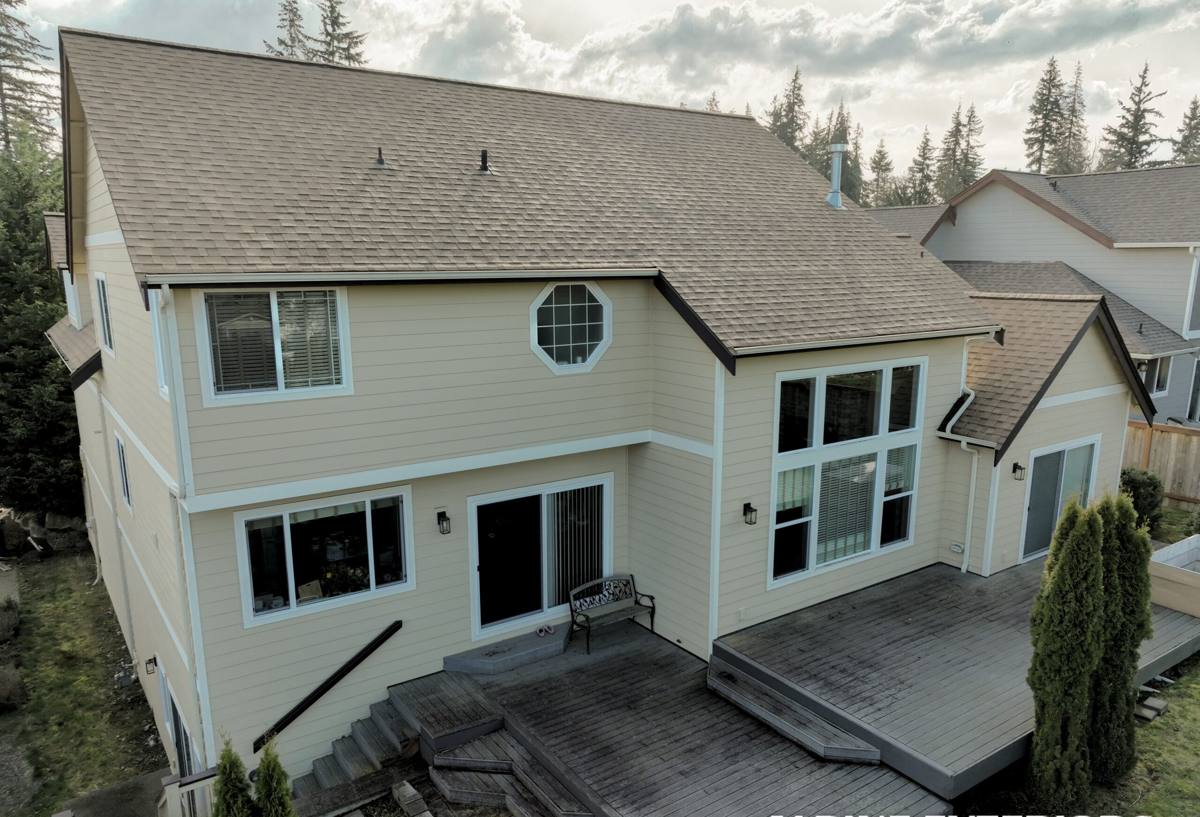
 Sudden Valley Exterior
 Why Acme Homes Need Windows Built for This Specific Climate
Acme sits close enough to the water and tree cover around Sudden Valley that its windows take a different kind of beating than windows a hundred miles inland. It's not one big event that wears them out — it's the daily combination of salt-laden air, wind-driven rain, and long stretches of gray, damp weather that never quite dries out. Whatcom County's marine climate means moisture is almost always present in some form, and windows are one of the first components of a house to show the wear from it.
When we look at older windows in this area, we're usually seeing three things working against them at once: corroding hardware from salt air, water intrusion around poorly flashed frames from driving rain, and moss or mildew staining on sills and tracks that never get enough sun or airflow to dry between storms. Any one of those is manageable. All three together, over years, is what turns a serviceable window into a source of drafts, fogging, and rot.
Salt Air and Hardware Fatigue
Proximity to Bellingham Bay and the surrounding waterways means airborne salt reaches further inland than people expect, especially on windy days. Salt accelerates corrosion on window hardware — hinges, locks, balance mechanisms, and screen frames — well before the glass or frame itself fails. Once hardware seizes or corrodes, a window stops sealing tightly even if the frame looks fine, and that's when energy loss starts.
Driving Rain and Flashing
Rain here doesn't just fall straight down — wind pushes it sideways and up under trim, sills, and poorly lapped flashing. A window can look watertight in dry weather and still leak during a real Whatcom County storm if the flashing and water-resistive barrier weren't detailed correctly at install. This is one of the most common failure points we find on older Acme homes, and it's almost always an installation issue, not a product defect.
Moss Season and Sustained Moisture
The long moss season — roughly fall through spring — keeps north- and shade-facing walls damp for weeks at a time. Wood sills and jambs that don't dry out fully between rain events are prone to soft spots, paint failure, and eventually rot. Energy-efficient windows only perform as advertised if the surrounding wood and sealant stay sound; a great window in a rotting frame still leaks air and heat.
What "Energy-Efficient" Actually Means for a Window
Energy efficiency isn't a single feature — it's the combination of glass performance, frame material, and how well the unit is sealed into the wall. For this climate, we weigh a few factors more heavily than a supplier catalog usually does.
- Low-E coatings that reduce heat loss in winter without making the house feel like a greenhouse in the rare hot stretch of summer.
- Argon or krypton gas fill between panes, which only helps if the seal holding it in stays intact for years — a bigger concern in a climate with constant temperature and moisture swings.
- Warm-edge spacers that resist condensation at the glass edge, which matters here because condensation on interior glass is common when humid outside air meets a warm house.
- Frame material that won't warp, swell, or corrode under repeated wet-dry cycles.
Frame Material Trade-offs for This Climate
| Frame Type | Moisture Behavior | Maintenance | Typical Fit for Acme Homes |
|---|---|---|---|
| Vinyl | Won't rot; can expand/contract with temperature swings | Low — occasional cleaning | Good all-around choice for most homes; budget-friendly |
| Fiberglass | Excellent — very stable in wet/dry and hot/cold cycles | Low | Strong long-term option, especially on more exposed walls |
| Wood-clad | Vulnerable at cladding seams if flashing fails | Higher — needs inspection and occasional resealing | Works if appearance matters, but needs a careful installer |
| Aluminum | Conducts cold, prone to condensation; can corrode near salt air | Moderate | We generally steer homeowners away from it this close to the water |
We're not tied to one brand or one material. The right call depends on the wall's exposure, the home's style, and the budget — but in a salt-air, high-rain climate, we lean toward vinyl or fiberglass for most jobs because they hold up with the least ongoing maintenance.
Signs Your Acme Home's Windows Are Costing You Money
Most homeowners don't notice window failure until it shows up on a heating bill or as a visible problem. Here's what we tell people to watch for between now and their next storm season:
- Visible fogging or moisture between panes of double-pane glass (a sign the seal has failed)
- Soft or discolored wood at the sill, especially on north-facing or shaded walls
- Windows that are hard to open, lock, or latch — often a sign of corroded hardware or a swelling frame
- A noticeable draft you can feel with your hand near the frame on a windy day
- Condensation forming on the inside of the glass regularly during cooler months
- Visible gaps in exterior caulk or trim around the window frame
- Moss or green staining building up on the sill or lower frame
What a Correct Installation Involves
A window is only as good as its installation, and in this climate the installation details matter more than the glass specs printed on the label.
Flashing and Water Management
Every opening needs flashing tape and a water-resistive barrier lapped correctly — top piece over the side pieces, side pieces over the sill pan — so water is directed out and down, never trapped behind the trim. This is the single most common shortcut we see skipped on older installs, and it's the reason so many "good" windows in this area eventually leak.
Sealant and Fastener Choice
Salt air degrades cheap sealants and corrodes standard fasteners faster than most people expect. We use sealants rated for continuous UV and moisture exposure and corrosion-resistant fasteners, particularly on walls facing prevailing wind and weather.
Insulation Around the Frame
Gaps between the window frame and the rough opening need to be filled with low-expansion foam or backer rod and sealant — not just caulked at the trim. Skipping this step is invisible from the outside but shows up directly as drafts and higher heating bills.
Our Process for an Acme Window Job
- On-site assessment — we look at each opening's exposure, existing frame condition, and any signs of water intrusion or rot before quoting anything.
- Honest scope and options — we explain which frame materials and glass packages make sense for that specific wall and budget, without upselling features that don't fit the home.
- Removal and inspection — old units come out carefully so we can check the rough opening and sheathing for hidden moisture damage before it's covered back up.
- Correct flashing and sealing — every opening gets properly lapped flashing and rated sealant, not just a quick caulk bead.
- Install and adjust — units are shimmed, squared, and fastened so they operate smoothly and seal evenly on all sides.
- Final check — we test operation, look for gaps, and walk the homeowner through what to expect as the sealants cure.
Cost Factors for Energy-Efficient Window Replacement
Every home is different, but the same handful of factors drive most of the cost variation we see on jobs in this area.
| Factor | Why It Matters Here |
|---|---|
| Number and size of openings | Larger or more numerous windows mean more material and labor |
| Frame material chosen | Vinyl is typically the most budget-friendly; fiberglass costs more upfront but needs less upkeep |
| Wall exposure | Walls facing prevailing wind and rain often need extra flashing detail and time |
| Existing rot or water damage | Hidden sheathing or framing repair adds cost but shouldn't be skipped |
| Glass package | Upgraded Low-E coatings or gas fills add a modest premium for better long-term performance |
We give firm, itemized numbers after seeing the openings in person — not a phone estimate — because the exposure and condition of each wall genuinely changes the scope.
Why a Crew That Already Works Acme Matters
A crew that regularly works homes in and around Sudden Valley already knows which walls in this pocket of Whatcom County tend to take the worst weather, what the moss buildup pattern looks like on shaded elevations, and how the local wet-dry cycle behaves through the seasons. That's not something you get from a general contractor passing through once. It shows up in small decisions — which sealant to trust through a wet winter, how much clearance to leave for wood movement, where to add extra flashing without being asked — that make the difference between a window that lasts and one that needs attention again in a few years.
Maintenance That Extends the Life of Your New Windows
Energy-efficient windows still need basic upkeep in this climate to perform for their full lifespan.
- Rinse salt residue off frames and hardware a few times a year, especially after storms
- Clear moss and debris from sills and tracks before it holds moisture against the frame
- Check exterior caulk lines annually and touch up any cracking before the wet season
- Operate locks and hardware periodically so mechanisms don't seize from disuse
- Keep gutters and downspouts clear so runoff isn't sheeting directly over window heads
If your Acme-area home has drafty, foggy, or hard-to-operate windows, we're happy to take a look and give you a straightforward, no-pressure estimate — just fill out the form below.