 Sudden Valley Exterior
 Board & Batten Siding in Ferndale: What the Climate Actually Demands
Ferndale sits close enough to Bellingham Bay and the Strait of Georgia that salt-laden air is a real factor in how exterior materials age here, not a theoretical one. Add Whatcom County's long wet season, driving rain off the water, and the shaded, damp stretches of fall and winter that let moss and algae take hold on north-facing walls, and you've got a climate that is genuinely tough on vertical board and batten siding. The style is popular in Ferndale for good reason — it reads as clean, modern farmhouse, or craftsman depending on trim choices — but the vertical lines and exposed batten joints that make it attractive are also the places where water problems start if the material and installation aren't right for this environment.
We work Sudden Valley and the surrounding Whatcom County towns, including Ferndale, regularly enough that we've seen how board and batten siding actually performs here over years, not just how it looks on install day. That's the lens this page is written from.
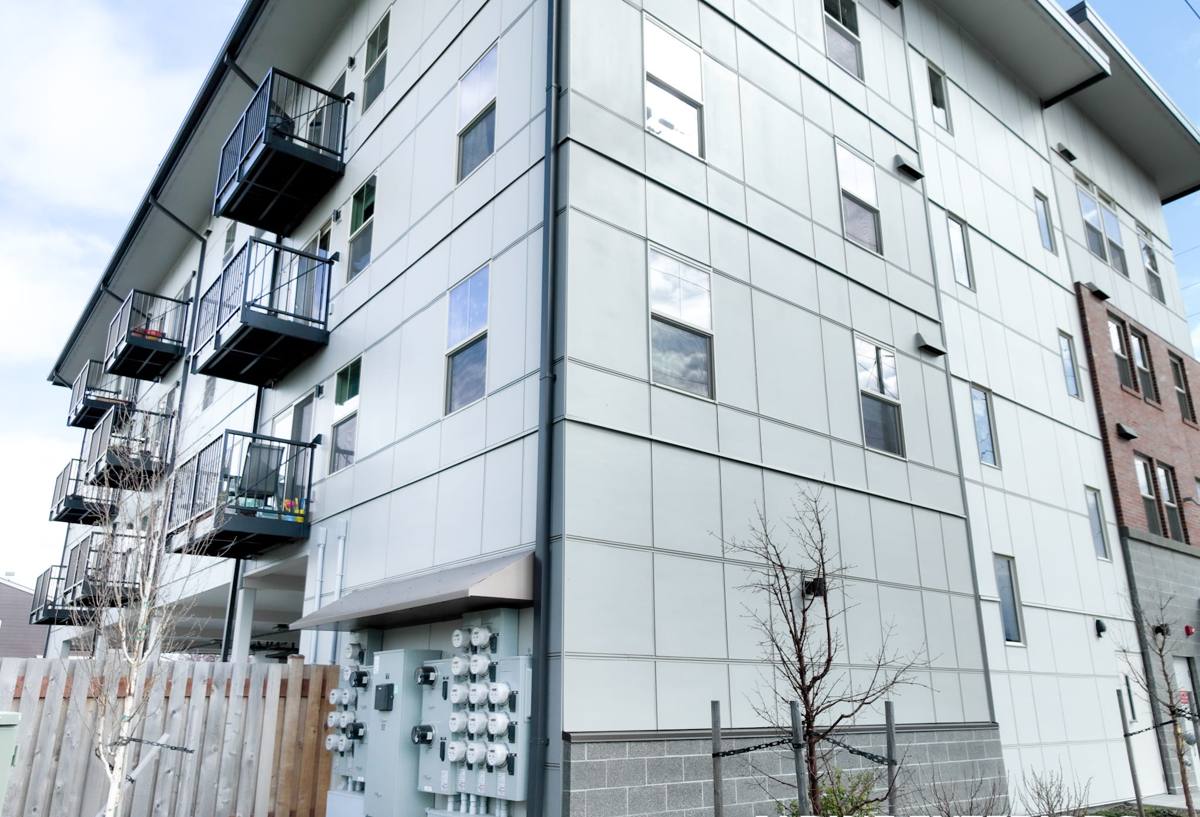
Why Board & Batten Is Riskier Than Lap Siding If You Get the Material Wrong
Every board and batten system has more vertical seams than a standard lap siding job, and every seam is a place water can find its way behind the cladding if it isn't detailed correctly. In a drier climate that's a smaller concern. In Ferndale, with sustained rain events and salt air accelerating corrosion of fasteners and hardware, the margin for error is smaller.
What tends to go wrong with the wrong material
- Wood-based battens and boards (cedar, primed spruce) absorb moisture at the cut ends and seams, leading to swelling, cupping, and eventual rot behind the battens
- Engineered wood products can suffer edge swelling if the factory seal is compromised during installation or by long-term moisture exposure
- Vinyl board and batten profiles rely on interlocking panels that can loosen or warp with UV and temperature cycling, and they don't hold paint if a homeowner ever wants to change the color
- Uncoated or poorly coated fasteners corrode faster in salt-influenced air, leaving rust streaks and eventually failing fastener holds
None of this means board and batten is a bad choice for a Ferndale home. It means the material and the installation details matter more here than they would inland.
Why We Install James Hardie for Board & Batten — and Nothing Else
Sudden Valley Exterior Co installs James Hardie fiber cement exclusively. For board and batten specifically, we use Hardie's vertical panel and batten systems (including their Artisan and HardiePanel lines depending on the look a homeowner wants), engineered and tested for wet, coastal-influenced climates like ours.
We don't install LP SmartSide, vinyl board and batten, Cemplank, Allura, or raw cedar or primed spruce boards. That's not a knock on every homeowner who has one of those products on their house already — plenty perform fine for years with regular maintenance. It's a standard we hold for what we put on new work:
- Non-combustible core. Fiber cement doesn't feed a fire the way wood-based products can.
- Moisture stability. Hardie's fiber cement doesn't swell, cup, or rot at cut edges the way engineered wood or cedar can when repeatedly wetted, which matters directly in Ferndale's rain pattern.
- Factory-baked ColorPlus finish. A UV-cured finish applied and cured under factory conditions holds color and resists the fading and chalking that field-applied paint on wood siding shows first, especially on sun-and-salt-exposed elevations.
- Climate-engineered product lines. Hardie makes region-specific formulations (their HZ5 line, for example) built for wetter, more humid climates rather than a single one-size-fits-all product.
- A warranty that's actually structured to transfer if the home sells, which matters to a lot of Ferndale buyers doing their own diligence on a home's exterior.
The honest trade-off: fiber cement costs more up front than vinyl and is heavier and more particular to install correctly than engineered wood panel. We think that trade-off is worth it for board and batten specifically, because the vertical seams and batten joints are exactly where an inferior material shows its weaknesses first.
What a Correct Board & Batten Installation Involves
Board and batten looks simple — vertical boards, battens over the seams — but the assembly behind the visible surface is what determines whether it lasts. This is where we see the biggest gap between a fast install and a correct one.
The details that actually matter
- A drainage plane (weather-resistive barrier plus a rainscreen gap) behind the siding so any water that does get past the surface can drain and the wall can dry
- Correct fastener type and spacing — stainless or coated fasteners rated for the coastal-adjacent environment, driven at the manufacturer's specified pattern, not just "wherever it holds"
- Proper batten spacing and fastening so battens don't trap water against the panel seam underneath
- Flashing at every horizontal transition — window and door heads, roof-to-wall intersections, deck ledgers — since vertical siding channels water downward faster than lap siding does
- Correct clearance at the base of the wall (typically a minimum gap above grade, decks, and roof lines) so the bottom of the siding isn't sitting in standing water or snow load
- Caulking and sealant only where the manufacturer specifies it — over-caulking board and batten seams can trap moisture instead of letting it drain
Any one of these done wrong can undo the benefit of using a better material in the first place. This is why we treat installation quality as inseparable from product choice — a premium material installed loosely performs worse over time than a mid-grade material installed correctly.
Our Process for Ferndale Projects
1. On-site assessment
We look at the home's exposure — which elevations take the worst weather, whether there's existing moisture damage behind current siding, roofline and drainage patterns, and how much moss or algae growth is already present on shaded walls.
2. Material and profile selection
We walk through Hardie's board and batten profile and color options against the home's style and the homeowner's budget, including how the ColorPlus finish options compare to field-applied paint over time.
3. Tear-off and substrate check
Where we're replacing existing siding, we check the sheathing and framing underneath for rot or moisture damage before anything new goes up — no covering up a problem that will keep growing behind new siding.
4. Weather barrier and rainscreen installation
This is the step that gets skipped by crews trying to move fast, and it's the step that determines whether the wall assembly can handle Whatcom County's rain load over the next 20-30 years.
5. Board, batten, and flashing installation to manufacturer spec
Fastener pattern, batten spacing, and flashing detail all follow Hardie's published installation requirements, which is also what keeps the manufacturer's warranty intact.
6. Final walkthrough
We go over the finished work with the homeowner, including basic care and what to expect from the finish over the first few seasons.
Cost Factors for Ferndale Board & Batten Siding
| Factor | What Drives the Cost | Why It Matters Here |
|---|---|---|
| Tear-off vs. new build | Removing existing siding and repairing any hidden damage adds labor | Moisture-related sheathing issues are more common on older Ferndale homes near the water |
| Wall height and complexity | Multi-story walls, dormers, and cut-up elevations need more battens, flashing, and labor time | More seams means more places detailing has to be right |
| Panel vs. individual board profile | Engineered panel systems install faster than individual board-and-batten boards | Affects labor cost more than material cost |
| Color and finish | Factory ColorPlus finish costs more than primed material painted on site | Factory finish holds up better against UV and salt air with far less repainting |
| Trim and accent detailing | Corner boards, window trim, and accent bands add material and labor | Common on farmhouse and craftsman styles popular in the area |
Maintenance: What Board & Batten Actually Needs in This Climate
- Rinse siding annually (or more often on shaded, moss-prone elevations) to keep organic growth from taking hold
- Inspect caulking at trim and penetrations yearly — replace if cracked or pulling away, since this is a common water entry point on any vertical siding
- Keep gutters and downspouts clear so roof runoff isn't sheeting down the wall directly onto siding and battens
- Trim back vegetation and keep mulch beds from holding moisture against the base of the wall
- Watch for any staining or soft spots near the bottom courses, which can signal a drainage or clearance issue worth addressing early
Fiber cement reduces the maintenance burden compared to wood-based board and batten, but it isn't zero-maintenance — regular attention is still what keeps any siding system performing for its full service life.
Why Hiring a Crew That Already Works Ferndale Matters
Board and batten installation quality depends heavily on judgment calls specific to a site — how much rainscreen gap a particular wall needs, how a roofline transition should be flashed, where moss growth patterns suggest extra attention. A crew that already works Sudden Valley and Ferndale regularly has already made those calls on homes with similar exposure, similar rain patterns, and similar salt-air influence. That's different from a crew installing board and batten for the first time in an unfamiliar climate, or one juggling multiple product lines and cutting corners on installation depth to keep pace.
We install one product system because it lets us go deep on doing it right, on every job, rather than being generalists across five different manufacturers' installation requirements.
If you're considering board and batten siding for a Ferndale home, we're happy to walk the property, look at your current exposure and any existing moisture issues, and put together a straightforward, no-pressure estimate using the form below.