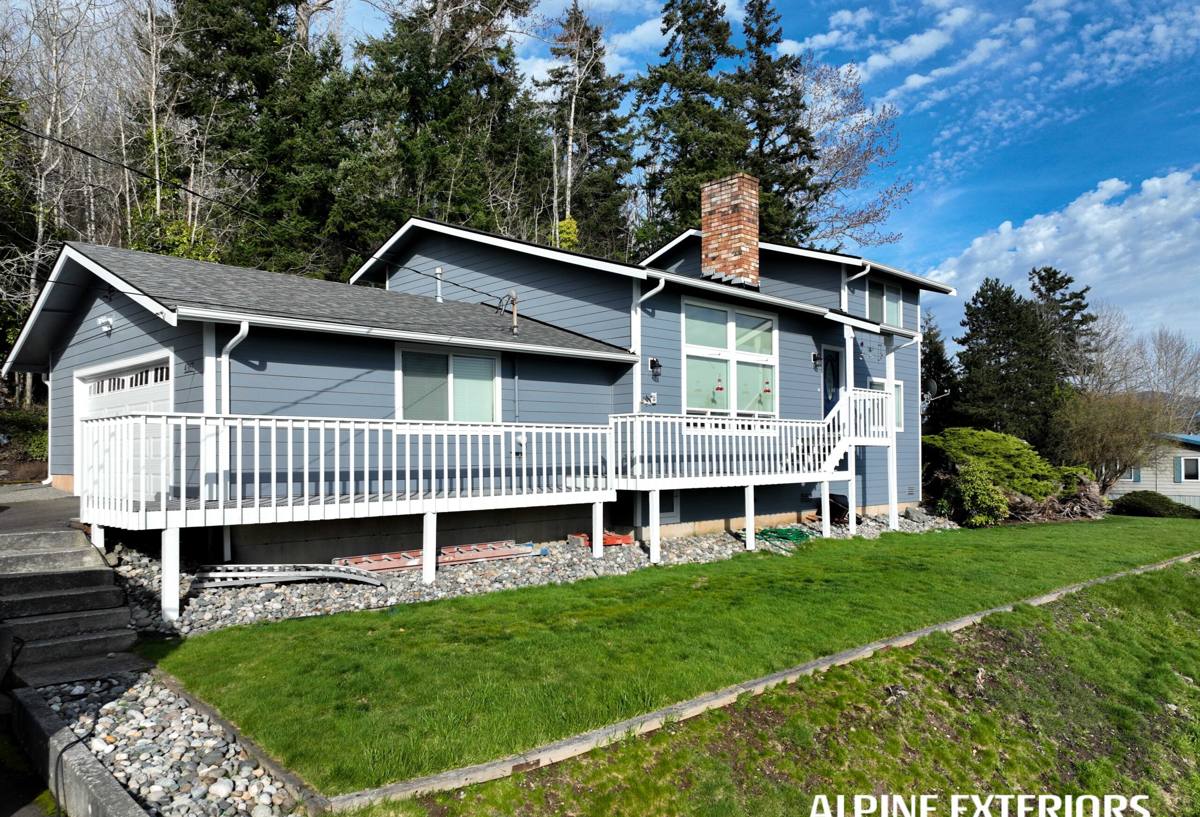
 Sudden Valley Exterior
 Why Roofs in Deming Take a Different Kind of Beating
Deming sits in a part of Whatcom County where the weather doesn't do a roof any favors. You get long stretches of steady, driving rain in the fall and winter, followed by damp, shaded stretches in spring where nothing on the roof gets a chance to fully dry out. Add in proximity to Lake Whatcom and the broader Puget Sound air moisture, and you have a climate that's built to grow moss, saturate underlayment, and work water into every gap a roof gives it.
Homes tucked under fir and cedar canopy - common around Sudden Valley and the surrounding Deming area - deal with extra shade and constant needle and leaf debris on top of the rain. That combination is exactly what accelerates moss growth and clogs valleys and gutters, which is where a huge share of the roof leaks we get called out for actually start.
What This Means for Homeowners
It means a roof here ages differently than one in a drier climate. Shingles can look fine from the ground while moss is already lifting tabs and holding moisture against the roof deck underneath. It also means small issues - a cracked pipe boot, a lifted shingle edge, a clogged valley - don't stay small for long. Constant moisture turns minor wear into active leaks faster than most homeowners expect.
What a Correct Roof Repair Actually Involves
A lot of "roof repair" in this region amounts to sealing a visible spot with roofing cement and calling it done. That approach might buy a season, but it rarely addresses why the leak started in the first place, and caulk-and-cement patches tend to fail again once the material dries out and cracks.
A repair done right starts with figuring out where water is actually entering - which is often several feet away from where it shows up on your ceiling, since water travels along rafters and sheathing before it drips through. From there, the fix should match the actual failure: replacing damaged shingles or flashing, resealing penetrations with the correct materials, or rebuilding a valley that's no longer shedding water properly.
Signs a Repair Is Overdue
- Dark streaks or green growth concentrated on north-facing or shaded slopes
- Granules collecting in gutters or at downspout outlets
- Curling, cracking, or lifted shingle edges, especially near roof valleys
- Soft or discolored ceiling spots after heavy rain
- Daylight visible through the attic at flashing points or the roof deck
- Moss or debris buildup thick enough to hold standing moisture
The Repairs We See Most Often Around Deming and Sudden Valley
Moss-Related Shingle Damage
Moss doesn't just look bad - it physically lifts shingle tabs as it grows, breaking the seal that keeps wind-driven rain out. Left long enough, moss roots can work into the shingle surface itself and accelerate granule loss, which shortens the life of the whole roof section, not just the patch where the moss is growing.
Flashing and Penetration Failures
Chimneys, vent pipes, and skylights are common leak points because the flashing and boots around them rely on sealant and metalwork that degrades over time. In a climate with this much sustained rain, a flashing seam that's even slightly open will find water eventually.
Valley and Gutter Backups
Roof valleys concentrate a lot of water flow, and on tree-covered lots they also concentrate needle and leaf debris. Once a valley is partially blocked, water backs up under the shingles above it instead of running off - this is one of the more common causes of interior leaks we trace back on repair calls in this area.
Wind and Storm Damage
Winter storms coming off the Sound can lift or tear shingles, particularly on roofs that already have some age or moss weight on them. A few missing or cracked shingles seem minor, but they're an open door for the next rain event.
Our Repair Process
1. Full Roof Assessment, Not Just the Reported Spot
When we come out for a repair, we check the whole roof, not just the area where the leak is showing. Because water travels before it shows up inside, the visible damage and the actual source are often in different places. We also look at attic ventilation and insulation where accessible, since poor airflow contributes to both moisture buildup and premature moss growth.
2. A Straightforward Explanation and Options
We'll walk you through what we found, what's causing it, and what it takes to fix it correctly - including when a small repair is genuinely the right call versus when you're better off addressing a larger section. We're not going to recommend replacement work you don't need, and we're not going to undersell a repair that won't hold.
3. Repair Using Materials Matched to the Existing Roof
Wherever possible, we match shingle type, color, and weight to your existing roofing so the repair blends in rather than standing out as an obvious patch. Flashing work is done in corrosion-resistant metal appropriate for coastal-influenced Whatcom County weather, and all penetrations are resealed with materials rated for sustained moisture exposure, not a quick tube of general-purpose caulk.
4. Cleanup and a Post-Repair Check
Debris, old material, and any moss removed during the repair gets cleared off the roof and out of the gutters before we leave - loose moss and granules left in place just wash back into valleys and downspouts with the next rain.
Repair vs. Replacement: How We Help You Decide
Not every damaged roof needs a full replacement, and not every leak can be reliably fixed with a patch. The table below covers the main factors we weigh when giving you an honest recommendation.
| Factor | Leans Toward Repair | Leans Toward Replacement |
|---|---|---|
| Age of roofing material | Under roughly 12-15 years | Nearing or past manufacturer lifespan |
| Extent of damage | Localized to one area or slope | Spread across multiple sections |
| Moss/moisture history | Recent, surface-level growth | Long-term growth with deck softening |
| Underlying deck condition | Solid, no rot found | Soft spots or sheathing damage present |
| Number of past repairs | First or second repair | Repeated patches in the same area |
If your roof lands mostly in the left column, a well-executed repair is the responsible, cost-effective choice. If it's landing on the right, we'll tell you plainly - patching a roof that's structurally past its service life just delays a bigger problem and spends money that would be better put toward a new roof.
Moss and Debris Maintenance Between Repairs
Because moss and organic debris are the biggest recurring threat to roofs in this area, ongoing maintenance matters as much as the repair itself. A few habits go a long way toward stretching the life of both your repair and the roof around it:
- Keep gutters and valleys clear of needles and leaves, especially heading into fall
- Trim back overhanging branches to reduce shade and debris drop on the roof
- Have moss physically removed rather than just treated, since dead moss still holds moisture
- Check attic ventilation periodically - poor airflow speeds up both moss growth and shingle aging
- Schedule a roof check after major windstorms, not just when a leak appears
Materials and Products We Work With
For repair work, we use asphalt composition shingles matched to your existing roof in the large majority of cases, since it's the most common roofing material in the area and gives the most reliable match for color and profile. For flashing and metalwork, we use corrosion-resistant materials suited to sustained moisture exposure rather than lighter-duty options that can degrade faster in this climate.
There are some products on the market marketed as low-maintenance moss solutions or permanent sealant patches. Our standard is to be upfront about the trade-offs: some of these products can trap moisture against the roof surface if not installed with the right ventilation behind them, and sealant-only patches without proper flashing work tend to need redoing sooner than homeowners expect. We'd rather do the repair with proven materials and a method that holds than sell a shortcut that needs revisiting in a year.
Why a Crew That Already Works Deming and Sudden Valley Matters
Roof repair is a trade where local knowledge actually changes the outcome. A crew that regularly works this stretch of Whatcom County already knows which roof designs handle heavy tree cover poorly, which flashing details tend to fail first in this rainfall pattern, and how aggressively moss grows back if it isn't fully removed at the root. That's the difference between a repair that's built for the conditions here and one that was done to a generic checklist.
It also means faster, more accurate estimates. We're not learning the regional climate on your roof - we already know what driving rain off the Sound and a long moss season do to a roof over time, and we build repairs to hold up against exactly that.
Get a Straightforward Look at Your Roof
If you're dealing with a leak, moss buildup, or storm damage on your Deming or Sudden Valley home, we're happy to come take an honest look and walk you through what we find. There's no pressure and no obligation - just a clear read on what your roof needs and what a proper repair would involve. Fill out the form below to get started.